The World from PRX

Montreal protocol

Since 2002, scientific data pointed to a slower decline of CFC-11, one of several chemical substances banned by the Montreal Protocol in 1987. The amount of CFC-11 found in the atmosphere has actually gone up during that time, prompting the United Nations
Environment
Scientists detected a spike in ozone-depleting chemicals. They’ll use the Montreal Protocol to stop the pollution.
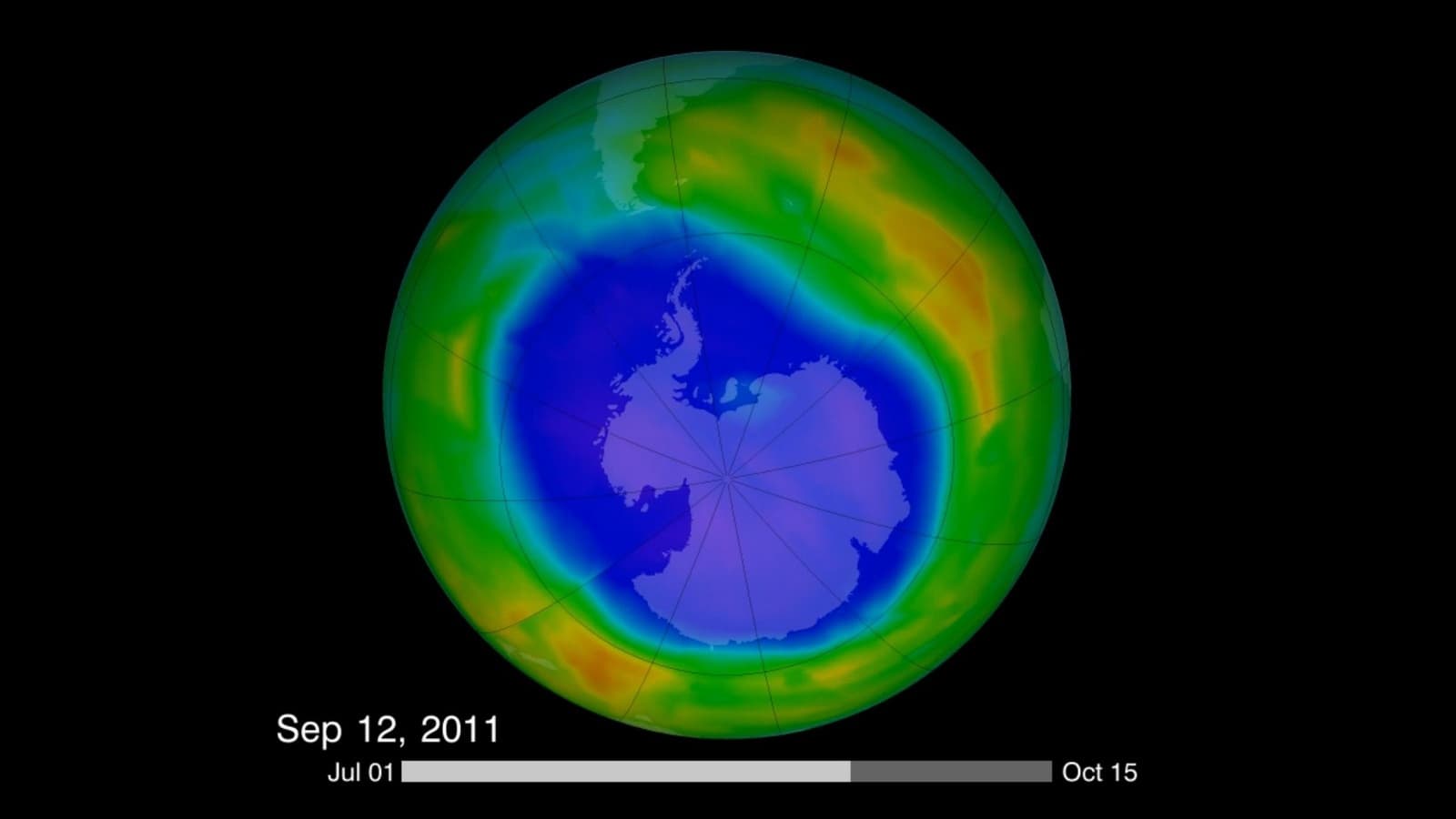
This image is from a video made in 2011 that compiled visualizations of the Antarctic ozone hole. Recent findings have shown that the hole is filling up — while other parts of ozone remain on the decline.
Science
The ozone hole over the Antarctic is beginning to fill up. Here’s the bad news.
A false-color image showing ozone concentrations above Antarctica on Oct. 2, 2015.
Environment
The ozone layer is bouncing back. And our hairstyles will be OK too.
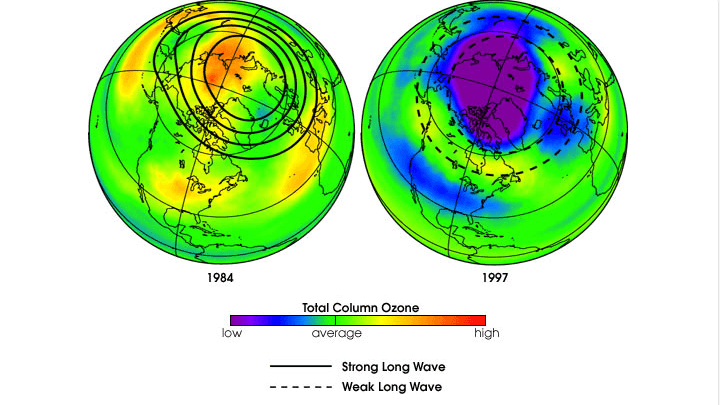
This NASA graphic shows relative average levels of atmospheric ozone over the northern hemisphere in 1984 and 1997. The lower concentrations, shown in darker colors, are due to the effects of ozone-destroying chemicals in the atmosphere.
Environment
The latest news on the ozone layer shows we can solve big environmental problems
Environment
China, U.S. to seek way to end production, use of climate change causing HFCs
Environment
Ozone levels over the Arctic hit all-time low
New Ozone Hole Findings
Ozone Treaty Revisited
Problems With Promising CFC Substitute
Ozone Hole: once Again, Worse than Predicted
Life Under The Ozone Hole
Ozone: Going, Going…