Public radio’s longest-running daily global news program.
©2025 The World from PRX
PRX is a 501(c)(3) organization recognized by the IRS: #263347402.

Brazilian cinema has received strong global attention recently, with films like “I’m Still Here” and “The Secret Agent” earning a slew of Oscar nods. But many filmmakers say these films reflect a limited group of voices. Reporter Julia Franca explores issues of funding, gender, and access in the Brazilian film industry.
The Olhar de Cinema – Curitiba International Film Festival team during its 14th edition, June 18, 2025.
Brazilian cinema went 20 years without any Oscar recognition. That changed when the film “I’m Still Here” won Best International Feature at last year’s ceremony.
Brazil’s visibility on the global stage has continued into 2026 with “The Secret Agent,” directed by Kleber Mendonça. It received four nominations, including Best International Feature Film and Best Picture.
This marks a new moment of visibility for Brazilian cinema, and raises questions about who gets to make films and which voices break through internationally.
According to Gabriel Borges, co-director of the Festival Olhar de Cinema, one of the most influential film festivals in Brazil, “There’s a big rise in Brazilian cinema of young auteurs.”
In this context, he says that Oscar-nominated films represent only a small fraction of Brazilian cinematic output.

“But there are also other films that have attracted international attention worldwide,”
Borges told The World. “Like the films directed by Andre Novais.” Novais is a director known for his intimate movies that center on everyday life in working-class communities.
Borges added that many of these filmmakers are young and don’t come from privileged backgrounds. Like Juliana Antunes, another young filmmaker bringing underexplored perspectives to Brazilian cinema. In 2017, she directed the film “Baronesa,” which follows two women in a Brazilian favela as they navigate daily life, dreams, and violence.
Despite receiving nominations for global awards for “Baronesa,” Antunes is just now releasing her next feature.
“We have to be careful with the idea that national cinema is booming,” she said. “It is, but for whom? Right now, all the power and resources in the industry are concentrated in the hands of very few people.”
Antunes said it’s difficult to get funding, especially as a young woman filmmaker in Brazil. “In Brazil, there aren’t many women directors. That’s a global problem, but it’s really significant in Brazil. Look at the Brazilian films that have achieved this huge success — they absolutely deserve it. I love Kleber Mendonça’s work. That movie was great. But these are all movies made by men.”
None of this is new. The push to reshape Brazilian cinema to more fully reflect the country and its people dates back to Cinema Novo in the late 1950s, a movement that rejected Hollywood-style filmmaking in favor of political critique and social realism.
Cinema Novo brought some marginalized voices to the screen. It marked a turning point, making Brazilian film feel distinctly Brazilian for the first time. However, film festival director Gabriel Borges says that some progress has been lost.
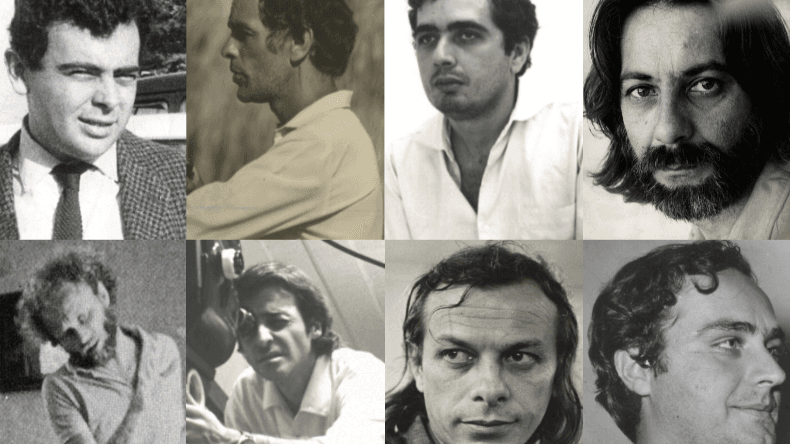
“Brazilian Cinema has been as Brazilian economics [and] politics have been … dominated by mainly white men since the beginning of Brazilian modern history,” he said. “So, there’s still a lot of stories to be told from different angles.”
This is exactly what Juliana Antunes set out to do with “Baronesa.”
To make the movie, she moved back to a favela in Belo Horizonte, the capital city of the State of Minas Gerais, where she grew up, and assembled a cast of people who lived in the neighborhood. She aimed to tell a story with the people and not simply about them.
“Life is always bigger than cinema,” said Antunes. “So, it’s cinema that has to adapt to life, not the other way around. Of course, that’s not always possible. It’s not a recipe that works every time. The film we’re about to release wasn’t made that way. Each project has to find its own way.”

In this complex context of power dynamics, Borges said film festivals like Olhar de Cinema should be intentional about how they present Brazil internationally. At the same time, he mentioned the local industry could support a cinema that truly represents the country’s diversity.
“Having more access to equipment, our history, and to the things that are being done in Brazil are the things that will help us not just grow but to make more films based on our realities,” he said. “…Not based on trying to imitate an American or a European reality or way to make films.”
The recent Oscar attention is meaningful and worth celebrating. Juliana Antunes hopes it inspires viewers to engage more deeply with Brazilian films and for producers to trust the talent of a rising wave of filmmakers.
Antunes is inspired by the legendary French-Swiss filmmaker and French New Wave pioneer Jean-Luc Godard.
“There’s this Godard quote that I love. I’m not 100% sure I remember exactly how he put it, but basically every film is a documentary of its own making,” Antunes recalled. “And that’s true.” She hopes to see more films made by and with all the people of Brazil.