Public radio’s longest-running daily global news program.
©2025 The World from PRX
PRX is a 501(c)(3) organization recognized by the IRS: #263347402.

Singer-songwriter Melly comes from a state with a long tradition in Brazilian music, but faces her own challenges. At age 24 and with a Latin Grammy nomination under her belt, she is about to release her sophomore record.
Melly’s debut album, “Amaríssima,” is about falling in — and out — of love with other women and got her a Latin Grammy nomination.
Brazilian singer-songwriter known by the stage name Melly was at a studio in São Paulo putting the final touches on her sophomore album in March. It’s inspired by some reading she’s done on Hermetic philosophy, which includes elements of mysticism and astrology.
“I started going deep on this topic and I decided I wanted to talk about the soul, about my interaction with the world and the people around me,” she said.
It’s a departure from her debut album, “Amaríssima,” which is about falling in — and out of — love with other women. It got her a Latin Grammy nomination. She is now about to release her sophomore record and she just released a duet with Brazilian pop star Anitta. Although she comes from a place in Brazil with a long musical tradition, she faces her own unique challenges.
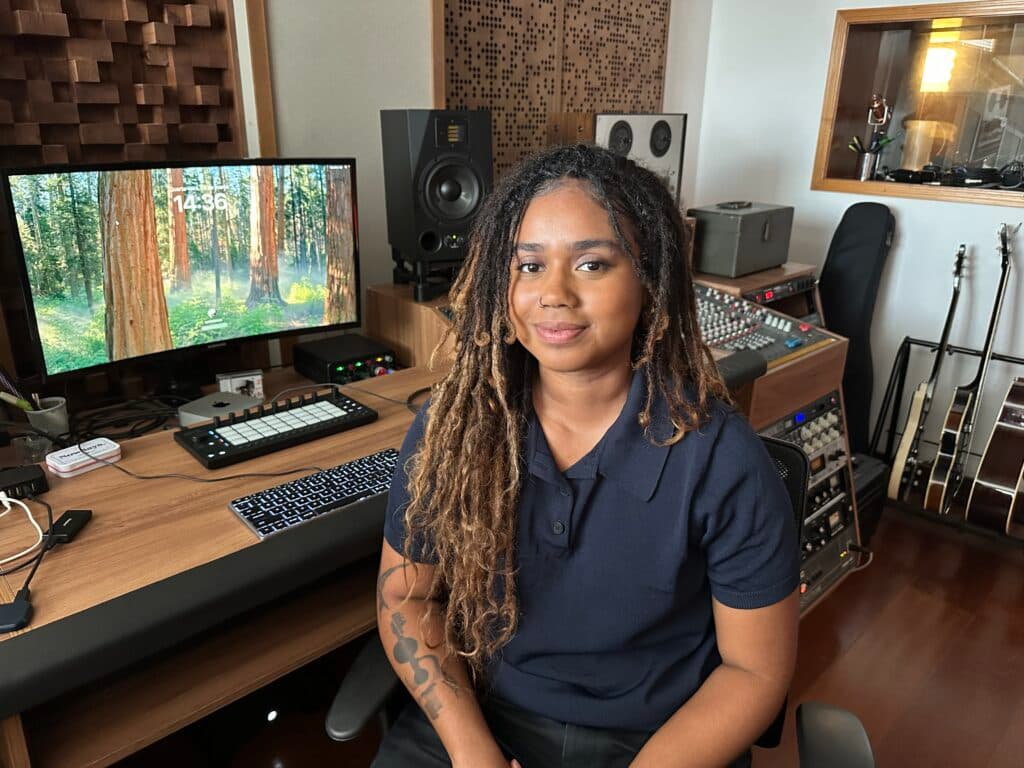
“There is sweet and bitter in ‘Amaríssima,’ which is the superlative of bitter. My [astrological] sign is cancer, so I’m dramatic, everything for me is exaggerated,” Melly explained. “I think I suffer a lot,” she added, laughing.
“Amarissima” also got her a WME award as songwriter of the year. It seems a lot for someone who’s just 24 years old and a college student. But Melly, who is from the state of Bahia — home to some of the biggest names in the country’s music, like Gilberto Gil and Caetano Veloso — has been performing at bars since she was 16.

Melly Louise Queiroz Araújo was born in a poor family in Salvador, the capital of Brazil’s Bahia state. She started taking free piano lessons when she was six, but a couple of years later, she switched instruments.
“I asked my grandma for an acoustic guitar and she gave me one for someone who is right-handed. I’m left-handed, but I was so anxious to learn that I didn’t ask her to exchange it,” she said. “I learned to play on that one, and I even tattooed it on my arm.”
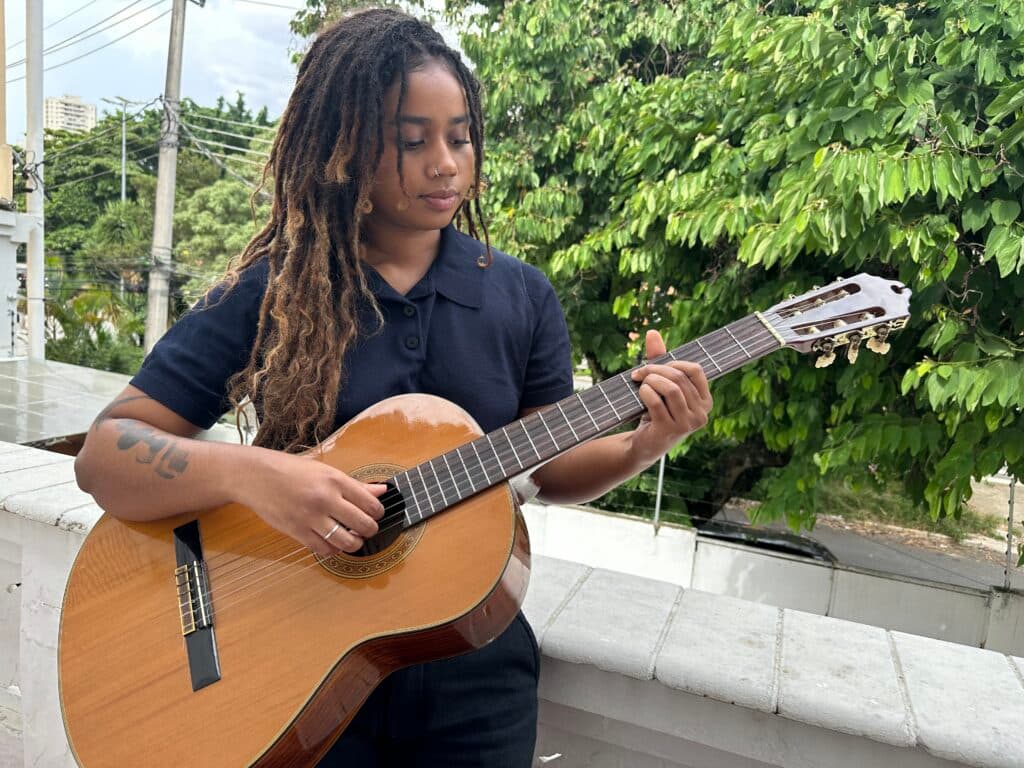
Melly’s father played in samba-reggae bands, and she grew up listening to music from Bahia as well as American R&B and soul. When she was 20, she released the single “Azul,” and it blew up.
Even though many well-known Brazilian musicians come from Bahia, it’s not easy for them to succeed, according to Julli Rodrigues, a journalist and producer of a radio music show in Salvador.
Rodrigues said the mainstream press often looks down on them. “They try to place different artists in the same box just because they are Black and from Bahia,” she said.
One of the things Rodrigues enjoys about Melly’s first album is that it combines opposite moods. “The melody is upbeat, danceable, but the lyrics are about heartbreak. It’s this idea of dancing as you suffer,” she said.
One example is the song “Falar de Amor,” or “To Talk About Love.” Despite the title, it’s a break-up song.
Melly’s songs do not deal with racism or inequalities, topics often tackled by other Black singer-songwriters in Brazil, but Rodrigues said her songs are political because of who Melly is.
“She is a Black woman talking about love for other women, something we couldn’t even even imagine a few years ago,” she said.
On her album, Melly sings “10 Minutos” with Latin-Grammy winner Liniker, who is a trans-woman.
At a Melly concert in São Paulo in late March, a fan named Ana Luisa Sousa said her debut record spoke to her personally.
“‘Amarissima’ was an album that completed me in a moment when I needed it the most,” she said.
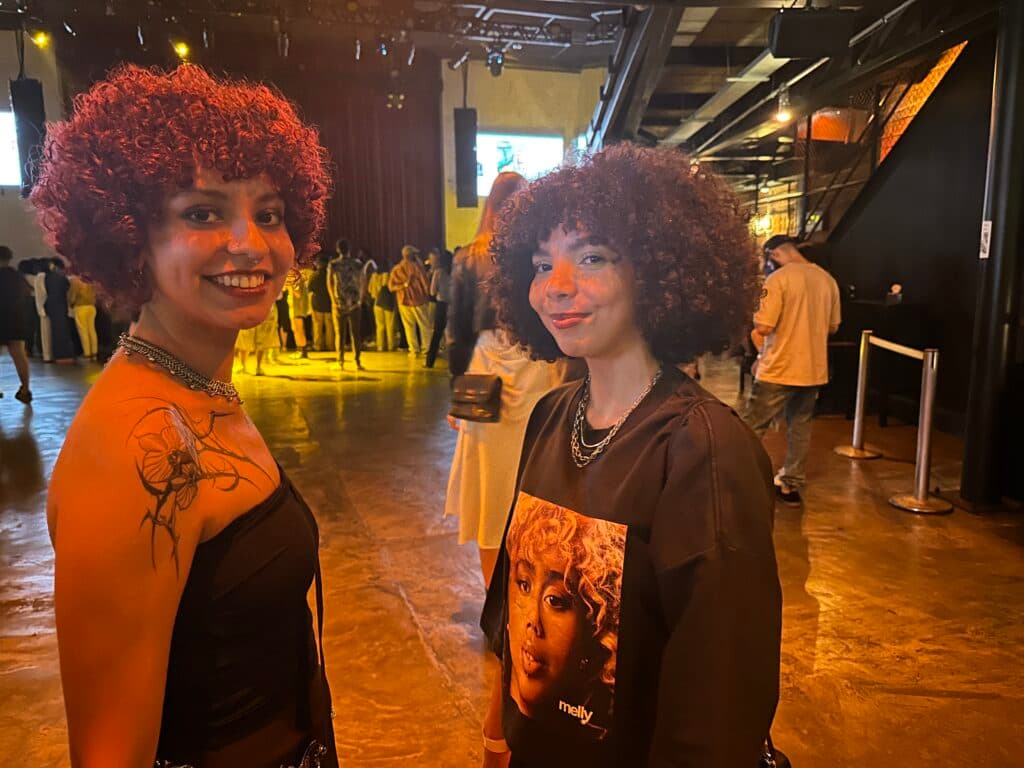
Sousa went to her first Melly concert by herself in 2024 and there she met Yasmin Sanchez, who was with her again at this concert.
“This is my fourth or fifth show, I’m losing track of how many times I’ve seen Melly live,” Sanchez said.
Sousa and Sanchez will have even more chances to see Melly live in São Paulo, as the artist just moved to the city because she believes it will be better for her career.
Melly dreams about living in other places as well, including New York City, where she performed a free concert at Lincoln Center last summer.

“To be honest, I want to study music at Julliard,” she said.
For now, she’s working on getting a law degree, and might also study philosophy — just for the fun of it.
Support for this project was provided by a PSC-CUNY Award, jointly funded by The Professional Staff Congress and The City University of New York.