Public radio’s longest-running daily global news program.
©2025 The World from PRX
PRX is a 501(c)(3) organization recognized by the IRS: #263347402.

The Swedish tradition of “fika” creates space for caffeine and connection. The World’s Joshua Coe learns of the fine line between a simple brunch date and “pure fika” at a coffee shop in Gothenburg.
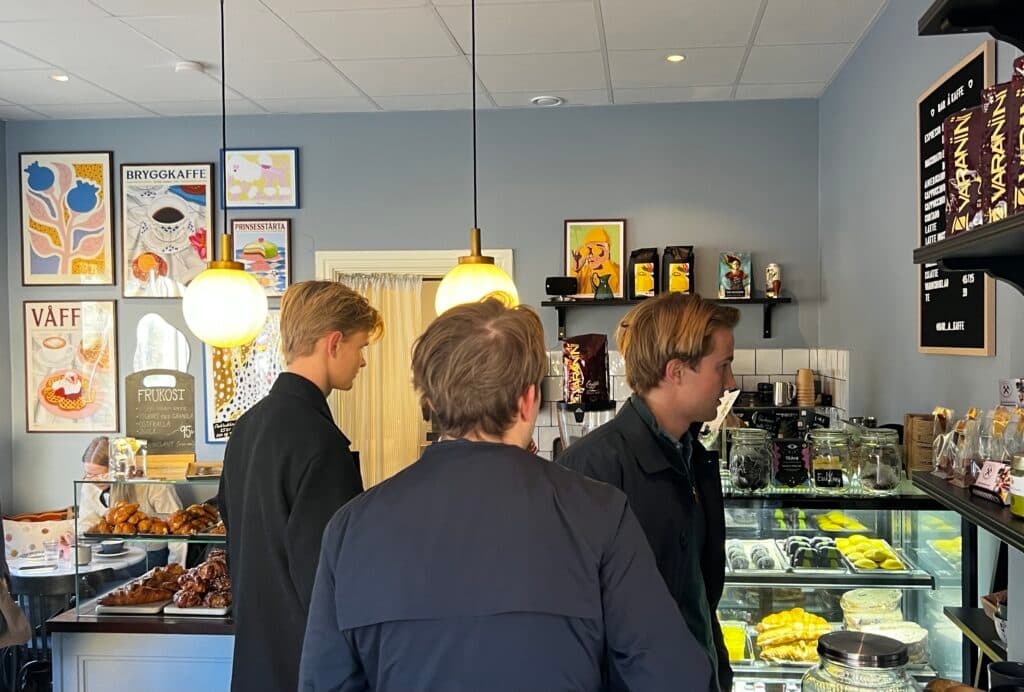
Sweet and savory baked goods await customers at Bar á Kaffe in Gothenburg, Sweden, Nov. 15, 2025.
On a crisp Saturday morning on the outskirts of Gothenburg, Sweden, the local coffee shop Bar à Kaffe hummed with conversation and the hiss of a milk frother. To an outsider, this looked familiar: People gathered tableside over hot drinks and pastries on blue-white porcelain plates. But in Sweden, the ritual carries a deeper meaning.
It’s called “fika.”
While Sweden’s national dictionary defines fika as “coffee or tea with snacks” or, simply, a “coffee break,” this ritual is less about the caffeine and more about connection — with others, or even with oneself. Fika has been hailed as a remedy for everything from loneliness to stress, but the definition can be both precise and flexible.
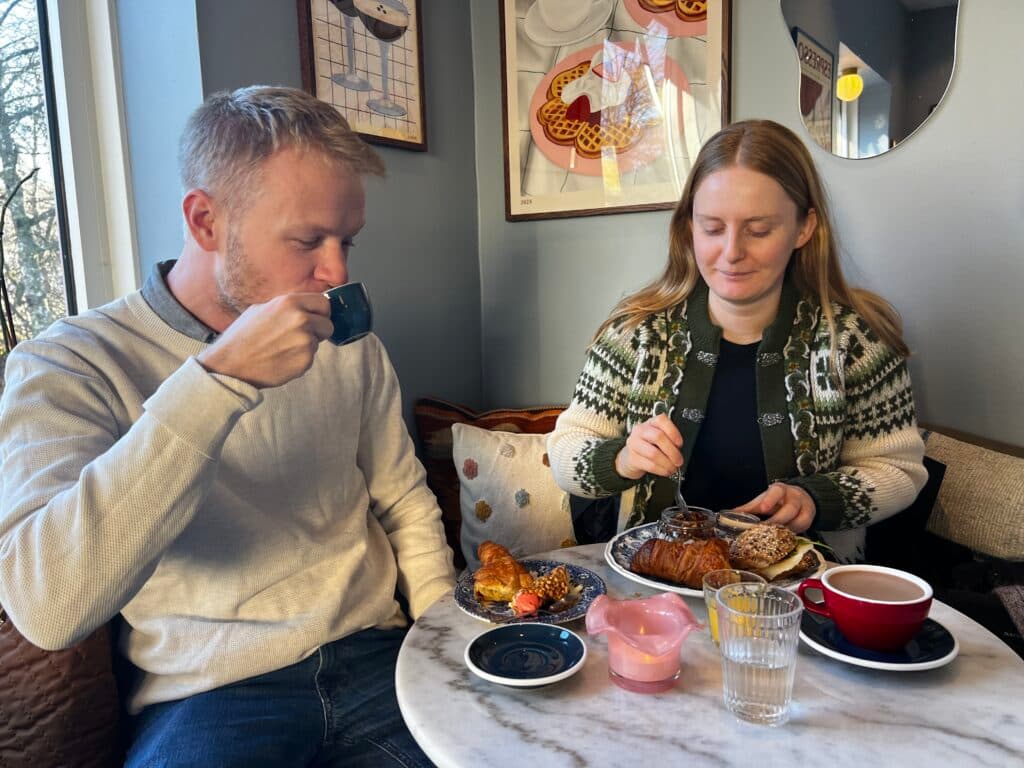
A couple seated in the corner debated the definition over their spread of pastries and breakfast items.
“I would say that [fika] takes place more in the afternoon,” Ebba Nilsson Lövehed said. It was almost 1:00 p.m., so the time was approaching in her view — but not quite.
“You could do a fika anytime, I would say,” her husband Viktor Brandt Johnson contended.
But, then again, Johnson was eating a cannoli — a very fika-esque option — while Lövehed ordered yogurt and muesli along with bread and cheese. “It’s maybe a little bit too much actually to be pure fika,” he surmised.
But he wanted a “professional” opinion on the matter.
“Would you say that we’ve crossed the line here for a regular fika?” he asked, turning to the woman behind the counter.
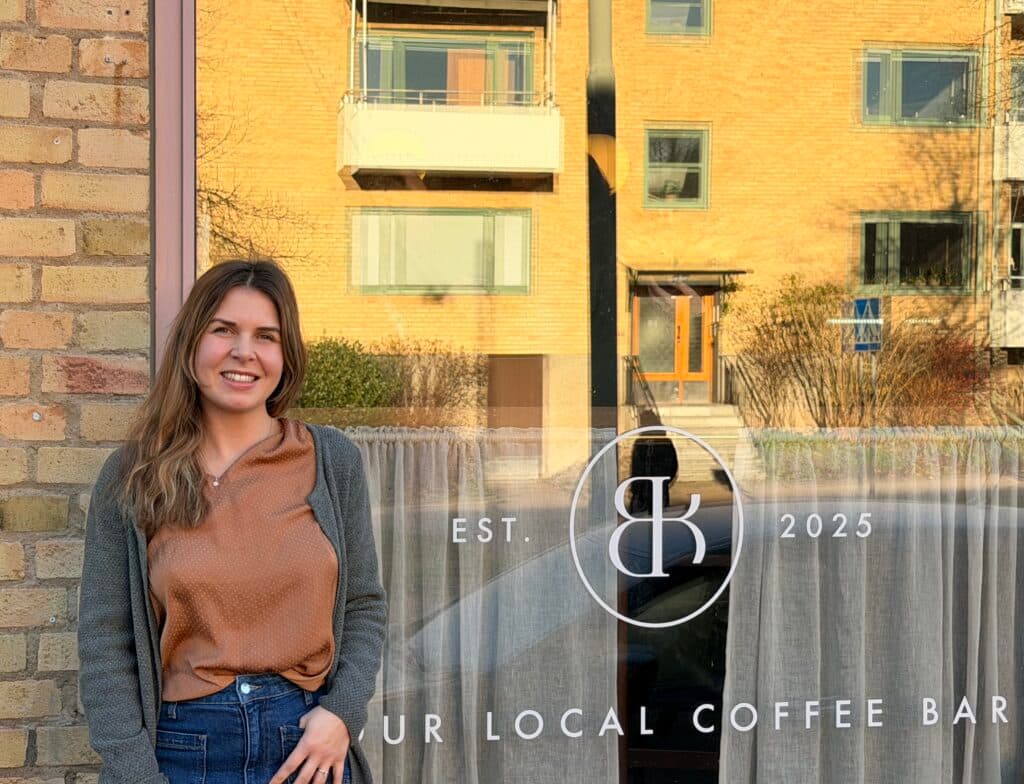
Elsa Henriksdotter, the owner of the coffee shop, approached their table and looked over their orders. “I would say you are doing the fika,” she said, pointing to the cannoli in front of Johnson. ”And you are doing a breakfast,” she added, pointing to Lövehed’s plate.
With years of experience as both a Swedish barista and Swedish investigative journalist, Henriksdotter has developed a keen sense of what fika is and what caffeination is for caffeination’s sake.
According to her, there are three key elements of a “pure fika”:
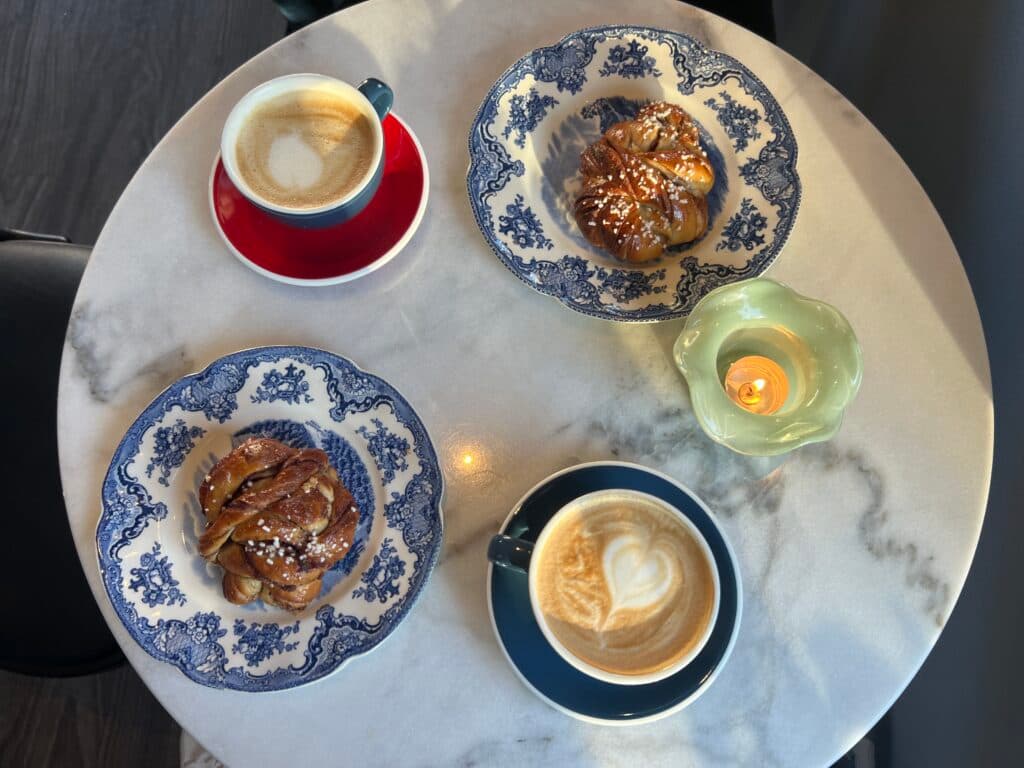
That pause is the essence of fika. Henriksdotter describes the practice as a cultural workaround — a way to prioritize connection in a society that doesn’t always encourage spontaneous interaction. It might mean catching up with a close friend, visiting a grandparent — or even taking half an hour alone to reflect, she explained.
“You can sit down and just think,” she said. “‘How is my life going?’ ‘What am I thinking about?’… You can just have time for yourself.”
Before opening her café in 2025, Henriksdotter spent years as a crime reporter for Sweden’s national public radio, covering the darker side of life in Gothenburg. For over a decade, the port city has been a center of Sweden’s gang warfare — with drug trafficking, shootings and bombings making regular headlines.
Henriksdotter reported on it all. Police operations, arrests and court cases became routine — but so did the emotional toll. Local cases involving young men pulled into gang networks and violent assaults were a normal part of her work. But there were also the more unusual stories that made international headlines, including a gruesome beheading in France, which weighed heavily on her.
“It was a lot,” she recalled. “You think about that all the time. It was hard to focus.”
Eventually, the accumulation of those experiences pushed her to step away — not permanently, but long enough to focus on her young family and passion for coffee.
“For me right now, it’s very nice to only focus on this,” she said. “You go out, and then you have the whole world. But here, you can take a step back.”
That idea of stepping back sits at the heart of Swedish coffee time. It’s not an escape from reality so much as a brief recalibration — a chance to slow down and reconnect.
For customers, fika might last just 30 minutes or more than an hour. For Henriksdotter, running the café means she’s more often the one facilitating other people’s coffee dates.
“You can see how important it is,” she said, glancing at the queue stretching toward the door.
Eventually, the cups emptied and chairs scraped back. People collected their things and stepped back into the street, returning to work, errands and the rest of life’s obligations.
When the afternoon rush is finally over, Henriksdotter can get back home to spend time with her own family.