Public radio’s longest-running daily global news program.
©2025 The World from PRX
PRX is a 501(c)(3) organization recognized by the IRS: #263347402.
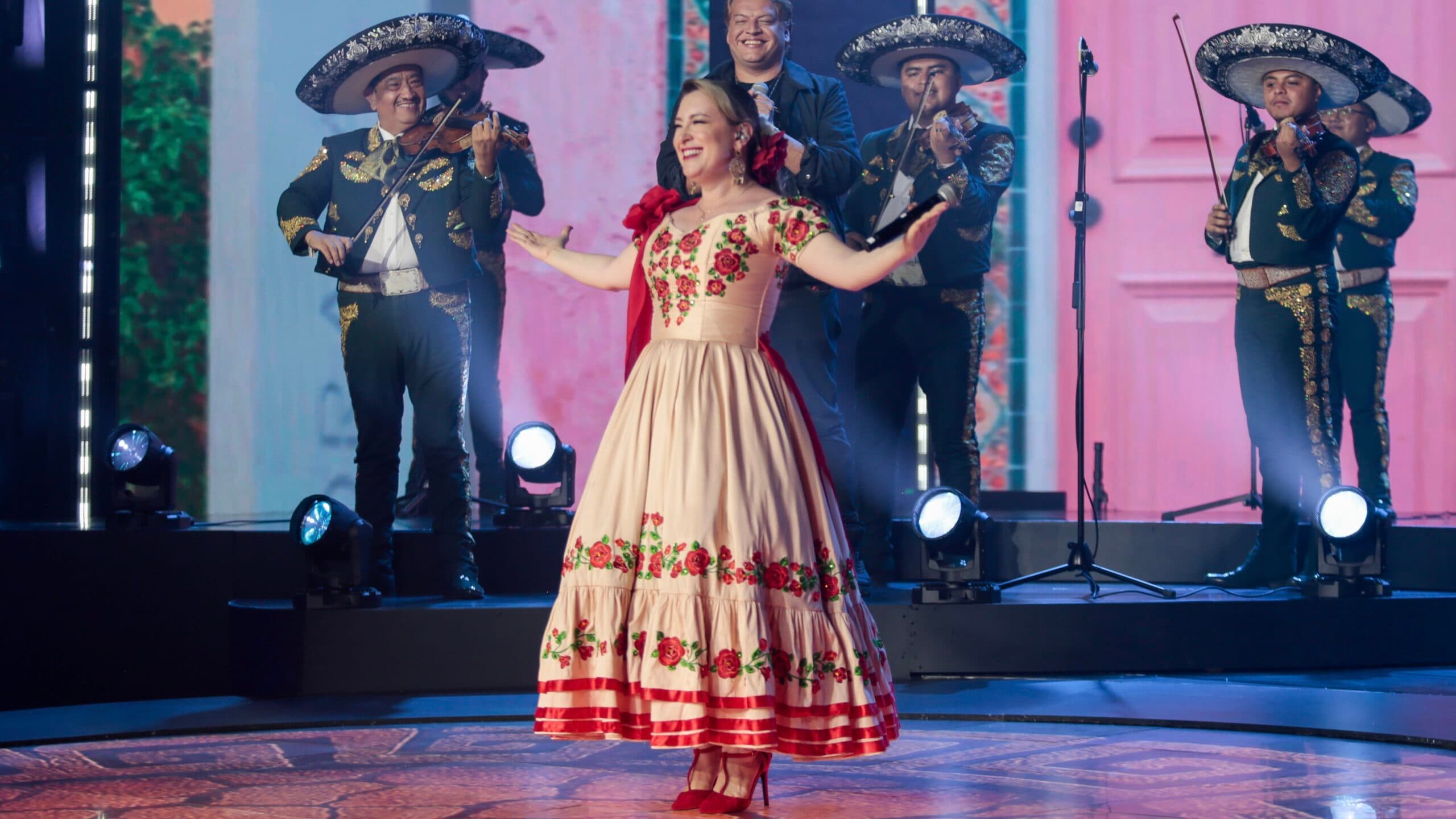
As part of a cultural push to counter the influence of narco-corridos, President Claudia Sheinbaum’s government is hosting a national songwriting contest aimed at lifting up non-violent musical expressions.
Carolina Imperial performs at the “Mexico Canta” semifinals.
Narco-corridos — ballads that glorify the lives of drug traffickers and cartels — are hugely popular in Mexico, but also controversial. The Mexican government is trying a different approach: a televised music contest called “México Canta por la paz y contra las adicciones” (“Mexico Sings for Peace and Against Addiction”), open to young musicians from Mexico and the US, with one big rule — no lyrics that glorify violence or drug trafficking.
The contest bears a strong resemblance to the US competition show “American Idol.” Young singers step onto a brightly lit stage, perform before a panel of judges and wait nervously for feedback.

A total of 365 performers from across Mexico and the US entered the competition when it launched over the summer, according to Manuel Trujillo, president of Mexico’s Music Council. Now only eight remain.
Singer and actress Regina Orozco, one of the judges, said the aim was to give young people “another perspective, another way to make a living — not by picking up a gun, but by choosing a much more powerful weapon: music.”
The contest is an effort by the Mexican government to counter the enormous popularity of narco-corridos, which rack up billions of streams online and have propelled artists like Peso Pluma to the top of global charts.
Alex Moreno, one of the contestants, performed a song he wrote called the “Anti-corrido.” In a video, he said he’s deeply concerned that narco-corridos have become so widespread that even children are now listening to them, and added that he wants to do his part to push back. The lyrics go: “We don’t want to sing anymore about your poisoned war.”
Several Mexican states have banned narco-corridos’ performances on stage or radio. The Trump administration has also taken action — revoking visas for one band that recently projected an image of a cartel boss on stage and sanctioning a rapper accused of cartel ties.
But censorship often backfires, said Juan Carlos Ramírez-Pimienta, a professor at San Diego State University who studies narco-corridos. “The government has censored narco-corridos since the 1990s, and all they have done is make them more popular,” he said. He added that violent imagery also came from video games, movies, and television — not only songs.
José Manuel Valenzuela Arce, a researcher of the corrido genre at El Colegio de la Frontera Norte, explained that corridos have long been central to Mexican identity.
“The corrido has been the main narrative device of the Mexican people,” he said. “For a largely illiterate population at the end of the 19th century, it became a way to tell their history through song.”
He added that narco-corridos grew directly out of that tradition, reflecting the more recent realities of drug trafficking.
“As long as these painful stories exist — stories that cut short the lives of thousands of young people — there will be corridos, songs, and cultural expressions based on those topics,” Valenzuela said.
Mexico’s President Claudia Sheinbaum took a similar stance, saying she preferred to promote a “culture of peace” rather than bans. Some artists were also trying to reshape the corrido tradition from within. Singer-songwriter Vivir Quintana, known for her feminist songs, said she was not in favor of censorship but of “listening to what people have to say, whatever it is — and creating new narratives within the genre.”

Skeptics warned that contests like “México Canta” can only go so far. Ramírez-Pimienta argued that as long as drug trafficking continued to shape daily life, narco-corridos would remain relevant: “In order to make narco-corridos less prevalent, you have to make the source of narco-corridos less prevalent.” He said if the government is really serious about diminishing the influence of songs that glorify drugs and violence, it should focus on cracking down on organized crime.
But for cultural promoter Isael Gutierrez, president of Music VIP Entertainment, the contest was still an important start.
“This is just the beginning, it’s about discovering and supporting new talents that can carry a new narrative,” he said.

The final round of “México Canta” is set for Oct. 5. The winner will receive a record deal with a major label, including the production of music videos.
With millions tuning in on public TV and radio, organizers hope the contest will help a new generation of performers share songs that reflect pride, identity, and peace — offering an alternative soundtrack to the violence that has long shaped Mexico’s most controversial musical tradition.
Jiroko Nakamuro contributed to this report