Public radio’s longest-running daily global news program.
©2025 The World from PRX
PRX is a 501(c)(3) organization recognized by the IRS: #263347402.
After more than a year of measures such as mask mandates and social distancing to prevent the spread of the coronavirus, communities around the world are adjusting to reopened workplaces and society. But ongoing concerns about the pandemic and challenges posed by variants have many people wary. The World’s Elana Gordon moderated a conversation with Harvard Chan School of Public Health’s Karestan Koenen, who explored mental health during this transition.
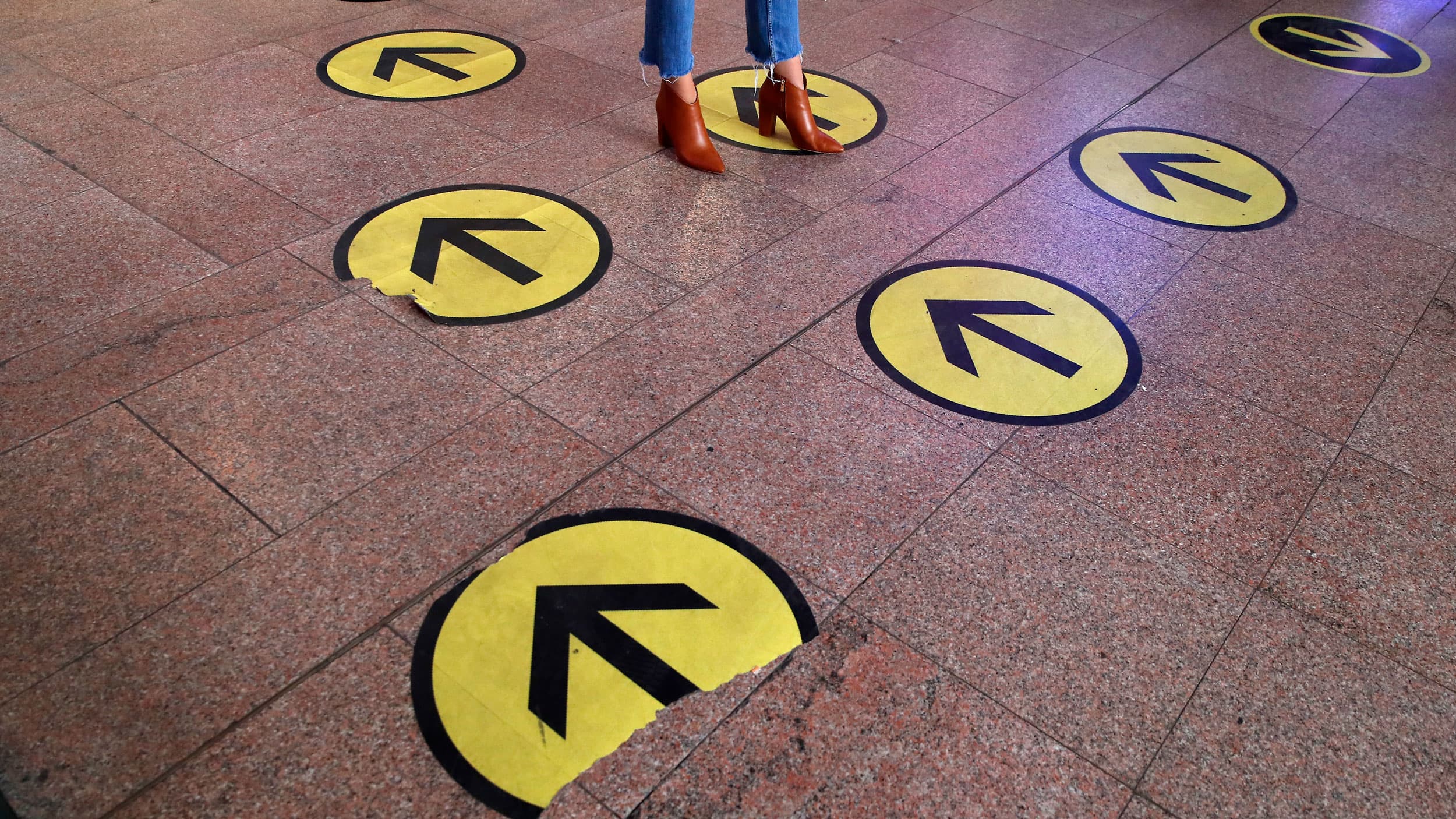
Stickers on the floor show arrows marking the direction to walk it at the Cadorna railway station in Milan, Italy, April 26, 2021. Italy is gradually reopening after six months of rotating virus lockdowns.
The coronavirus has radically changed society and the way we work. Now it’s changing physical spaces, too.
With the rollout of coronavirus vaccination campaigns, several countries having begun the easing of lockdown restrictions. As restrictions lift, many companies around the world are making adjustments to their offices to help employees feel safer as they return to in-person work, like improving air circulation systems or moving desks further apart. Others are ditching desks and building more conference rooms to accommodate employees who still work remotely but come in for meetings.
After more than a year of measures such as mask mandates and social distancing, communities around the world are adjusting to a reopening society. But with ongoing concerns about the pandemic’s spread, variants and disparate vaccine acceptance rates, the future for many may still be uncertain and the coronavirus pandemic continues to cast a long shadow on our mental health.
As part of The World’s conversation series on the pandemic with Harvard T.H. Chan School of Public health, reporter Elana Gordon moderated a discussion with Karestan Koenen, professor of psychiatric epidemiology, who explored well-being and mental health during this transition.
This conversation is presented jointly with the Forum at Harvard T.H. Chan School of Public Health.
The AP contributed to this post.