Public radio’s longest-running daily global news program.
©2025 The World from PRX
PRX is a 501(c)(3) organization recognized by the IRS: #263347402.
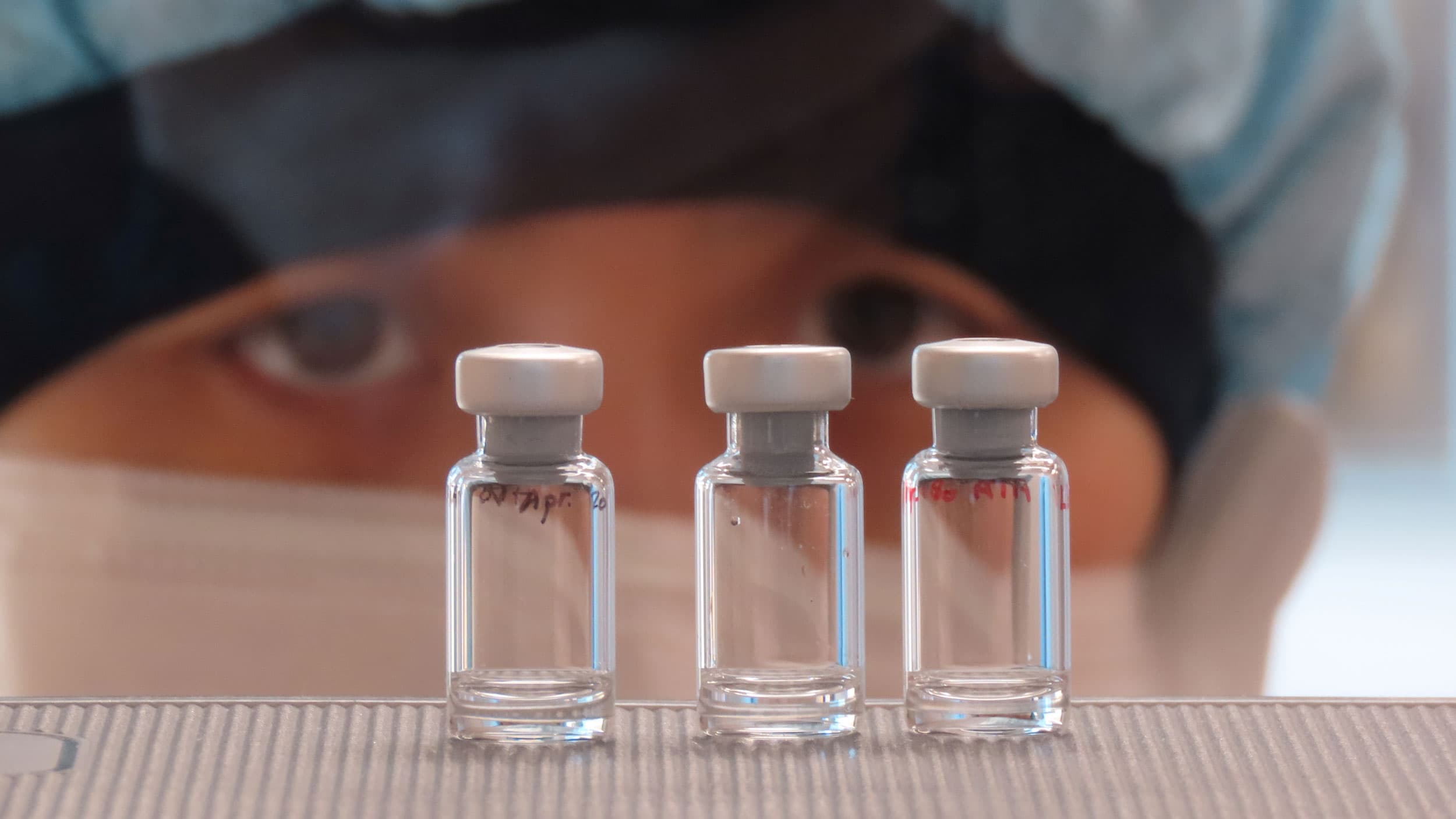
To help curb the coronavirus pandemic, the world will need widely available treatments and vaccines. As part of our weekly series taking your question to the experts, The World’s Jonathan Dyer moderated a discussion with Dr. Barry Bloom, former dean of the Harvard T.H. Chan School of Public Health.
A scientist checks vaccine vials at the Clinical Biomanufacturing Facility (CBF) in Oxford, Britain. Researchers at the CBF are working on a vaccine candidate against COVID-19, April 2, 2020.
World leaders and organizations came together virtually this week and pledged $8 billion to research, manufacture and distribute a possible vaccine and treatments for the new coronavirus.
The funding pledge comes as the number of people infected with COVID-19 worldwide was more than 3.7 million with over 258,000 killed, according to a Reuters tally.
Health authorities are working to turn the page on the fractious and haphazard initial global response to the coronavirus crisis. Many leaders stressed that any treatment or vaccine must be available to everyone. Canadian Prime Minister Justin Trudeau said it should not just be for rich countries.
“We can’t just have the wealthiest countries, the most successful scientific countries, have this success and not share it with the world, because we will not be safer until we’re able to share it with the world,” he said.
Related discussion: Mental health, stress and resiliency during the coronavirus pandemic
As part of our weekly series taking your questions to the experts, The World’s Jonathan Dyer moderated a discussion with Dr. Barry Bloom, the Joan L. and Julius H. Jacobson Research Professor of Public Health and former dean of the Harvard T.H. Chan School of Public Health, who addressed the current thinking about possible COVID-19 treatments.