Public radio’s longest-running daily global news program.
©2025 The World from PRX
PRX is a 501(c)(3) organization recognized by the IRS: #263347402.
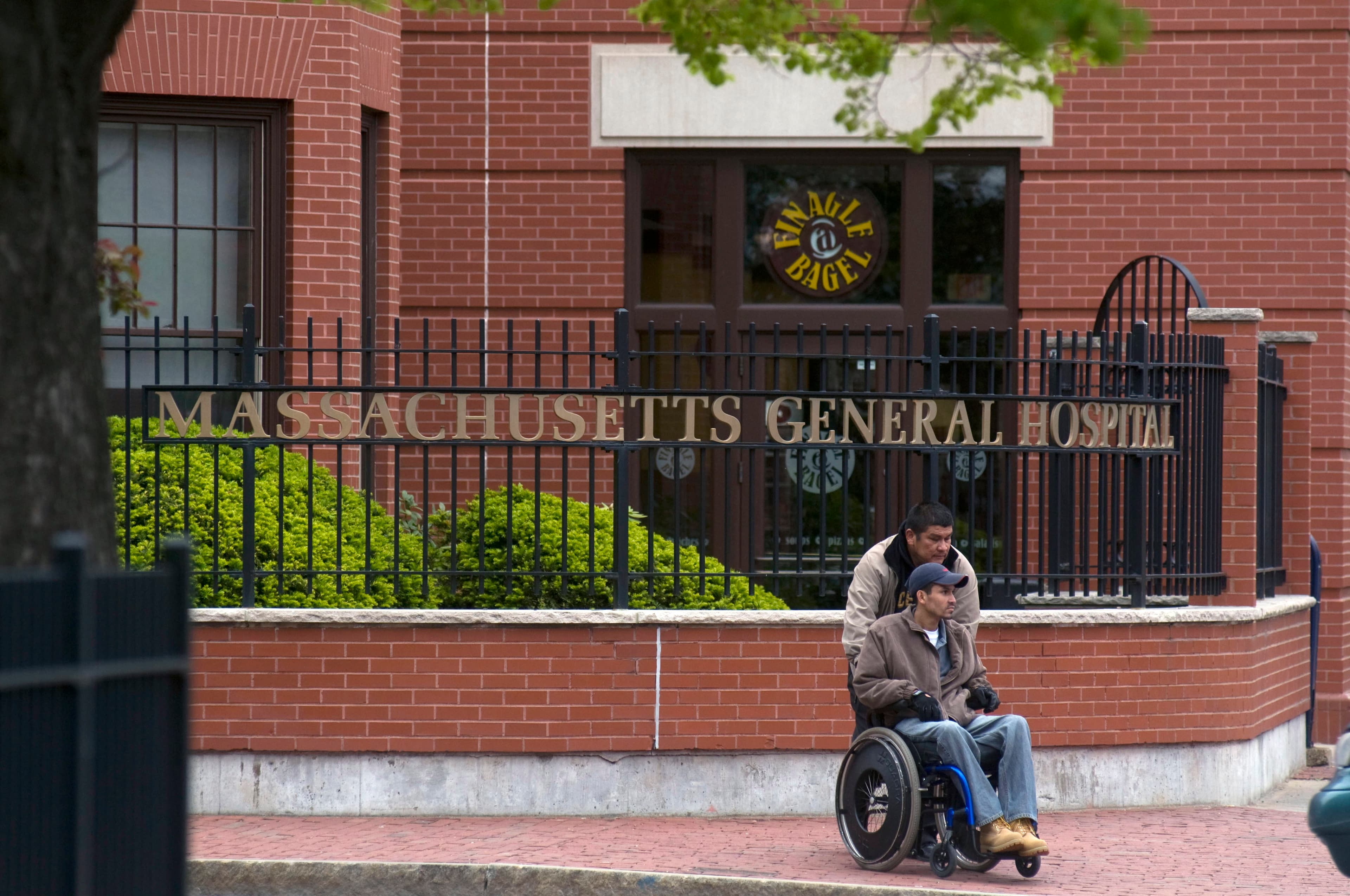
Only one out of seven errors, accidents and other events that harm Medicare patients while they are hospitalized are reported, according to federal investigators.
A man is pushed in a wheelchair outside Massachusetts General Hospital.
Only one out of seven errors, accidents and other events that harm Medicare patients while they are hospitalized are reported, according to federal investigators.
And while hospitals paid by Medicare are required to “track medical errors and adverse patient events, analyze their causes” and improve care, in fact they rarely changed their practices to prevent repetition of the "adverse events," according to a report, cited by The New York Times.
Also, organizations that inspected and accredited hospitals generally did not "scrutinize” how hospitals keep track of medical errors and other adverse events, said the report from Daniel R. Levinson, inspector general of the Department of Health and Human Services, issued Friday.
“Despite the existence of incident reporting systems,” Levinson said, “hospital staff did not report most events that harmed Medicare beneficiaries.”
Even the most serious of problems, which caused patients to die, went unreported, Fox News reported, citing the study.
According to the report, investigators identified 302 events of preventable harm to patients, 128 of which were considered serious — including a death from septic shock.
Other adverse events included severe bedsores, hospital-acquired infections, delirium from too many painkillers and excessive bleeding due to improper use of blood thinners.
Only one of 17 catheter-related infections — a common event in Medicare beneficiaries — was reported.
Levinson’s report said hospital administrators acknowledged that their employees were not reporting these adverse events.
The inspector general estimated that more than 130,000 Medicare beneficiaries experienced one or more adverse events in hospitals in a single month.
The Times points to a landmark 1999 report on patient safety from the National Academy of Sciences that suggested hospital employees were often afraid to admit mistakes.
However, that no longer appeared to be the main obstacle to reporting, Levinson said — more often, the problem was that hospital employees do not know "what constitutes patient harm” or do not realize that particular events harmed patients and should be reported.
They assumed someone else would report the episode, that it was so common it did not need to be reported, or “that the events were isolated incidents unlikely to recur.”
Medicare officials have said they would develop a list of "reportable events" for their employees, and give employees “detailed, unambiguous instructions on the types of events that should be reported.”