Public radio’s longest-running daily global news program.
©2025 The World from PRX
PRX is a 501(c)(3) organization recognized by the IRS: #263347402.

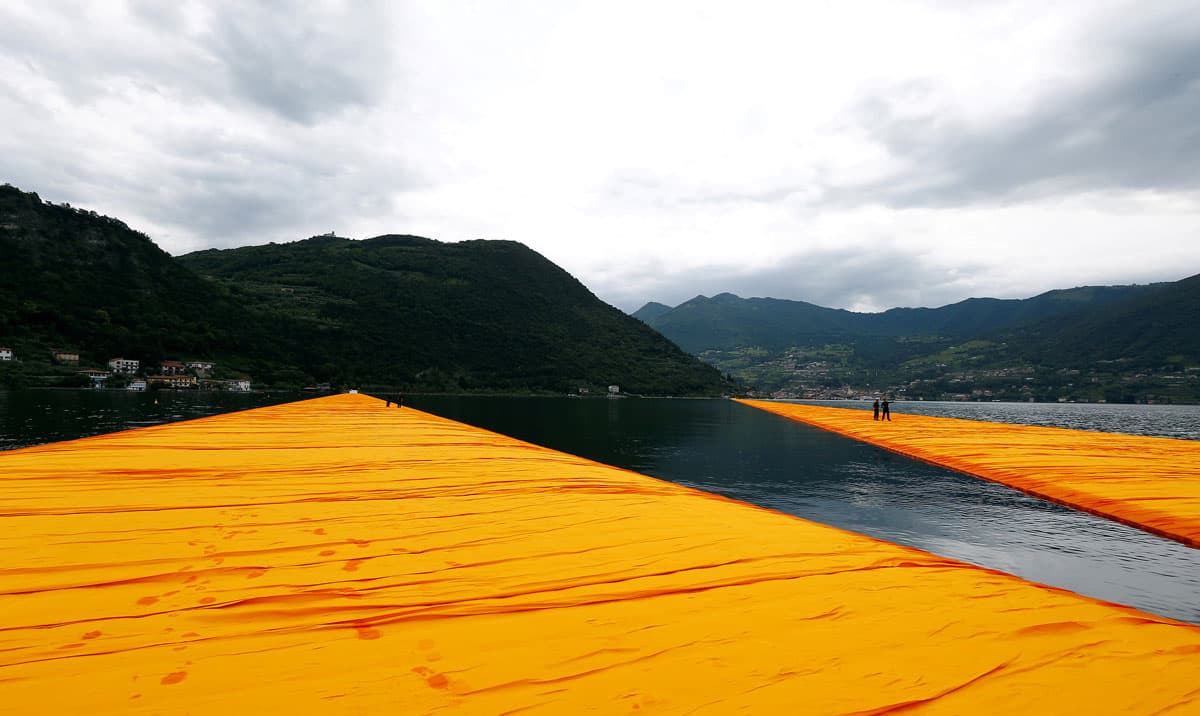
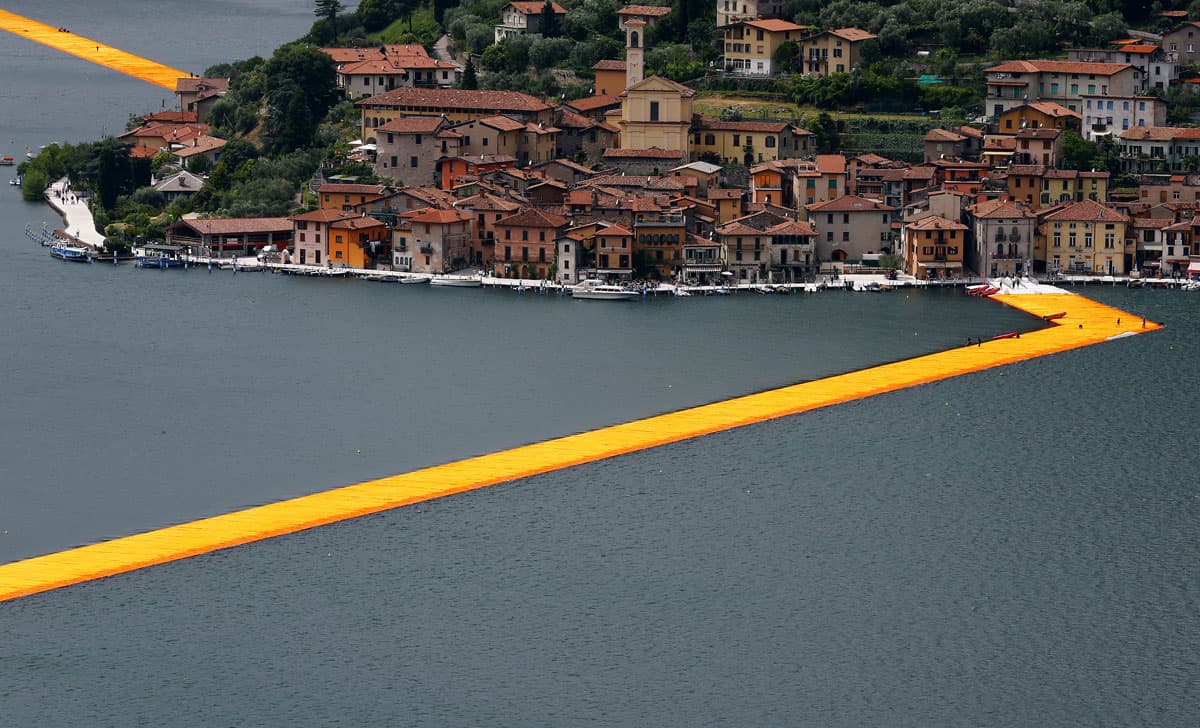
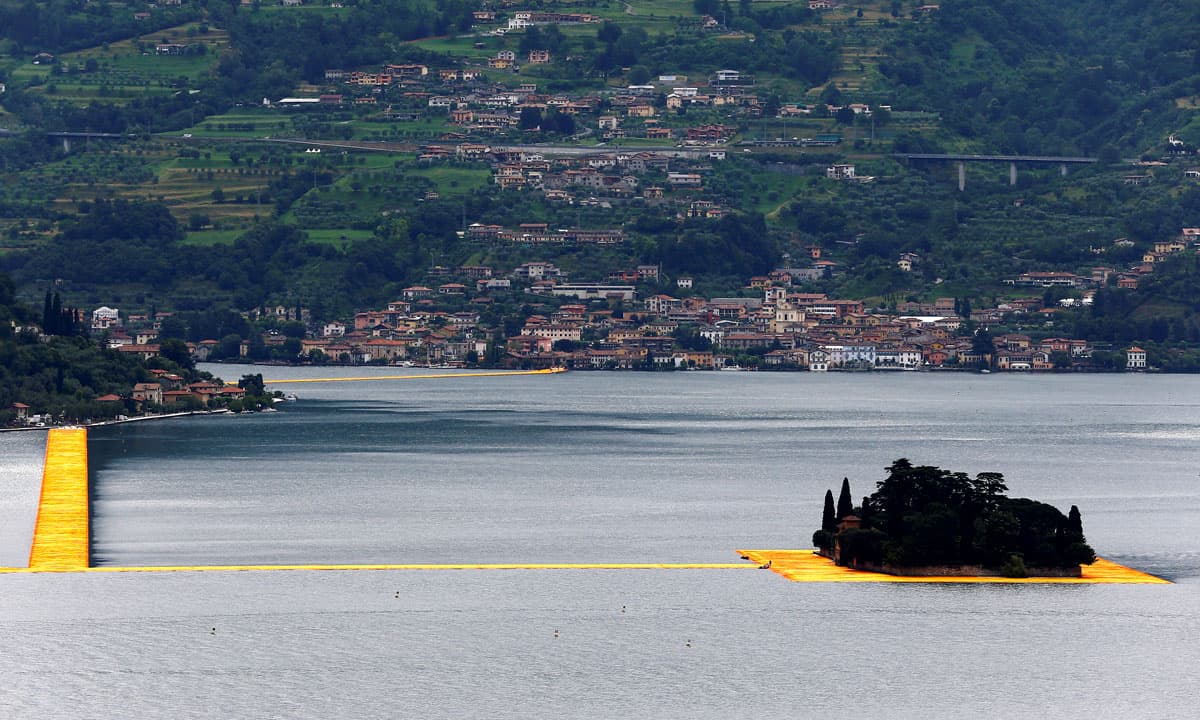
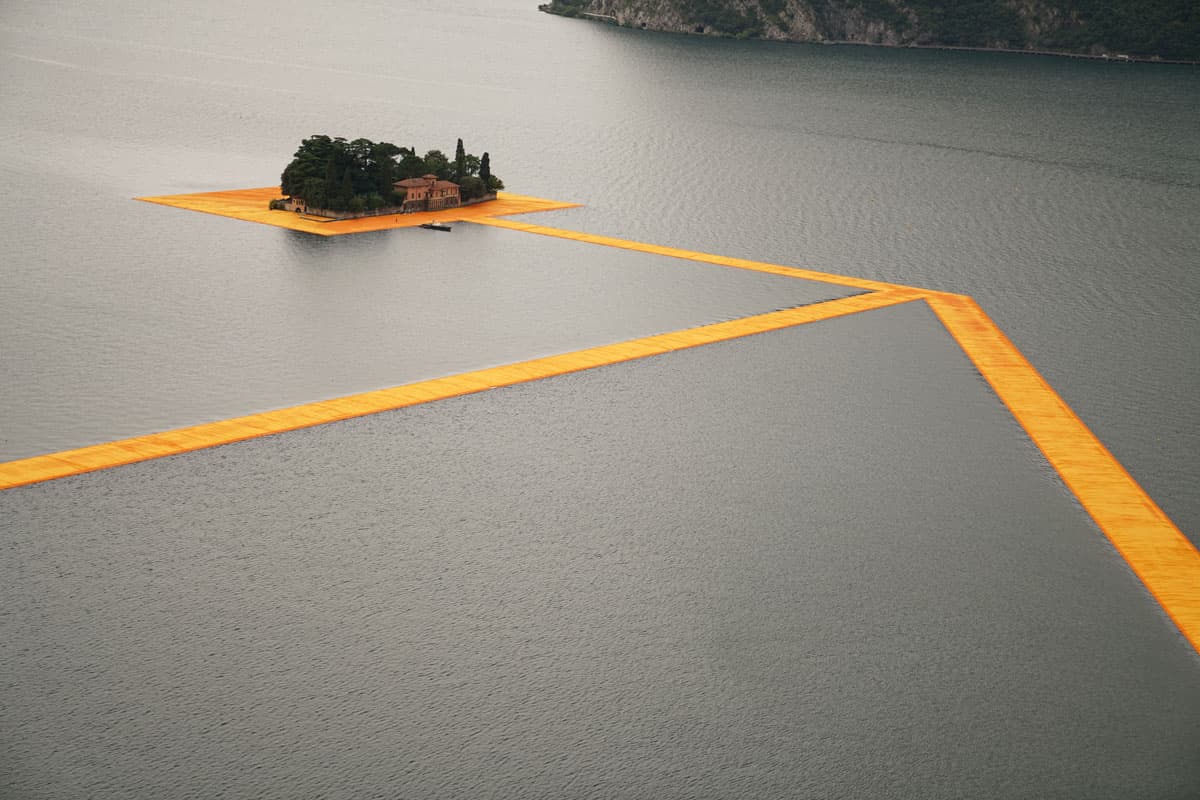
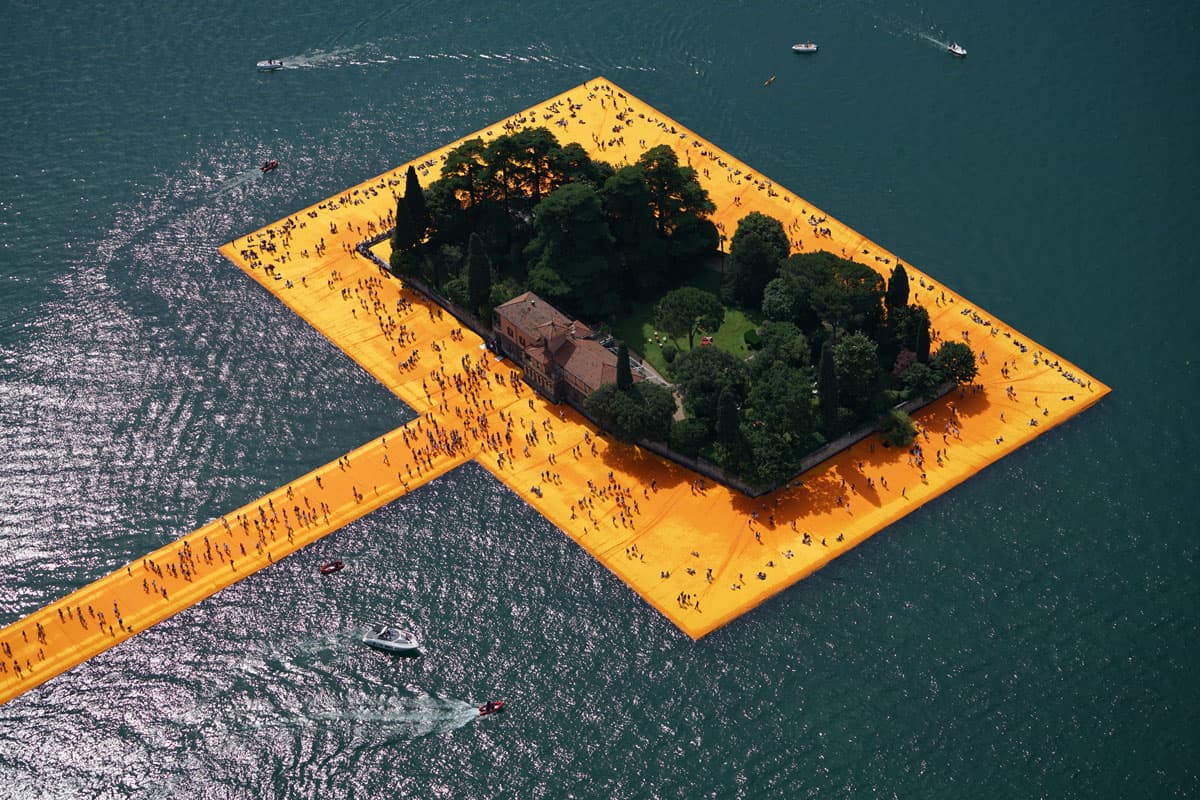
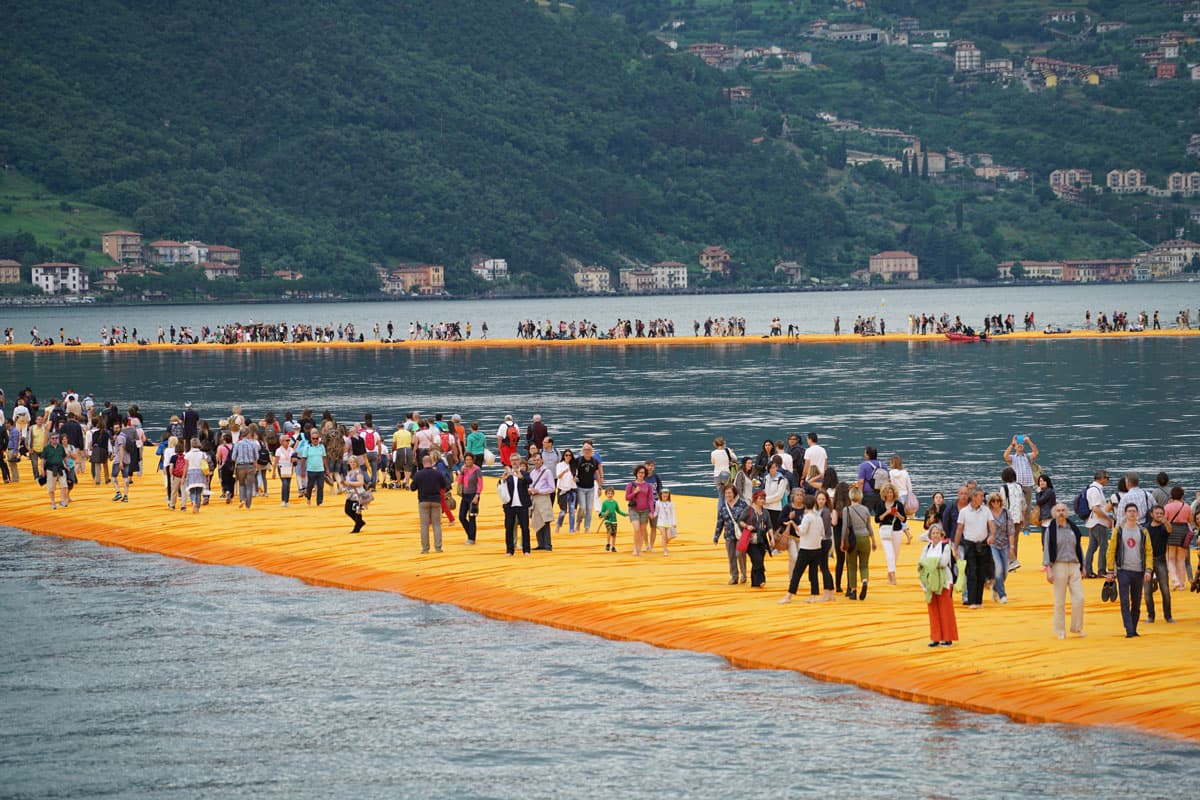
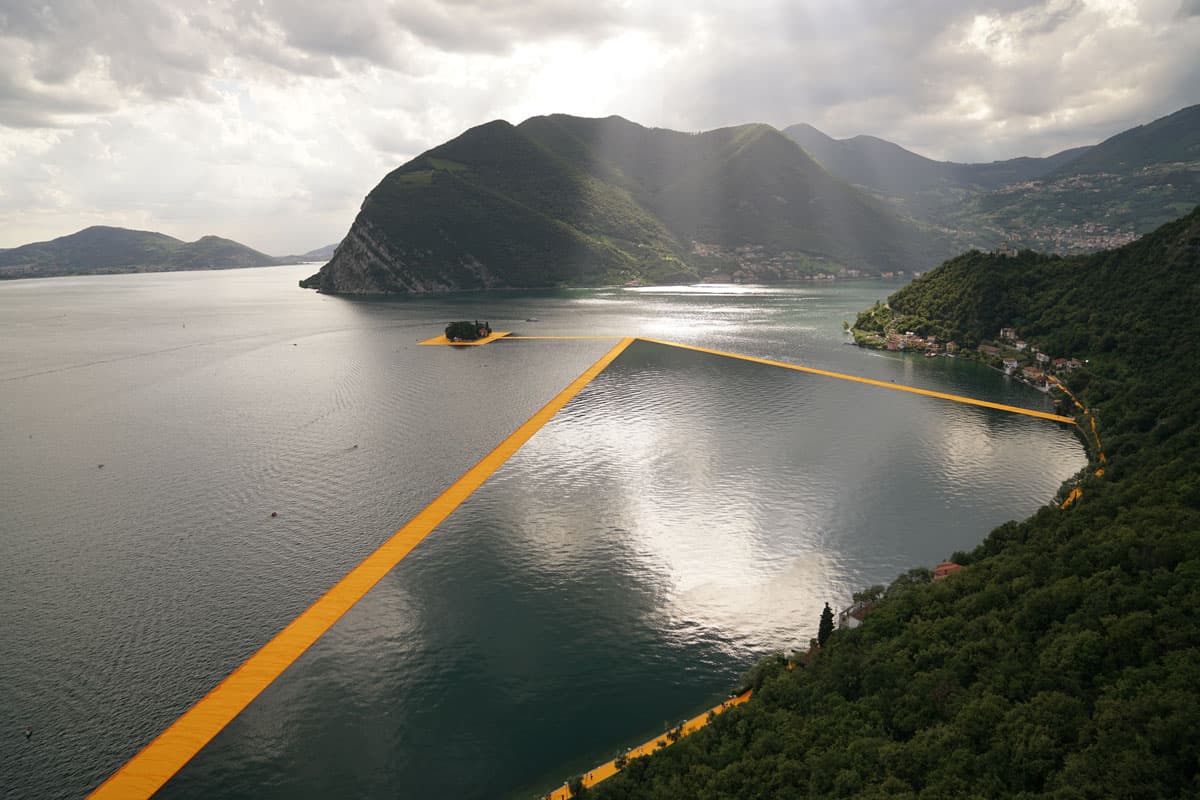
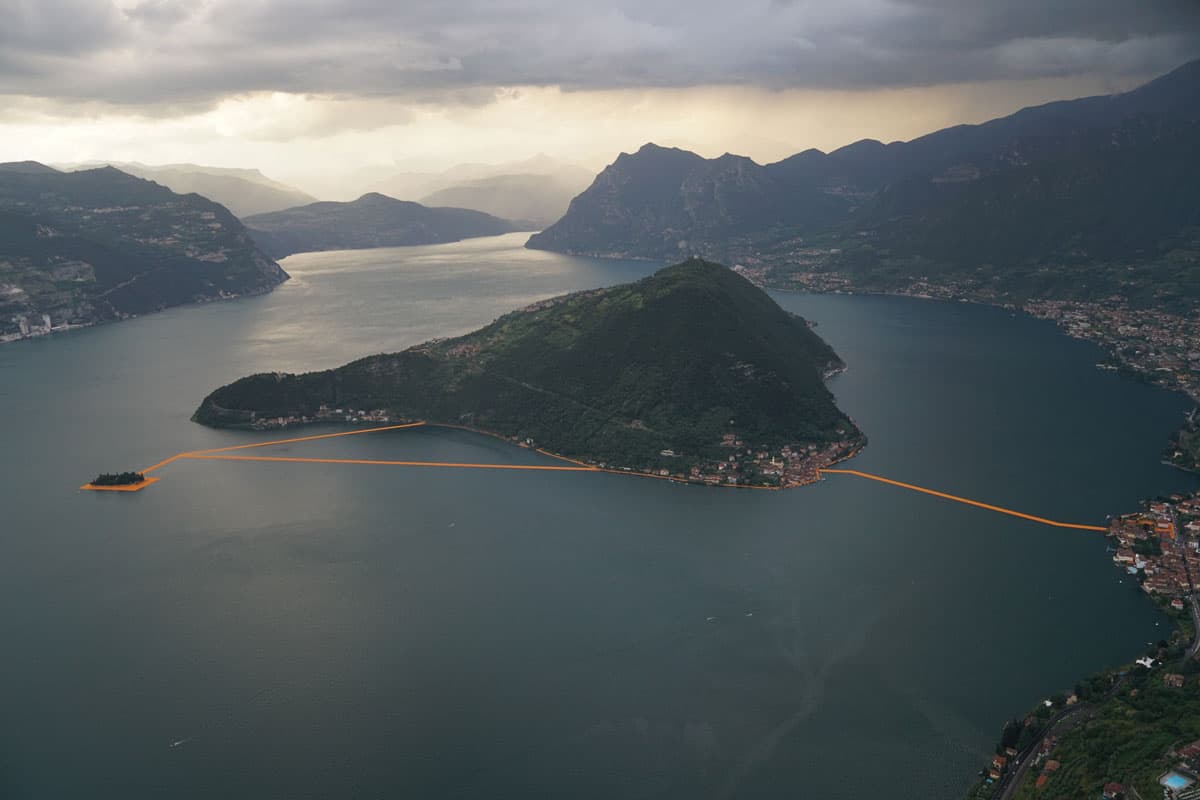
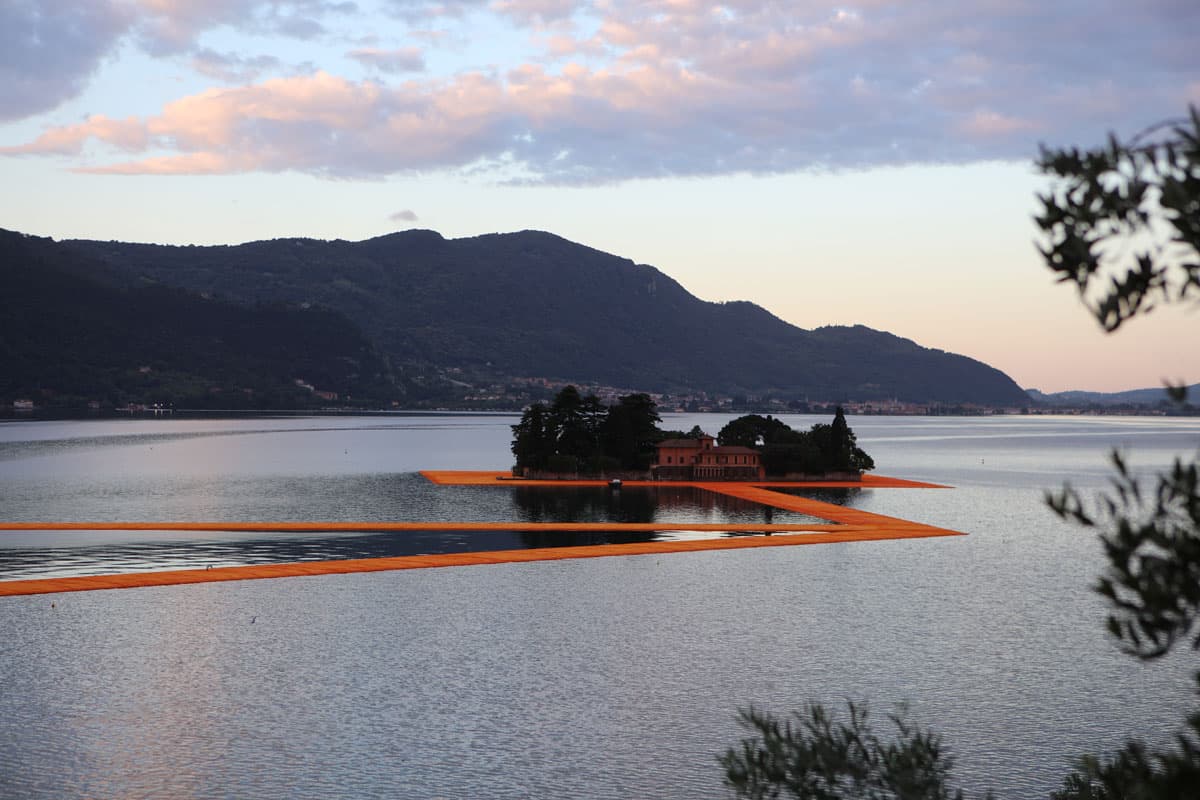
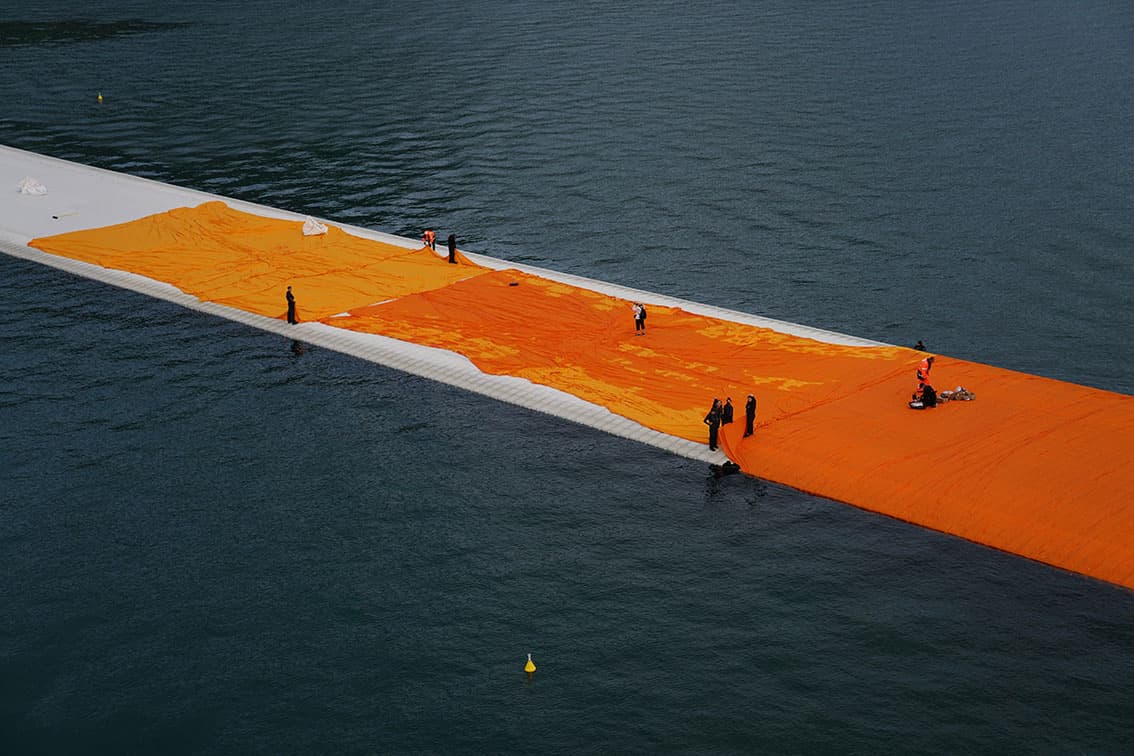
For this art installation, shoes are optional. During 16 days — through July 3 — visitors to Italy’s Lake Iseo will get to experience the latest artwork from Christo. “The Floating Piers” is comprised of nearly two miles of modular docks and more than 62 square miles of shimmering dahlia-yellow fabric.
A woman walks on the installation "The Floating Piers" by Bulgarian-born artist Christo Vladimirov Yavachev known as Christo, on Lake Iseo, northern Italy.
You don't need a ticket to experience "The Floating Piers," you just need good weather and a little sense of adventure.
The latest project from Christo, an 81-year-old Bulgarian-born American artist, includes 220,000 high-density polyethylene cubes that juts out into Italy’s Lake Iseo for nearly two miles.
The modular docking system, covered by more that 62 square miles of padding and fabric, is like walking on a "lightly rocking boat without feeling wary about suddenly toppling over should a strong wave arrive," as Elisabetta Povoledo writes for the New York Times.
According to Povoledo, shoes are optional.
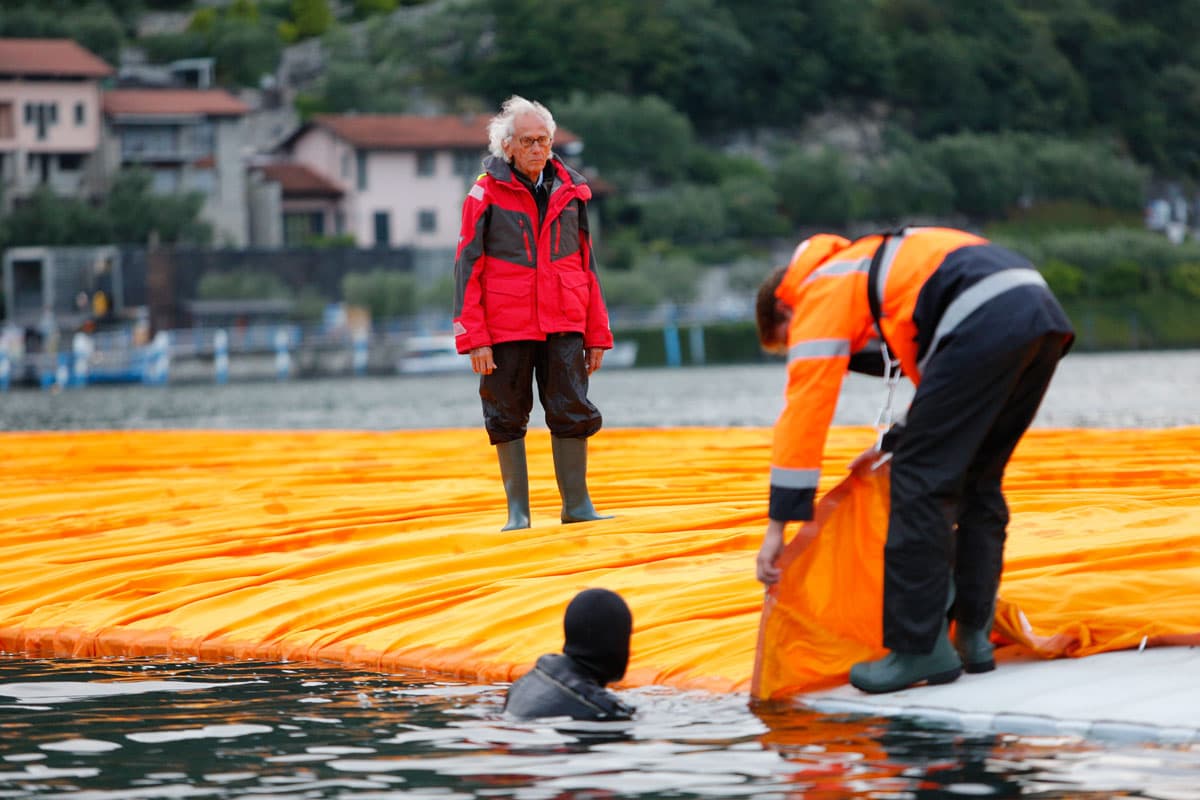
Christo conceived of "The Floating Piers" along with his wife Jeanne-Claude, in 1970. Jeanne-Claude passed away in 2009, but their artistic vision now shimmers golden in Italy. The pair last captured the public's imagination when they installed 7,500 saffron-paneled gates in New York City's Central Park in 2005.
Visitors to "The Floating Piers" will be able to walk out to the small island of San Paolo. The golden path also extends through the pedestrian walkways in the towns of Sulzano, on the mainland, and Peschiera Maraglio, on Monte Isola, an islet in the lake. Since opening on June 18, the installation has been so popular that officials are now closing "The Floating Piers" from midnight to 6 a.m. for cleaning and repairs.
“Those who experience 'The Floating Piers' will feel like they are walking on water — or perhaps the back of a whale,” said Christo. “The light and water will transform the bright yellow fabric to shades of red and gold throughout the 16 days.”