PRX is a 501(c)(3) organization recognized by the IRS: #263347402.
How conflict in northern Cameroon is impacting education for girls
For years, the north of Cameroon has been dealing with both separatist and militant insurgencies. The violence has displaced hundreds of thousands of people, and the UN reports it has impacted the education of some 250,000 children. The International Rescue Committee has warned that girls are especially impacted as “hidden victims” of the conflict. The World’s Host Carolyn Beeler learns more from Antoinette Chibi, IRC’s country director for Cameroon and the Central African Republic.
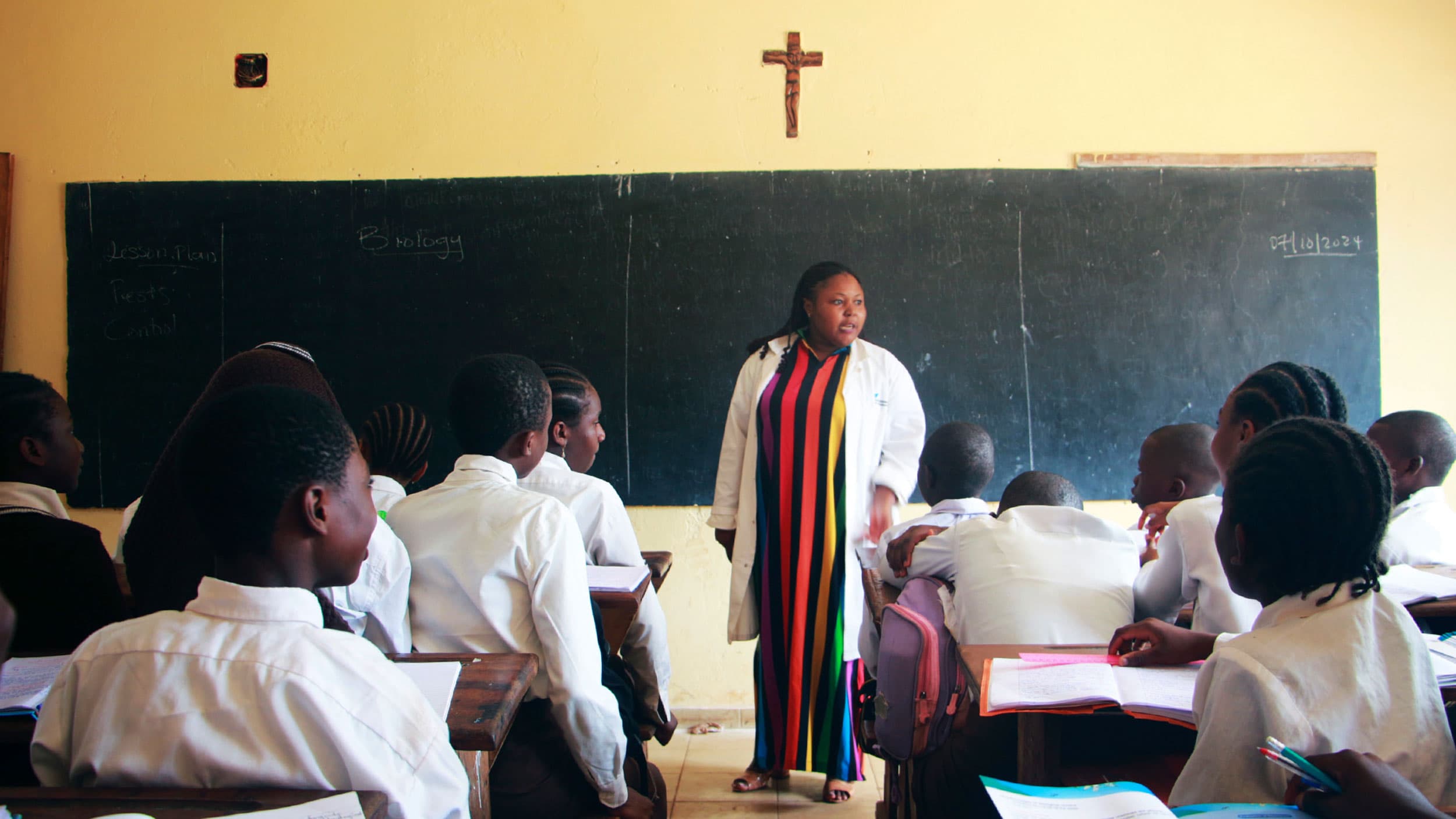
Students listen to the teacher in the Holy Infant high school, in Yaounde, Cameron, Oct. 7, 2024.
Angel Ngwe/AP/File photo
Cameroon, in West Africa, has two official languages, French and English, and identity is based on which language you speak. For nearly a decade, there’s been a fight for control of the country’s two English-speaking regions. The separatist violence has killed thousands of people and displaced hundreds of thousands more.
The UN reports it has disrupted the education of some 250,000 children. The International Rescue Committee (IRC) has warned that girls are especially impacted and are listed as hidden victims of the conflict. Antoinette Chibi, who leads the IRC’s teams in Cameroon and the Central African Republic, discussed the situation with The World’s Host Carolyn Beeler.
“We’re facing a sociopolitical crisis that is rooted in the history and identity of people living in this region. So, this conflict is often called the Anglophone Crisis,” Chibi said.
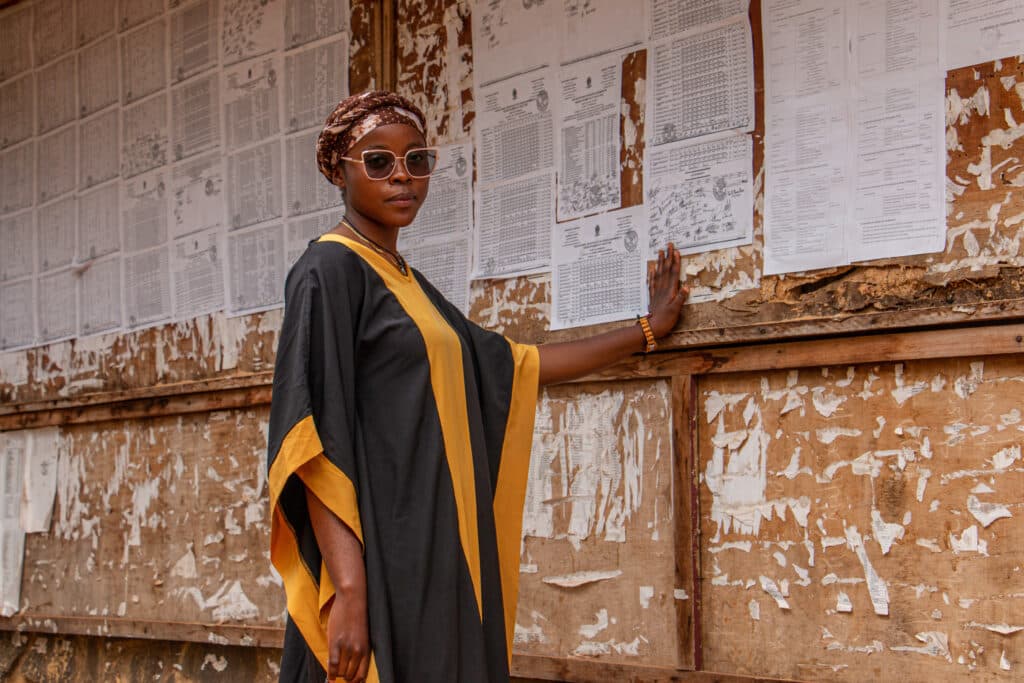
Tankeu Patie Merveille, 24, a student, poses on the campus of the University of Yaoundé I, Cameroon, Sept. 12, 2025.Welba Yamo Pascal/AP/File photo
Carolyn Beeler: So, there are separatists fighting for control against the government for the two Anglophone regions in majority French-speaking Cameroon?
Antoinette Chibi: That’s correct.
And then there’s a separate conflict in a different region called the Far North Region, and that is spurred by militant groups, including Boko Haram, correct? So, two separate conflicts here?
Yes. The conflict in the Far North is driven by the spillover of the Lake Chad Basin crisis, where non-state armed groups stormed into Cameroon. So, it’s the Islamic State in West Africa Province (ISWAP) and Boko Haram.
And so, you are in the capital of one of the English-speaking regions, and you just returned from a conflict area outside of the capital. What were conditions like there? Was there active fighting, or were people displaced from previous fighting?
We went to visit one of our communities of internally displaced people. So, people there are perpetual wanderers. So, they flee into the bush or forest when fighting breaks out, and they live there for a couple of weeks, and then they return to find their homes looted or burned, or they have to uproot themselves and their families to other communities. And that’s where we were in Tingoh.
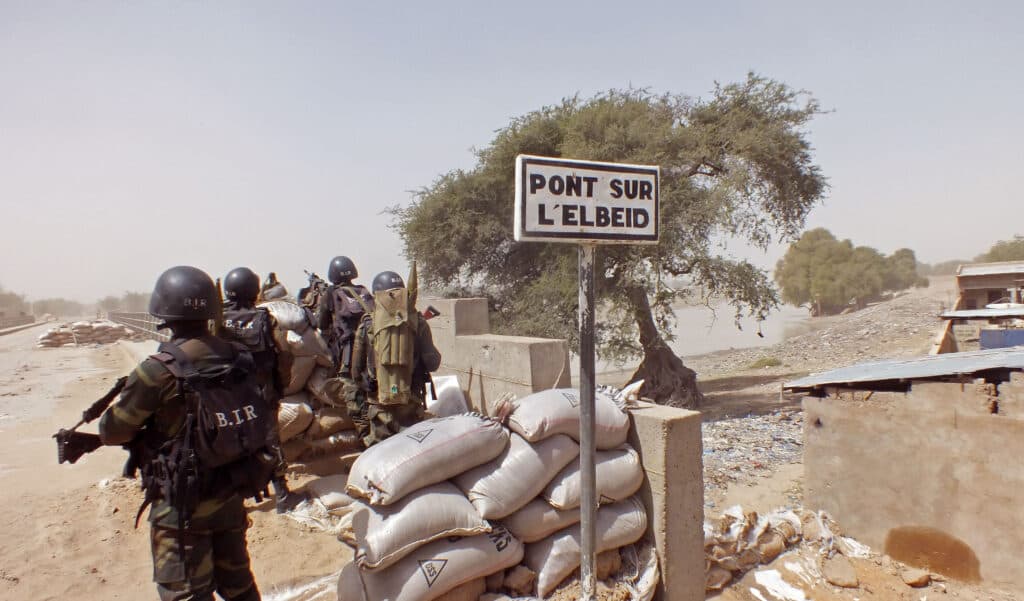
In this file photo, Cameroon soldiers stand guard at a lookout post as they take part in operations against the extremists group Boko Haram, their guard post on Elbeid bridge, which separates northern Cameroon form Nigeria’s Borno state near the village of Fotokol, Cameroon, Feb. 25, 2015.Edwin Kindzeka Moki/AP/FIle photo
So, are there options for people to flee outside of these regions, or are they all displaced internally within these two areas where there’s a lot of fighting?
It depends. You have families that will actually uproot themselves out of the region entirely. You’ll find a lot in suburban areas in Yaoundé, Douala, and Bafoussam, in the western and central regions of Cameroon. And others are displaced within the same regions, but in other subdivisions.
Your organization says that more than 4,000 schools are not operating in conflict areas in Cameroon because of the conflict. What is happening to those kids who used to go to those schools?
I want to tell you about a 12-year-old girl I met recently in the Far North. Her name is Amina, and her story is similar to most girls, even in the Northwest and Southwest. So, two years ago, her school was attacked and burned, and today, instead of carrying a backpack and learning math and literacy at school, she spends her day carrying heavy water containers or searching for firewood to sell. So, every day Amina is not in school, she’s at a higher risk of being married off just so her family can have one less mouth to feed.
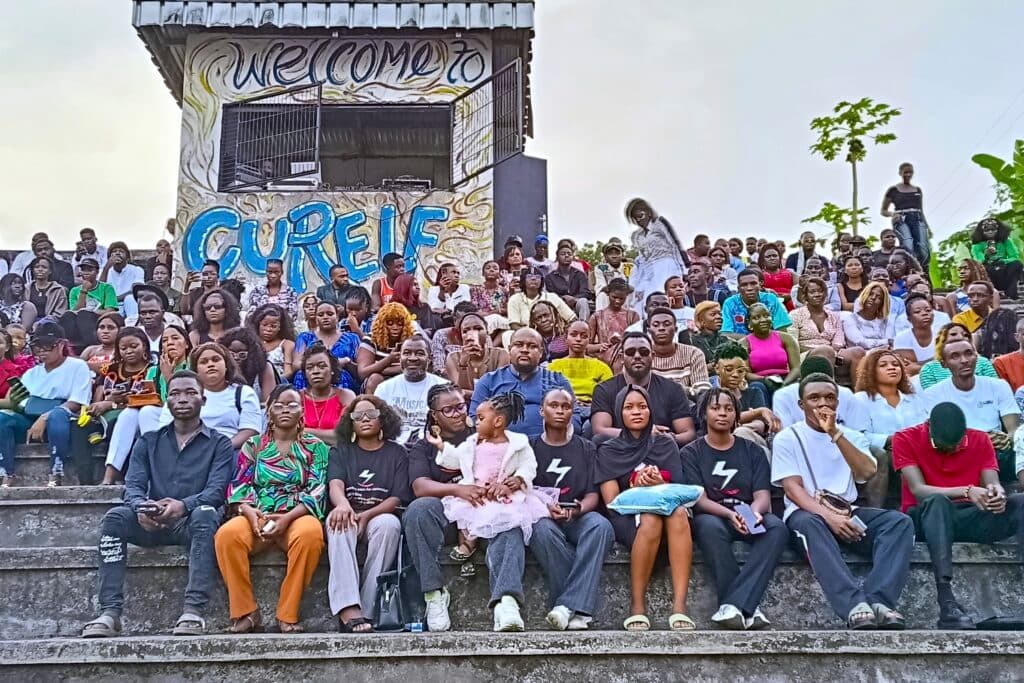
Spectators watch Boris Taleabong Alemnge recite a poem as artists using spoken-word poetry perform “Cries of War” in Buea, Cameroon, March 9, 2025.Nalova Akua/AP/File photo
Your work focuses especially on young girls because they are more vulnerable when they are out of school. Is arranged or early marriage the biggest vulnerability there that these girls face?
Those girls, and they’re not the only vulnerable people, you have households that are headed by children, but our program has a definite focus on girls because of the multisectoral vulnerabilities that they face. So, with our program, we are creating a safe space for them where they can receive psychosocial support, for example. You can’t learn to read, for example, if you are still processing the sound of gunfire.
What does school look like for these kids? I think you said there are accelerated programs, there are informal programs. So, does this look different than going to a schoolroom and getting a lesson from a teacher?
We try as much as possible to integrate these interventions within already existing settings. But as you know, 4,000 schools have closed in conflict areas in Cameroon. So, when there’s no school, we will create those temporary learning spaces where children can grow and learn. We also ensure that we are not just teaching them the ABCs. It’s also about social and emotional learning. So, we train teachers not just to teach them math, but to recognize the signs of trauma.
As you said, you can’t learn to read if you’re still processing the sound of gunfire.
Indeed.
As you mentioned, the conflict in Cameroon is not one of the conflicts that is topping headlines these days. What are you seeing in your visits of the day-to-day impacts of this instability in Cameroon that you think it’s important for us to know?
Well, right now, an IDP or a refugee, whether a girl, [boy, man, or woman] in the Far North or the Northwest of Cameroon, they’re facing what I call a triple threat. The first one is physical. So, a girl is at risk of being kidnapped when she’s going out to fetch water for her family. The other threat is economic. So, when families lose everything, then their daughters are often the first to be pulled out from school to help at home, or, heartbreakingly, to be married off to reduce the family’s financial burden. And then, the last one is the invisible one, the trauma. For example, in Tingoh yesterday and Abangoh the day prior, I saw girls who have forgotten how to play, girls who jump at the sound of a door slamming because it sounds like a gunshot. So, this is the price that those children pay day to day while the world is moving ahead.
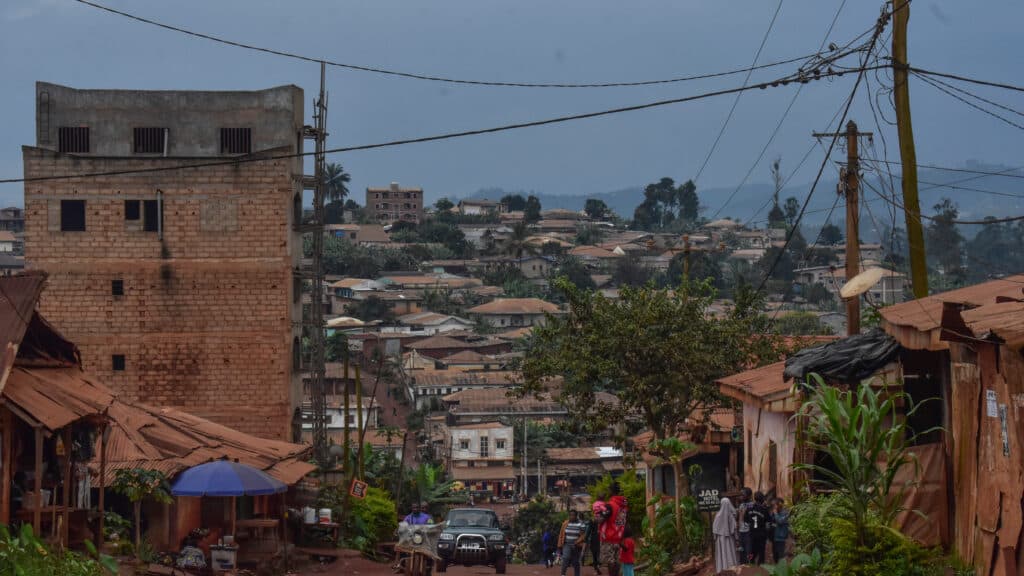
A view of a street where Ateasong Belts Tajoah teaches philosophy, helping to rebuild a community scarred by conflict, in Dschang, Cameroon, Dec. 1, 2024. Robert Bociaga/AP Photo
The invisible trauma, you said?
Correct. The international community has looked away.
Antoinette, where you’re based in the capital of the Northwest region in Cameroon, what is daily life like there right now? Is there fighting?
In the capital it’s peaceful. That’s where all the institutions are. And that’s why our team, our office in the capital, it’s just for coordination. The majority of our team is based in the conflict-affected regions of the Northwest, Southwest and Far North.
What are the challenges that you personally are facing in addressing the challenges of those across the country who have been displaced or affected by violence?
With the current environment, resources are scarce. So, reduction of funding is affecting our ability to do more. That’s why we are maximizing the resources that we currently have to ensure that we continue to reach our clients. That’s our mission. And also, what’s going on around the world, the reality of the conflict that is elsewhere, for example, in the Middle East, has increased the cost of living for most of our communities.
So, conflicts elsewhere are also impacting folks in the middle of these conflicts, driving up the cost of living in a way they can’t afford.
Indeed, the fuel shortage has driven up the cost of everything from the truck that delivers school supplies to the very food the children eat. We are seeing a massive spike in the cost of living that acts as a cost of learning tax, for example. Last month in the Far North, where families are already on the brink, this inflation was the final nudge for some of them to take their children out of school. And yeah, we definitely see that happening in our communities.
Parts of this interview have been lightly edited for length and clarity.