Public radio’s longest-running daily global news program.
©2025 The World from PRX
PRX is a 501(c)(3) organization recognized by the IRS: #263347402.
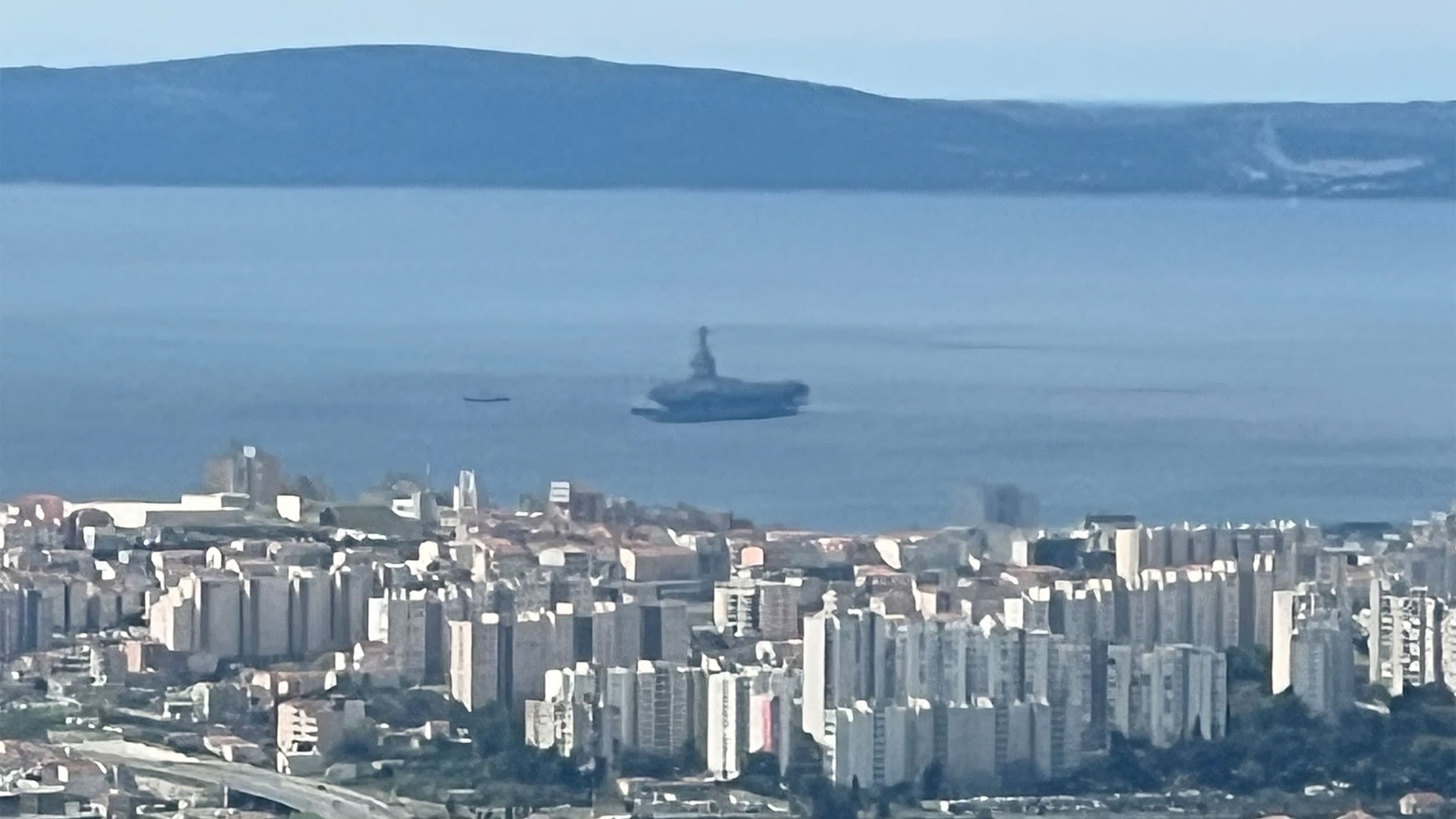
As the USS Gerald R. Ford gets repairs in Croatia, Houthi fighters have entered the war in the Middle East to support Iran, a month into the US-Israeli conflict.
View of USS Gerald R. Ford in the waters off Split, Croatia.
On Wednesday, the USS Gerald R. Ford aircraft carrier sat off the coast of Split, a historic Adriatic port city in Croatia. The gray carrier dwarfed the harbor’s typical white-hulled yachts, ferries and cruise ships.
With the ship in need of repairs, some of the 4,500 crewmembers could be found wandering the historic downtown, famed for its Roman ruins and Venetian architecture. Tourist season is weeks away, and the sailors have been a welcome boost for local businesses.
A headline in a local newspaper read: “Split under siege by ‘The Dollar Carriers’: Americans arrived eager for everything; on the first evening, boutiques ran out of bread and alcohol.”
But for some local residents, the American warship has been a visible reminder of what’s causing rising energy prices for them.
Out for a midday stroll with her mother and child along the waterfront promenade, Tea Jakasa said the carrier was an unwelcome sight.

“We’re a little bit scared because it comes from the area of the war,” the 30-year-old nurse said.
As the Ford arrived Saturday, the US-Israeli war with Iran widened.
With a barrage of missiles against Israel over the weekend, the Iran-backed Houthi forces in Yemen announced that they had entered the war.
“Unfortunate timing,” said Nick Childs, a senior fellow for naval forces and maritime security at the International Institute for Strategic Studies in London.
“[The warship had] been deployed into the Red [Sea] in order to be ready to respond to, but perhaps hopefully deter, the Houthis getting involved again,” Childs told The World during a call on Monday.
With the Houthis now directly engaged and American ground troops deploying to the Gulf, the absence of such a significant military asset could have operational implications, though US officials have not publicly detailed any immediate impact.

The USS Ford’s absence from the Red Sea may encourage the Houthis to carry out attacks on commercial vessels heading through the Bab el-Mandeb Strait, Childs added. About 40% of Europe’s oil transits through the strait, past territory held by the militant group.
“If you add into the mix the Houthis causing trouble again in the … southern Red Sea in the Bab el-Mandeb Strait … as they did between 2023, that will pull US and other forces in different directions and stretch those assets even further,” Childs added.
With a total of 11 carriers, the US Navy has more than any other nation, but the fleet is overstretched and “being run ragged,” according to Childs, with ships like the Ford operating well past their planned seven-month deployments — putting strain on both the vessels and crews. He cautioned that pulling the USS Abraham Lincoln out of the Indo-Pacific to support the war in the Middle East illustrates how the US global commitments are competing for too few carriers, complicating sustained operations worldwide.
A third carrier — the USS George H.W. Bush — is now on its way to the region.

Carriers have played a key role in the war, according to Bryan Clark, a naval expert at the Hudson Institute in Washington.
“[They] allow the military to have options for doing fighter bomber attacks against Iran from places that don’t require host nation approval or overflight permission,” Clark said during a call with The World on Sunday. “The US has had some problems in getting permission to operate out of some of our allies’ territories because of the unpopularity of the war, initially.”
That policy appears to be changing among Gulf allies as Iran has targeted major oil infrastructure and civilian areas in Saudi Arabia and other nearby countries.
Clark suggested the decision to keep the carrier near Croatia, rather than returning it to its home port in Norfolk, Virginia, indicates it may still play a role in upcoming operations.
The fact that it was now in for repairs in Split “suggests that they don’t intend to bring it home right away and that this may be all an effort to keep it in theater as an option to support … a ground operation, for example,” he said.
“They’re going to want fighter aircraft from the Ford to contribute to close air support and protection of troops on the ground.” About 2,500 US Marines have arrived in the region along with thousands of paratroopers.

While Tehran has warned of a US ground invasion, officials have denied that the deployment signals boots on the ground, instead describing the forces as offering “maximum optionality.”
What role the USS Gerald R. Ford might play as part of this “optionality” remains to be seen.
As of Wednesday morning, the USS Gerald R. Ford remains anchored off Croatia’s coast. The ship’s public affairs officer did not respond to requests for comment. In friendly waters and a safe distance from the fray, local shipyards in Split offer some much needed repairs, Clark said.
While in the Red Sea, sleeping quarters were reportedly damaged by a “laundry fire.” Some 200 crew members were reportedly treated for smoke inhalation, and over 100 bunks were damaged. Some reporting suggests that as many as 600 sailors were left bedless.
In addition to fire damage, the carrier has been plagued by a vacuum-based sewage system that requires frequent fixes. Since 2023, the system has undergone at least 10 acid washes. Each cleaning costs about $400,000, according to a 2020 Government Accountability Office report.
It’s a new system, he said — and not unlike those on cruise ships — the sort of vessels that typically arrive in Split.