Public radio’s longest-running daily global news program.
©2025 The World from PRX
PRX is a 501(c)(3) organization recognized by the IRS: #263347402.
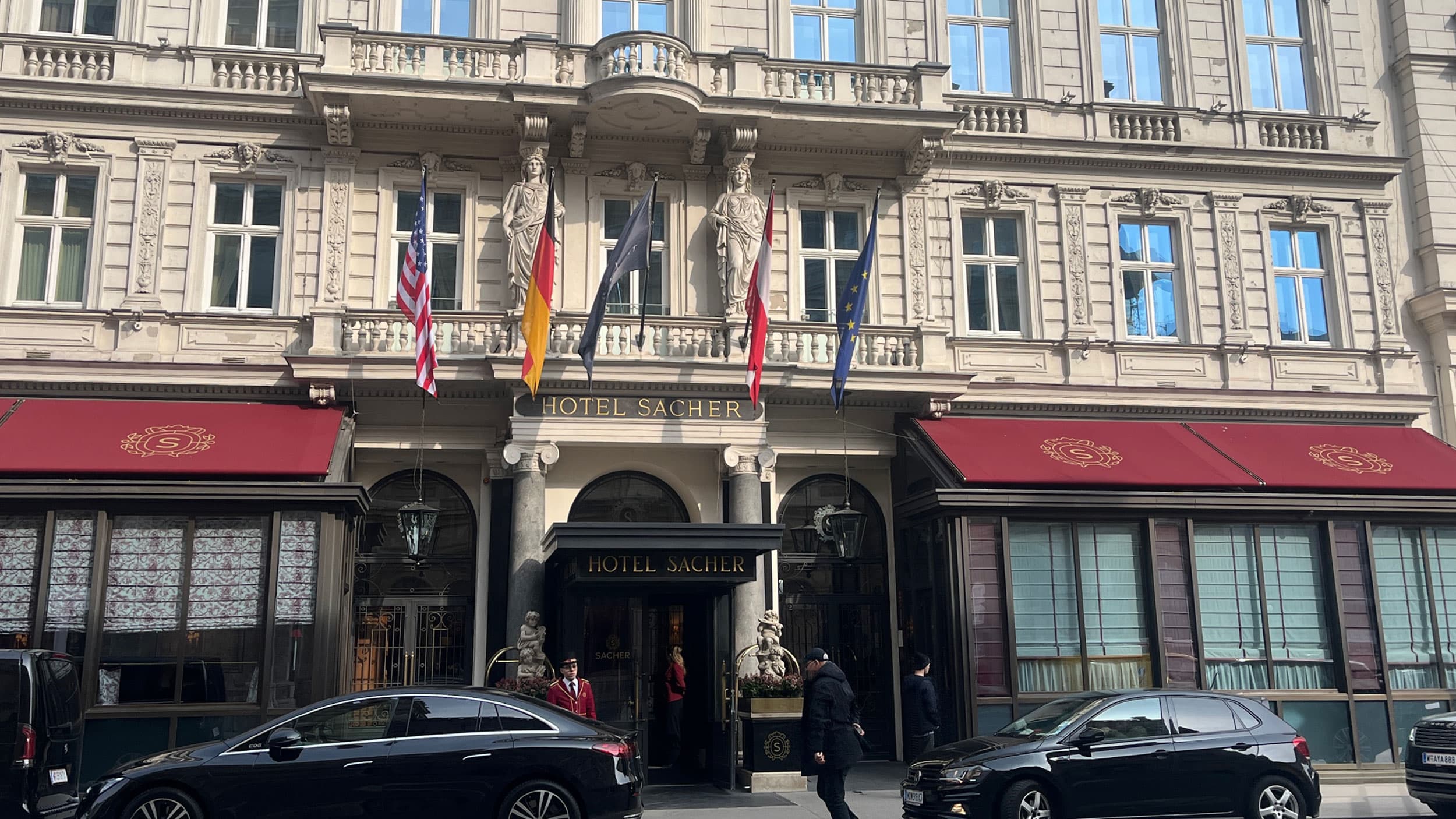
The largest spy trial in decades is currently underway in Austria. The case has drawn international attention to the country’s lax espionage laws and intensified calls for tougher legislation.
There are an estimated 7,000 spies operating in Vienna, which has given the Austrian capital the nickname, “The city of spies.”
“How many spies operate in Vienna today, do you think?” Jascha Novak, a tour guide, asked a group of vacationers on a spy-themed walking tour of the Austrian capital earlier this month.
“Fifty? One hundred?” a couple of British tourists ventured. Their guesses fell far short of the assumed figure. “The estimate is that there are 7,000 spies operating in Vienna,” Novak said, citing data compiled several years ago by Austria’s Intelligence and Security Studies Center. Novak, who runs Hidden Vienna tours, said the number is likely to be even higher today and has earned the Austrian capital the nickname, “The city of spies.”

Today, the high-profile trial of a former Austrian intelligence officer has revived debate about the country’s attitude toward state-sponsored espionage. For decades, Austria’s central location in Europe and its military neutrality have made Vienna a convenient hub for intelligence operatives.
During the Cold War, the city was a hot spot for both Eastern and Western spies, its cafés and hotels serving as meeting points for clandestine exchanges. Currently, Vienna hosts major international organizations, including the Organization for Security and Co-operation in Europe (OSCE), the International Atomic Energy Agency (IAEA) and a United Nations complex — all of which attract diplomats and, inevitably, spies.
In January, the trial of Egisto Ott, the former intelligence officer, opened in Vienna. Ott faces charges of abuse of authority, corruption and espionage against Austria, accusations he denies.
The case has drawn attention from across Europe.
Prosecutors allege that Ott handed over information, not only to Russian intelligence officers but also to Jan Marsalek, the fugitive executive of collapsed German payments firm Wirecard. Marsalek, who is Austrian, is believed to have fled to Moscow following Wirecard’s spectacular accounting fraud scandal in 2020.
Anna Thalhammer, editor-in-chief of the Austrian investigative magazine Profil, has been reporting on both Ott and Marsalek for several years. She said that her work has made her a target of disinformation and intimidation campaigns.
“They spread rumours that I was having affairs with investigators, that I’m political and that I’m bought by a political party,” she said.
In 2025, intelligence services informed Thalhammer that it appeared she was also being spied upon. “It emerged that I was being followed to my workplace and my home, and it continued for several months.”

Thalhammer is not the only journalist in Vienna who was under surveillance. Christo Grozev, the former lead Russia investigator with Bellingcat, who lived in the Austrian capital for almost two decades, was forced to flee the city in 2023 because of what authorities said was a credible threat against him from Russian security services.
Grozev has repeatedly embarrassed the Kremlin by uncovering clandestine operations, such as the 2018 poisoning of the Skripals in Salisbury and the 2020 poisoning of Russian opposition leader Alexei Navalny. In 2022, his apartment in Vienna was broken into while he was investigating Marsalek’s movements. Prosecutors allege that Ott provided Marsalek with Grozev’s address, facilitating the break-in.
As more details emerge in the trial, the Austrian government is under pressure to tighten its espionage laws. Espionage is explicitly banned in Austria only when directed against the state, but is largely unregulated when targeting other countries or international organizations.
“Austria decided to turn a blind eye to spying activities in this country,” said Martin Staudinger, deputy editor-in-chief of Falter magazine. “And as a result, spies are everywhere. If you work in journalism in Austria and if you cover security issues, you can’t avoid coming into contact with spies,” he said.
Part of the problem is political. Some Austrian political parties, notably the far-right Freedom Party, have leading members perceived as sympathetic to Russia, Staudinger explained. “We have no smoking gun, but usually when something walks like a duck and quacks like a duck, it’s a duck.”

Lawmakers with ties to the Kremlin have little interest in cracking down on espionage, he added. After the 2022 full-scale Russian invasion of Ukraine, most European countries expelled dozens of Russian diplomats, but Austria only expelled a handful.
Beyond traditional espionage, experts warn of the growing influence of so-called agents of influence. Dietmar Pichler, a disinformation analyst in Vienna, said these agents don’t take information; they bring hostile information and lobby on behalf of authoritarian regimes.
“We know, for instance, that there are cases of journalists and authors operating in Austria who are paid by the Kremlin or paid by Kremlin oligarchs.” Pichler claimed that some of these agents of influence appear on television panels in Austria, spouting pro-Kremlin propaganda. “They are invited for their so-called expertise, but nobody checks how close they are to certain regimes.”

Last year, Austrian Chancellor Christian Stocker, a member of the People’s Party (ÖVP), said he planned to strengthen domestic anti-espionage laws. So far, little has changed. In January, Austria’s Ministry of Justice said that an interministerial working group was examining a possible tightening of the espionage law.
Jascha Novak, the Vienna tour guide, who has been working since 2018, said he has heard that before, but added, “I don’t think I will have to change my spy tours anytime soon.”