Public radio’s longest-running daily global news program.
©2025 The World from PRX
PRX is a 501(c)(3) organization recognized by the IRS: #263347402.
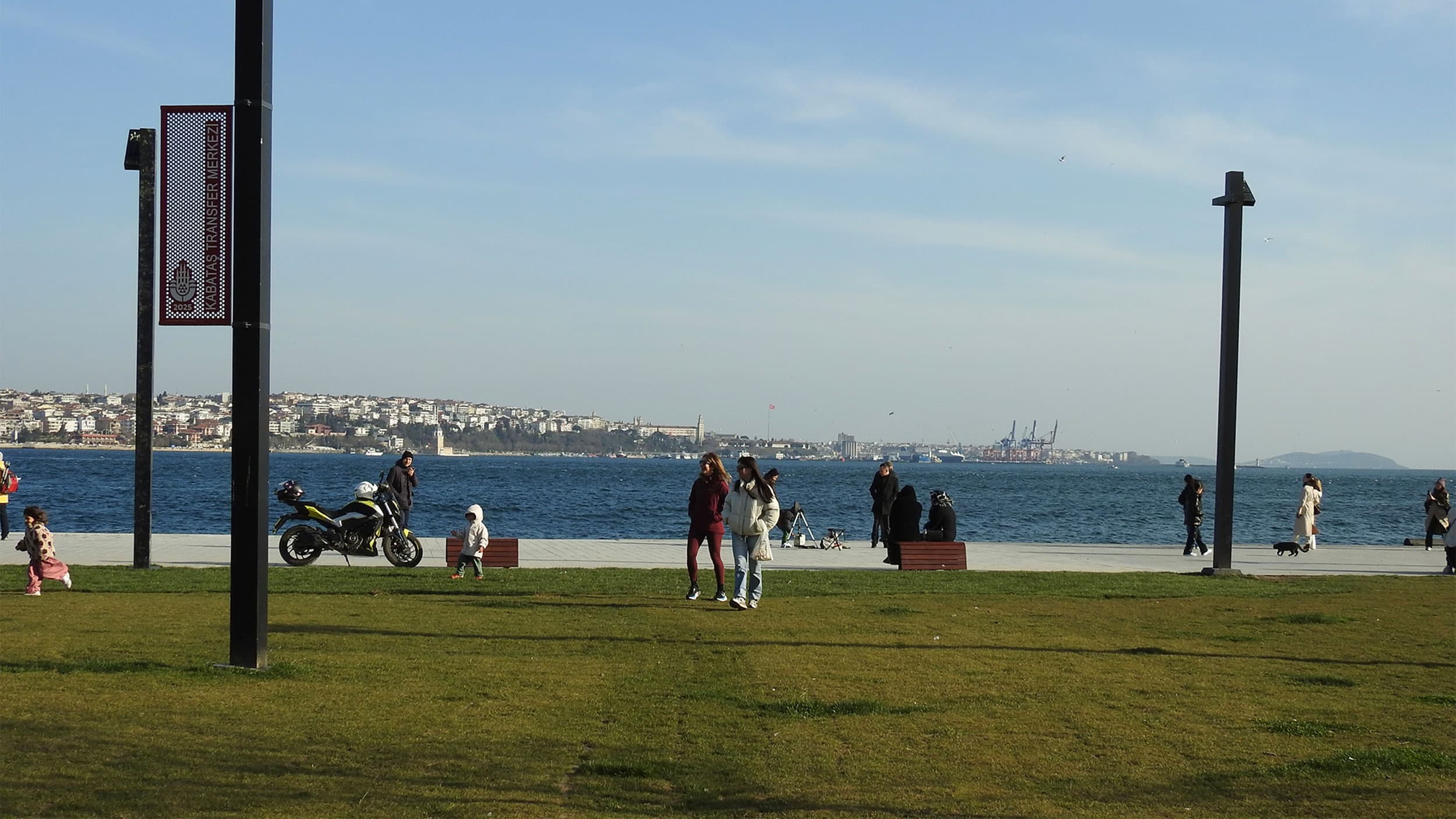
After having three missiles directed into Turkish airspace and shot down by NATO in the last month, more eyes have turned to Turkey. Both Turkish officials and some Istanbul residents maintain the country won’t get involved.
Children play on the public greenway along the promenade that lines the Bosphorus Strait on the European side of Istanbul. March 17, 2026.
Spring is making a slow arrival in Istanbul, Turkey, and on days when the sun does come out, the people come with it. As Ramadan, the Islamic holy month of fasting, came to an end, many began celebrations for Şeker Bayramı, known globally as Eid al-Fitr. Families formed plans to visit each other across the city, children and elders in tow. The city was bustling.
Along the same timeline, news of sustained conflict between Iran and the US-Israel front has continued to cover the pages and airtime of many news sources across the country. Turkey’s potential involvement has been a major topic. Since March 4, Turkish officials have reported that three separate missiles sent from Iran were neutralized by the North Atlantic Treaty Organization (NATO) in Turkish airspace.

Iranian officials denied having targeted Turkey with projectiles after the latest missile was shot down on March 13. Meanwhile, thoughts from residents of Turkey about the war and the country’s potential involvement in it range widely.
Oğulcan Boz, 30, was born and raised in Turkey and works at a coffee shop on a popular street on the European side of Istanbul. He sat outside on one of the month’s warmer days, less than a week after the first missile had been shot down, and explained why he doesn’t feel any immediate concerns.
“I’m not too scared about my personal safety because of the city I live in,” Boz said. “I don’t see there being a large chance of violence or war reaching Istanbul — it’s a little too cosmopolitan in that regard. On top of that, Istanbul is a very important city for Western states.”
At the same time, Boz said he doesn’t think Turkey is completely in the clear from an attack — but if there were to be violence, he doesn’t think it would come from Iran. He shared a theory that the missiles entering Turkey’s airspace actually came from Israel in a move to give the United States more leverage in the region.
“Currently, in addition to the oppression of a single country by [the United States and Israel], other states can interfere through … NATO,” he said. Boz continued, saying that if Turkey did actually get attacked by a missile, it would give NATO, and by extension, the United States, the ability to respond, further entrenching themselves in the region.
“There would be destruction, and there would be death,” he said. “And when that happens, NATO [of which Turkey is a member state] will inevitably have to get involved.”

A few tables away, a young woman sat, soaking up the sun. Originally from Iran, she moved to Istanbul two years ago. She didn’t want to share her name for fear of retaliation from her government; she said she hasn’t trusted any authority since protests first broke out in Iran in late December of 2025.
“They killed thousands of people,” she said, “They shut off the internet, and they killed people. I couldn’t talk to my family, I couldn’t get any news. I cried every day.”
The woman said she knows her family and friends back home could be in danger, but when she does get the chance to talk to them through brief phone calls, they tell her they would still rather live in the country’s current state than under the previous government.
“I’m happy that this war is happening,” she said. “Because without external intervention, we can never be free from the hands [of the regime]. I just want them gone, and I want our country to be free.”
She said she knows other Iranians, especially those living in other diasporas, have perspectives that differ from her own; she’s also upset at the loss of life Iran has seen. But, she shared that she doesn’t know how else a regime she had been living under — and in her eyes, escaped from — could change.

A five-minute walk down one of the city’s many hills, Istanbul locals and visitors alike shared the promenade that sweeps along much of the Bosphorus Strait. Snippets of conversation at benches lining the water focused on the war and Turkey’s potential role in it, including a middle-aged Turkish man wrapping up a phone call. He didn’t want to give his name for the same reasons as the Iranian woman at the cafe up the street, but some of his thoughts on the war diverged heavily from hers.
“The fact that a senator in the American congress determines the welfare of a child in Tehran or Gaza shows that the world is not fair,” he said. “The man in charge of America should be in prison, not in the White House.”
The man said he thinks the US has no business in the Middle East, and that he’s not afraid of Turkey getting involved, but he thinks the country could serve best as a mediator.
“We’re very suited to this role, because we’re both Western and Eastern, and neither at the same time,” he said. “We’re Muslim, but Western values are very high. Turkey doesn’t make big enemies, and it won’t push its people into a war.”
In an address given by Turkish President Recep Tayyip Erdogan following a conversation with Iranian President Masoud Pezeshkian after the second missile strike, he repeated that Turkey had no intention of getting involved in the war and that he still strongly opposed airstrikes on Iran. But he also stressed opposition to Iran’s actions.
“We openly stated that we never approve of Iran’s attacks targeting sister countries,” he said. “This will serve no purpose other than exacerbating common pain and sowing the seeds of hostility between brothers.”
Less than a week later, following the third missile downing on March 13, the Turkish Ministry of National Defense stated that all necessary measures were being taken “decisively and without hesitation” against threats to the country, and that clarifications would be made with Iran concerning the mission behind the missiles.