Public radio’s longest-running daily global news program.
©2025 The World from PRX
PRX is a 501(c)(3) organization recognized by the IRS: #263347402.
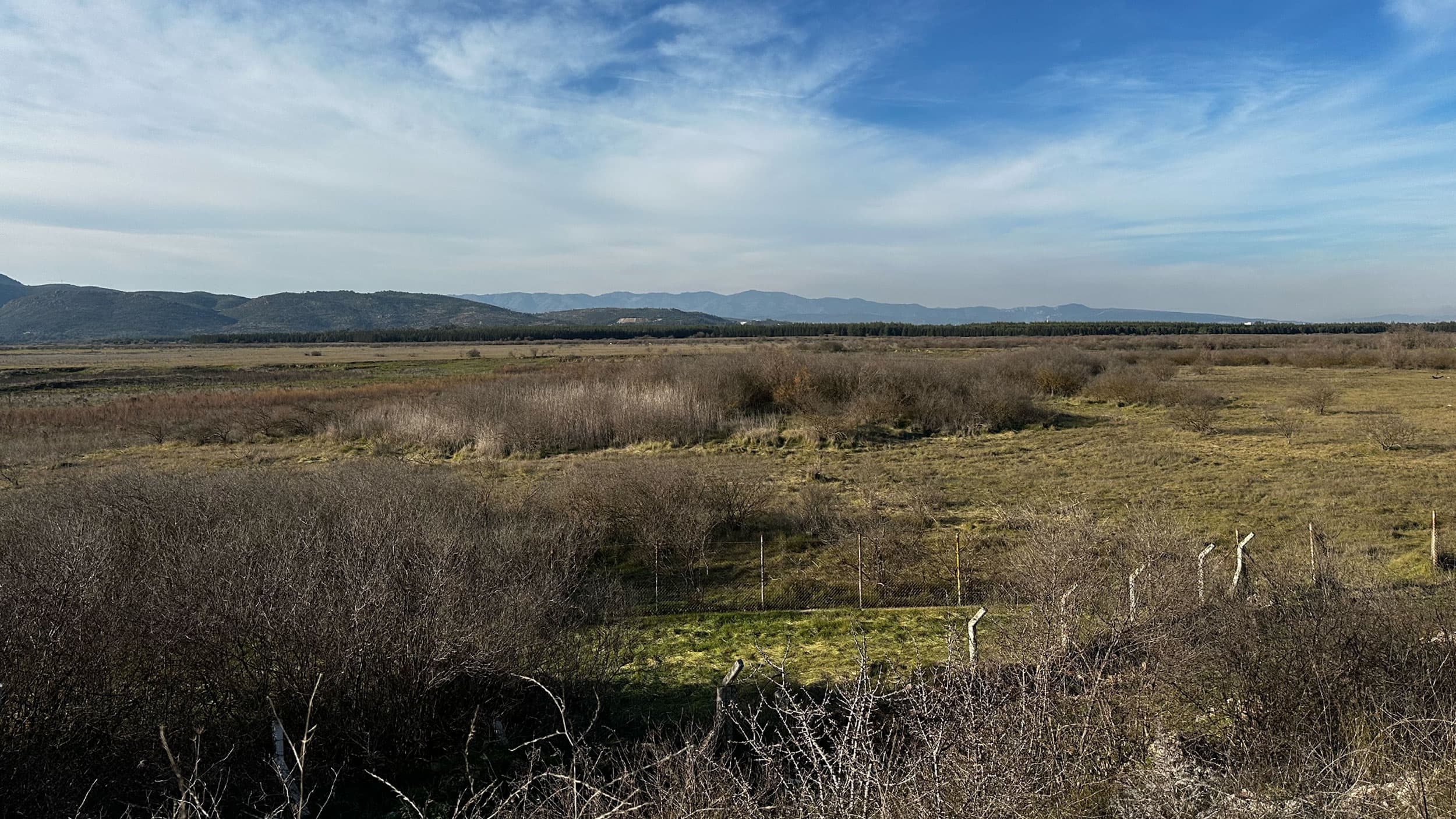
As Turkey faces its worst drought in half a century, many cities are implementing water cuts to avoid shortages while reservoirs sit dangerously low.
Turkey is facing its worst drought in half a century. The Tahtalı dam, which usually accounts for nearly half of Izmir’s water supply, plummeted to below 1% late last year.
At Zeynel Gevrek, a bakery nestled on a narrow street in Izmir’s central Alsancak neighborhood in Turkey, breakfast time is always busy.
Customers crowd the tiny shop, sipping hot tea while they tear into freshly baked simit, a sesame-covered ring-shaped bread that’s a Turkish breakfast staple.
Bakeries run on water. The dough, the dishes and countless cups of tea. But across Turkey, the worst drought in 50 years has forced cities like Ankara, Istanbul and Izmir — the country’s third largest city — to implement water cuts as reservoirs sit dangerously low.

The Tahtalı dam, which usually accounts for nearly half of Izmir’s water supply, plummeted to below 1% late last year. While winter rains have helped raise levels to around 40% full, scientists and officials are warning, though, that relief may only be temporary.
Normally, reservoirs refilling would be a good sign. But Alper Baba, head of the international water resources department at the Izmir Technical Institute, said that past weather patterns likely won’t apply in the future.
“If you look at the 100-year meteorological data, it says that the temperature is going to increase by about 30%,” Baba said. “The data also says that precipitation is going to decrease in this region.”

Last summer, these predictions started to look more like reality. From June through August, temperatures in Izmir averaged above 90 degrees Fahrenheit. The heat exacerbated a long-running drought and pushed the region’s drinking supply to the edge.
By September, in an effort to curb water consumption, the city’s Mayor Cemil Tugay, implemented water cuts — shutting off taps across the city from 11 p.m. to 5 a.m. nightly.
Yet, as the months dragged on, and the local reservoir levels kept dropping lower and lower, water continued to flow in many homes and businesses across the city.
The reason? Groundwater pumped from aquifers from deep underground.
John Selker, a professor of hydrology at Oregon State University and a specialist in groundwater systems, said tapping into subterranean aquifers may be a convenient way to keep the taps on now, but it could put the future of the region’s water at risk.
“Groundwater is our bank account where we store water for a rainy day, or perhaps better said, where we store water for a non-rainy day,” Selker explained.
These aquifers are often thousands of years old, accumulating water for millennia. In an arid country like Turkey, where only about an inch of water makes its way to underground stores every year, huge quantities of ground water have been pumped to feed the region’s needs as it’s gotten drier.

Selker said this can be a dangerous decision because as more water is extracted, the water table moves further and further down, “and after a few decades, you don’t have any water at all.”
This is Izmir’s gamble: Pump the finite underground water stores today to keep water flowing for 5 million people, or limit current consumption in hopes of preserving the city’s backup drinking supply for the future.
While domestic use may seem under the spotlight, it represents only a fraction of demand. In Turkey an estimated 90% of groundwater is used to irrigate agriculture. But even that may be starting to change.
In the farming town of Menemen, about an hour north of Izmir, a young farmer named Sümeyye, who was selling vegetables at her family’s stall, said their farm used to rely on irrigation canals fed by local reservoirs. But as supplies have run low, those canals too have been dry.
“So now we irrigate with groundwater. But because we have to pay for electricity to pump, we spend a lot more.”
She said that even when farmers can pay, however, many often find their wells have run dry as the water table moves further and further downward.
Without access to water, in the canals or underground, Sümeyye said some of her neighbors have abandoned their plots and stopped planting. She’s now studying for a new career in nursing as her family plans to close down the farm.
Back in Izmir, the city ended its nightly water cuts on Feb. 6, citing higher reservoir levels. But Mayor Tugay said the city must find additional water sources to avoid a crisis. He’s suggested the region try cloud seeding, making artificial rain, and he said his office has applied for permits to build three desalination plants.

While the struggle to secure drinking water may be playing out in Turkey now, hydrologist John Selker, said this issue is one that many around the globe are likely to face, especially in arid environments. But he said he expects, eventually, using groundwater for crop irrigation, will have to stop entirely.
“Every indication, though, is that we’re going to hit the wall before we climb over it,” Selker said.
Back at the bakery, things may be changing as well. For the first time, the bakery has been filling its backup water tank out of fears that the water may disappear at any moment.