Public radio’s longest-running daily global news program.
©2025 The World from PRX
PRX is a 501(c)(3) organization recognized by the IRS: #263347402.
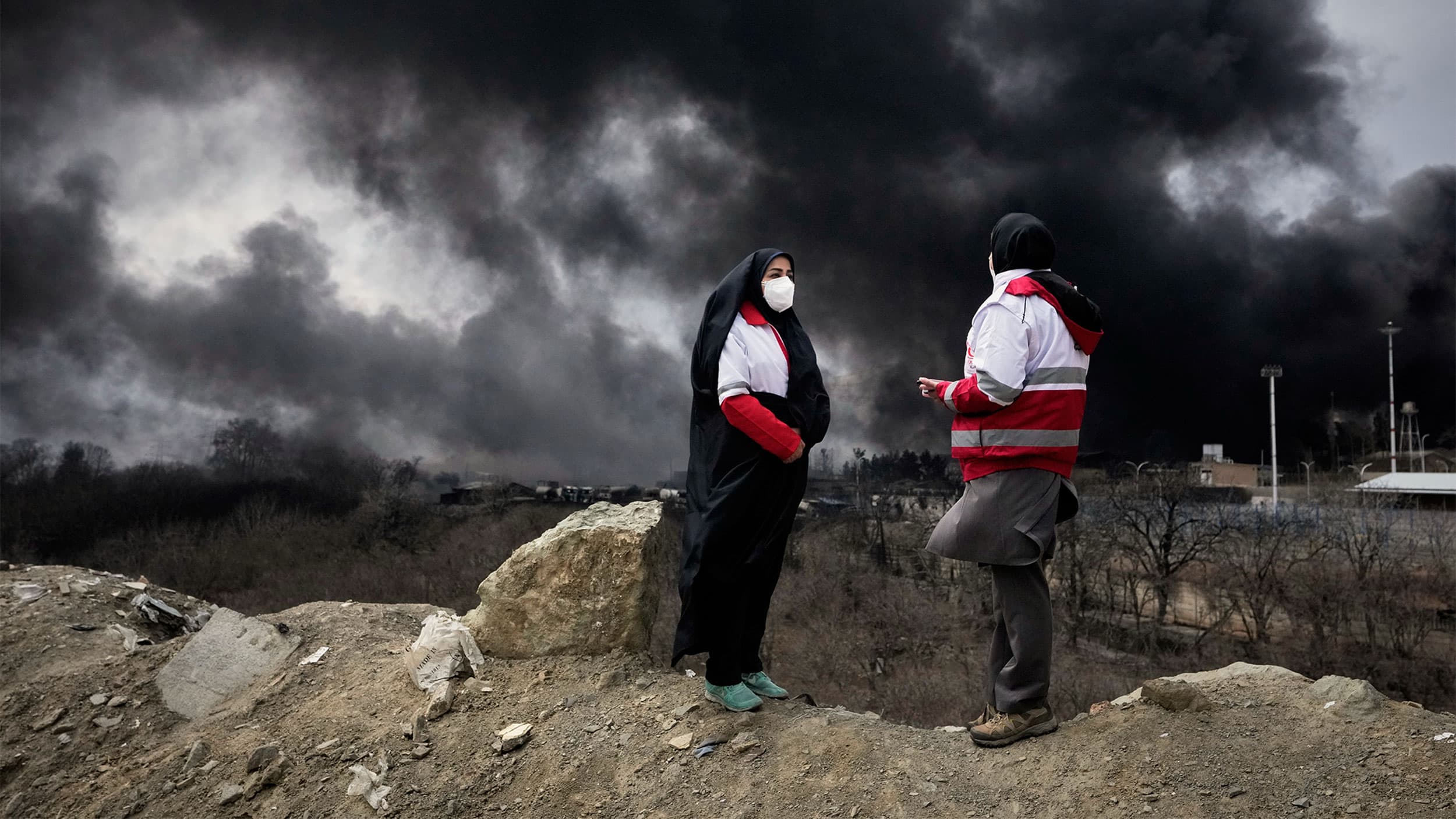
Israeli strikes have ignited fuel depots across Tehran, releasing toxic pollutants into the air. Now, residents say the air smells of smoke and gunpowder and scientists warn the toxic fallout could linger for years.
Two women from the Iranian Red Crescent Society stand as a thick plume of smoke from a US-Israeli strike on an oil storage facility rises in the sky in Tehran, Iran, March 8, 2026.
The night sky over Tehran turned orange on March 7, after Israeli jets struck several fuel depots in and around the Iranian capital.
Huge fires lit up the skyline. Thick plumes of smoke rose over a city of roughly 10 million people.

The morning after, even as snow fell over Tehran, one resident said the smell of smoke still lingered in the air.
Despite the fresh snow, she said, the scent of gunpowder, smoke and metal was unmistakable.
Another resident filming a massive plume of smoke insisted the scene was real. “I promise you, this is not AI,” he said.
In the days following the strikes, some residents described Tehran as feeling like a “toxic chamber.” They reported burning eyes, difficulty breathing and skin irritation.
Iranian officials have not confirmed whether the fires at the fuel depots have been fully extinguished. They urged people to stay indoors and keep their windows closed.
Experts say attacks on oil facilities are not unusual during conflicts.
Doug Weir, director of the UK-based Conflict and Environment Observatory, said similar strikes have occurred during wars in Ukraine and Sudan.
But the situation in Tehran is different.
“What’s been particularly shocking in the case of Tehran is that these sites are usually away from population centers,” Weir said. “They are never in the middle of cities of 9 million people.”

Tehran’s geography makes the situation even worse.
The city is surrounded by mountains, giving it a bowl-like shape. Dense construction and high-rise buildings also limit airflow. Under certain weather conditions, known as a boundary layer, pollution can become trapped near the ground.
“It’s like a blanket over the city,” Weir said. “Pollutants are pushed down toward street level, particularly overnight.”

Because the strikes happened at night, millions of people were exposed to the fumes while they slept.
Oil fires release a complex mixture of pollutants, including carbon monoxide, sulfur dioxide and nitrogen oxides. These can be especially dangerous for vulnerable populations, such as children, older adults and people with asthma.
Even before the conflict, Tehran struggled with severe air pollution. Those already living in polluted environments, Weir explained, may be more vulnerable to high concentrations of toxins.
“It’s quite concerning, the degree of pollution which people are being exposed to,” he added.
Smoke is only part of the danger.
Explosions also pulverize building materials and spread residues from explosives. These create tiny particles that can travel deep into the lungs.
Research suggests exposure to similar pollution can have long-term health effects.
Anna Hansell, a professor of environmental epidemiology at the University of Leicester, said studies of Gulf War veterans exposed to burn pits — large fires used to dispose of waste — found elevated cancer risks years later.
Those risks included cancers of the respiratory system, as well as blood cancers and cancers of the urinary tract, thyroid and prostate.

The long-term health impact depends largely on how intense the exposure is and how long it lasts, Hansell said.
Pollutants can also settle into soil and waterways and later be stirred back into the air weeks, months or even years later.
For now, she said, the most important step to reduce harm is stopping the bombing.
“I think it’s really important to try and get some monitoring data on what people are being exposed to and think about doing health studies,” Hansell said. “I know it’s very hard in a war situation, but people have managed to do those studies before, and they can be very valuable.”
The World Health Organization has also warned about the risks from so-called “black rain” — rainfall that mixes with toxic particles in the air.
WHO spokesperson Christian Lindmeier said the organization is in contact with hospitals and Iranian authorities as they monitor the health impact of the fires.
The head of the organization, Tedros Adhanom Ghebreyesus also said in a social media post that “damage to petroleum facilities in Iran risks contaminating food, water and air — hazards that can have severe health impacts especially on children, older people and people with pre-existing medical conditions.”