PRX is a 501(c)(3) organization recognized by the IRS: #263347402.
An investigative journalist discusses the risks of chasing a Kremlin spy
Host Carolyn Beeler speaks with journalist Christo Grozev at The World’s Boston studio about his ongoing investigation into the Jan Marsalek financial fraud case.
The US broadcast debut of the award-winning film “Antidote” exposing the cost of opposing Russian President Vladimir Putin.
Courtesy of Edgar Dubrovskiy/Passion Pictures
Christo Grozev has established himself as a skilled investigator of international criminals, especially those connected to the regime of Russian President Vladimir Putin. He is the head of investigations with the Russian dissident news outlet The Insider and the former lead Russia investigator for Bellingcat.
Grozev famously revealed the culprits who poisoned Russian dissident Alexei Navalny in 2020, and is now working with several journalism outlets on a new investigation that leads straight into Russian intelligence operations.
Christo Grozev joined Host Carolyn Beeler in The World’s Boston studio to talk about this ongoing investigation. It’s an intense effort that he’s undertaken with Germany’s Der Spiegel, The Insider and GBH’s documentary series FRONTLINE, which produced an award-winning film earlier this year about his work, called “Antidote.”
Carolyn Beeler: Your investigation focuses on an Austrian man named Jan Marsalek. He is wanted in Germany for a huge financial fraud case. Folks might remember it from when it was in the headlines a handful of years ago. Explain why German law enforcement wants him.
First of all, you’ll see his face at every airport in Germany, getting in or getting out. He’s literally Germany’s most wanted man. He’d made his fame in Germany by becoming, kind of, the wunderkind of German fintech. The company that he co-founded or made into the starling of Germany, fintech is something like the German PayPal. And he was the beloved young entrepreneur of Chancellor [Angela] Merkel, of many other government officials before that. They were parading him around the world.
Until one day the company just collapsed. That was in the middle of 2020. The company dissipated into thin air with more than $2.5 billion off its balance sheet, money that could never be found. So, the whole investigation had started earlier because of an investigative journalist from the Financial Times who had looked into that company and thought that all of the bank accounts are kind of cooked and nothing make sense.
Something didn’t add up.
Right. But then in June 2020, the auditors actually agreed with the investigating journalist saying, “No, we don’t see the money. We can’t re-endorse the annual accounts.” On that day, everything imploded and Jan Marsalek, the COO of this company, just vanished into thin air. The whole world started looking [for] where he went. I [learned] of his existence on that day. I had not followed the financial story of Wirecard before that. And I started looking for him, because a lot of colleagues reached out to me and said, “Well, you’re good at discovering people who disappear. Can you help us find this guy?”
So, we looked for him in Asia, because he had left some traces, or false tracks, as if he disappeared into Asia. We looked for him in Africa, and then we decided to check maybe he’s just vanished into Russia, which is where I have a lot competence in finding people, and we found him there. So, that’s how my story with tracking Jan Marsalek started almost five years ago.
A still image from the award-winning film “Antidote.” This image was provided by Passion Pictures and Bellingcat Production for FRONTLINE in association with Impact Partners, Channel 4 and M4 Studio.Courtesy of Passion Pictures and Bellingcat Production
And so, you find him in Moscow, you discover that he is involved with Russian intelligence services. How did he get involved with the Russian intelligence services, the FSB?
When we published our first finding that he actually fled to Russia — initially to Belarus and from there to Russia — we discovered a strange pattern of visits to Russia that predated that escape by 10 years. So, since 2014, he had traveled to Russia more than 70 times, and nobody in his company knew about those trips. And we started finding overlaps between those trips and certain other events. One of the trips we found that he had taken to Syria overlap with trips of Russian intelligence officers to that country. And slowly, we started unpeeling this onion and finding that he had made himself available to Russian intelligence for years before he escaped.
But the big question was, where did he vanish? Was Russia still using him? Is he just in exile? Or is he continuing to do some operations? And for about four years, this was the question that both German law enforcement and intelligence officers and investigative journalists were looking for answers on, until this investigation found the answer. We found him literally working for Russian intelligence, going to the office of the former KGB, the current FSB, almost on a daily basis. And we could visualize that by finding his photos in the streets of Moscow and going to this office of the headquarters of the FSB on street cameras that we got access to.
So, probably the most fun part of this investigation was that we were able to use the surveillance system that the Russian intelligence service uses on their own citizen to find out actually one of their operatives strolling through Moscow.
Turn it against them a little bit.
Correct.
So, if you have been able to find him, is Germany looking for him to try to prosecute him for his crimes?
Well, that’s the $2.5 billion question here, because Germany, on the surface of it, is looking for where the money went and is looking for answers. But I cannot imagine that they would still be at the loss of where it is. If we were able to find them. And that was part of the reason for this very visual investigation. We wanted to shame the German government into action, because once you show him in the streets of Moscow, they can no longer say, “Oh, we don’t know where he is.” And maybe the wheels of law enforcement will start turning a bit faster now that we’ve shown him there.
You say you want to shame Germany into acting. Can you guess why Germany has not done the work that you have done to find and potentially apprehend Marsalek?
I can only quote a recent statement by Marsalek to somebody, I cannot identify the person to whom he said that, but his words were, “Germany is the last country that wants me back. I know too much.” And I think there may be some truth to that. I mean, with all of his proximity to politicians, with all of his access to cash, it could be that he has what they call in Russia compromising material on German politicians that may make them reluctant to actually try to get him back.
So, back to his work with the FSB, your reporting shows that he was involved with the FSB for many years prior to his disappearance. So, while he was the COO of this big financial firm in Germany, he was working with the FSB.
Correct. And that work constituted assistance to Russian intelligence on many, many levels. Let’s start with the most obvious, he was sitting on top of a lot of transaction data payments. The company that he was running was a payments implementation system [Wirecard]. He had access to bank accounts or bank transfers of millions and millions of customers. Many of them were actually Western intelligence officers who trusted that company because it was Germany’s darling company.
So, German intelligence used that company for their own payments. American intelligence officers often used that company because it was kind of on the borderline between a bank and a non-banking institution, a lot more freedom in where they could make payments to. So, he was sitting on all of that data and arguably Russia would have access to that through him.
But further, more than that, and this has been proven in court now, he was able to bribe intelligence officers in Austria, his home country, and in Germany in order to get them to work for the Russians. And one of the strange incidents of discoveries in this investigation of mine was that he had actually bribed an Austrian police officer to spy on me and on other opposition or anti-Putin, as they call it, journalists living in Austria.
Because you are wanted by Russia for your work investigating Navalny, among other things.
So, this became a very meta-investigation because I just found in the middle of my own investigation that he had been helping the investigation against me, and more than that, it was later discovered that he had essentially run his own sub-intelligence unit that had been spying on me and my family for about three years and, I had no idea that that was happening.
There are famous cases of Russian agents poisoning and killing dissidents in Western countries. I gather that Marsalek is connected to some of those cases. Can you explain how?
Marsalek personally boasted about having the formula for Novichok, the actual secret formula of the toxin that almost killed Alexei Navalny and that almost killed [Sergei and Yulia] Skripal in 2018. And again, that showed some proximity to the operatives who would have conducted that operation.
There’s another incident of global proportions that we have discovered that he was involved with, much closer than that that had to do with poisonings, but I will abstain from naming that incident because we are continuing the investigation. We plan to publish it, but that is coming up in the future.
In this file photo, Russian opposition leader Alexei Navalny speaks to the media prior to a court session in Moscow, Russia, Aug. 22, 2019.Alexander Zemlianichenko/AP/File photo
This is a multi-part investigation, some of which has been published and some of which is yet to be published, as you say.
It is a live investigation, correct.
You mentioned these surveillance cameras that are all over Moscow that you have kind of been able to turn against the surveillance state. You have been tracking Jan Marsalek’s movements with considerable precision. And what other tools and methods have you used to do that?
Well, first of all, one thing I should say is that Jan Marsalek had a certain protection from being surveilled. His face was included in faces that cannot be looked up using the surveillance system, which again points to the fact that he was an operative for Russian intelligence. But we discovered this little workaround, which is that once we knew who he was dating, we were able to actually look up the face of his girlfriend. And there he was next to her in multiple places in Moscow.
Something that we also discovered in that process was that he was weaponizing his relationship with his girlfriend. He had turned her into a spy, as well, and she was careering a lot of the money and items that he needed in his intelligence work to European countries, because he can’t travel anymore now that his face is plastered all over airports. But we discovered also something very interesting, which was that in addition to his espionage work, he was actually a participant. He is a participant in the war against Ukraine. We found that he traveled multiple times across the border into Ukraine in the company of mercenaries, in the companies of soldiers.
And the only explanation we could find out that was verified by intelligence sources in Russia was that he’s, in fact, participating as a sort of saboteur and advanced intelligence officer on the front line in the War against Ukraine. Which has led interestingly to consideration by Austria, which has only become known this week, that they might withdraw his citizenship because, under Austrian law, any citizen who fights for the armed forces of another state loses their citizenship automatically. So, we might be in a situation where he has only Russian citizenship to look forward to.
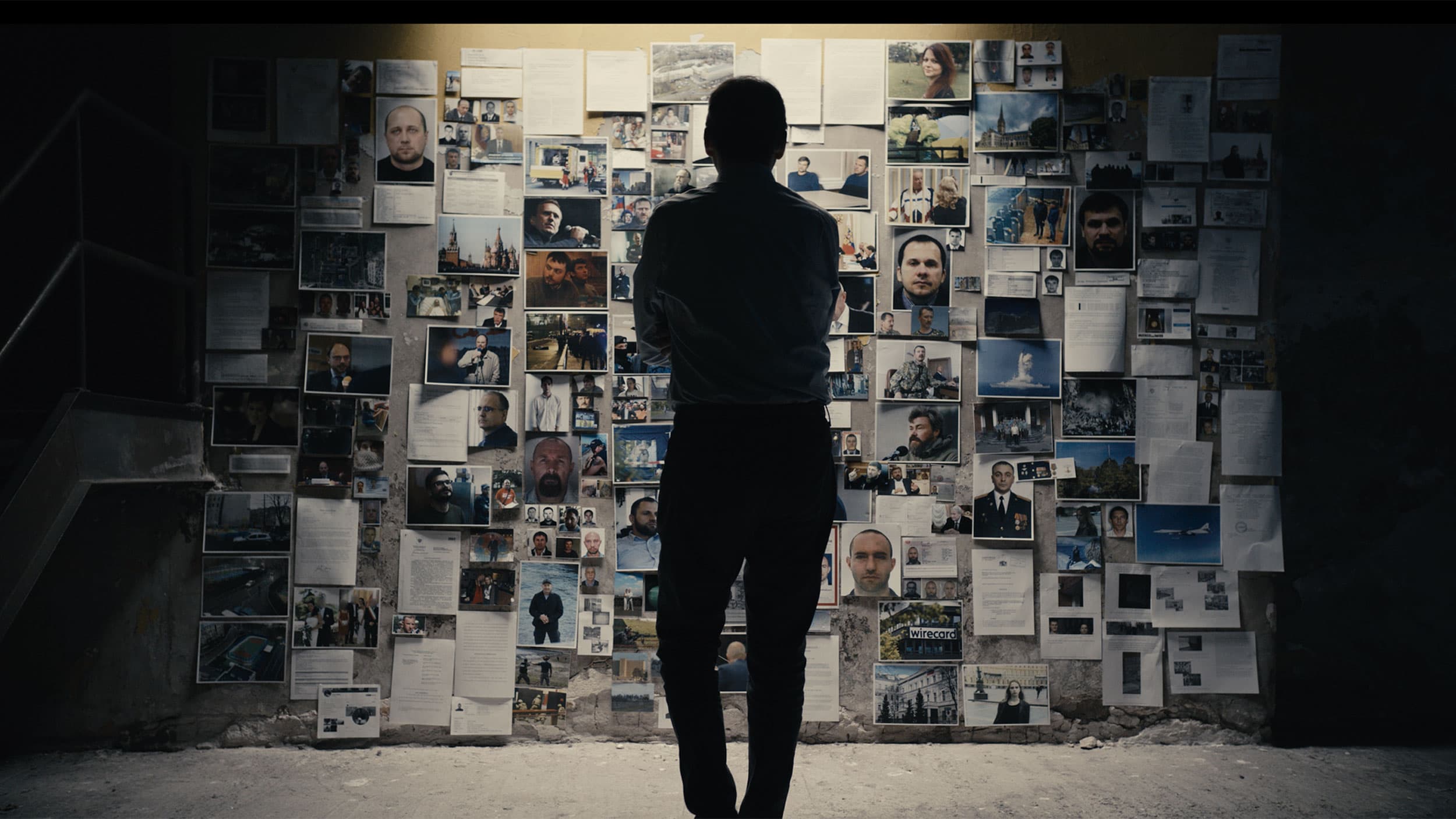
A still image of Christo Grozev in the award-winning film “Antidote.” This image was provided by Passion Pictures and Bellingcat Production for FRONTLINE in association with Impact Partners, Channel 4 and M4 Studio.Courtesy of Passion Pictures and Bellingcat Production
How do you see justice ultimately being served here?
The ultimate goal is to discover the truth. Law enforcement and intelligence services have become lazy. Sometimes they are prevented from pushing for a particular outcome because of political reasons. Coming forward with a journalistic investigation that is transparent, can be replicated by others, would leave a lot more questions that need to be answered by law enforcement than before such investigations, such as why can we not do the same and retrace these steps.
It’s been a passion of mine to get impact from my investigations by causing law enforcement to act. And very often we’ve seen that impact where suddenly they decide, “Okay, we can do the same thing. We’ll retrace the steps. We’ll bring somebody to justice.” One of our investigations at the time when I still worked for Bellingcat was into the assassination of a Chechen asylum seeker in Germany in 2019 in Berlin.
Bellingcat, the investigative organization that you led for many years.
And our investigation led directly to the indictment of the person as a Russian intelligence operative. And it was the first time that Germany, in recent history, had blamed the Russian state for a terrorist act on German territory. And this was directly connected to a journalistic investigation. So, I think there can be more of that.
I want to go back a little bit in history. You uncovered and confirmed the plot to poison Russian dissident Alexei Navalny. What connects that investigation with this one, beyond the obvious that we’ve heard so far?
Well, there’s one very direct connection. On the day that we published the investigation into Navalny’s poisoning — which was, if I remember correctly, December 13, 2020 — on that same day, Jan Marsalek, as we now know, tasked his network of freelance spies around Europe to start surveilling me and to follow me around. And he instructed them to gather any information on me that could be found because his bosses at the FSB were very interested in this person. And there’s clearly a connection with that investigation.
And that makes sense, because of all the investigations that I’ve supervised, that was probably the most embarrassing one [for] President Putin, because not only did it disclose this operation, not only did it trick one of the operatives, one of the poisoners, into admitting, confessing in a call to the victim, to Alexei Navalny, that they had tried to poison him unsuccessfully, but it also forced Putin to have to explain himself at the annual press conference about this incident. Clearly that was a heavy personal toil for Putin and he tasked the FSB with solving the problem. So, that’s a direct connection because Marsalek went after me as a result of that investigation.
I imagine you’re not doing any of this reporting inside of Russia, as you have mentioned. You are persona non grata, but you are still taking on considerable personal risk doing this work.
Yeah, that is correct. I mean, this same group of operatives broke into my apartment in Vienna when I used to live there in 2022. They tried to actively steal the laptop that they could see in the film “Navalny,” on which I was conducting the investigation into the Navalny poisoning, thinking that it contains all the secrets and all the whistleblower steps and whatever they imagined was on that computer. So, that’s a clear risk. It’s a risk not just for me, but for my family.
One of my children was at home during the break-in, and they didn’t realize that he was there, it was super scary. So, that’s a risk, and that probably drove my decision to also live separately from my family so that I can protect them. But it’s something you normalize and you just continue living. And one of the things that I don’t say frivolously is that once the risk is there, then at least I should make the most of this lifestyle and I should investigate more because the risk doesn’t increase with new investigations. But it is probably the biggest cost. I mean, the risk to my life is nothing compared to that cost, as you could imagine. I missed my daughter’s becoming an adult. I mean, I missed the best two years of my daughter’s life.
So, do you think that living separately from your family actually protects them?
I think it does. There are old rules of the game, which suggest that even the worst of the worst of intelligence services shouldn’t go after family members frivolously. By accident, yes, but that’s the accident that I’m trying to prevent by not being near them. But again, the rules of the game change and after the war, after the invasion of Ukraine by Putin, [the] reputation cost for Russia has kind of disappeared. So, nobody knows what the new rules of the game [are], but I just hope that even those operatives have some morals.
This interview has been lightly edited and condensed for clarity.