Public radio’s longest-running daily global news program.
©2025 The World from PRX
PRX is a 501(c)(3) organization recognized by the IRS: #263347402.
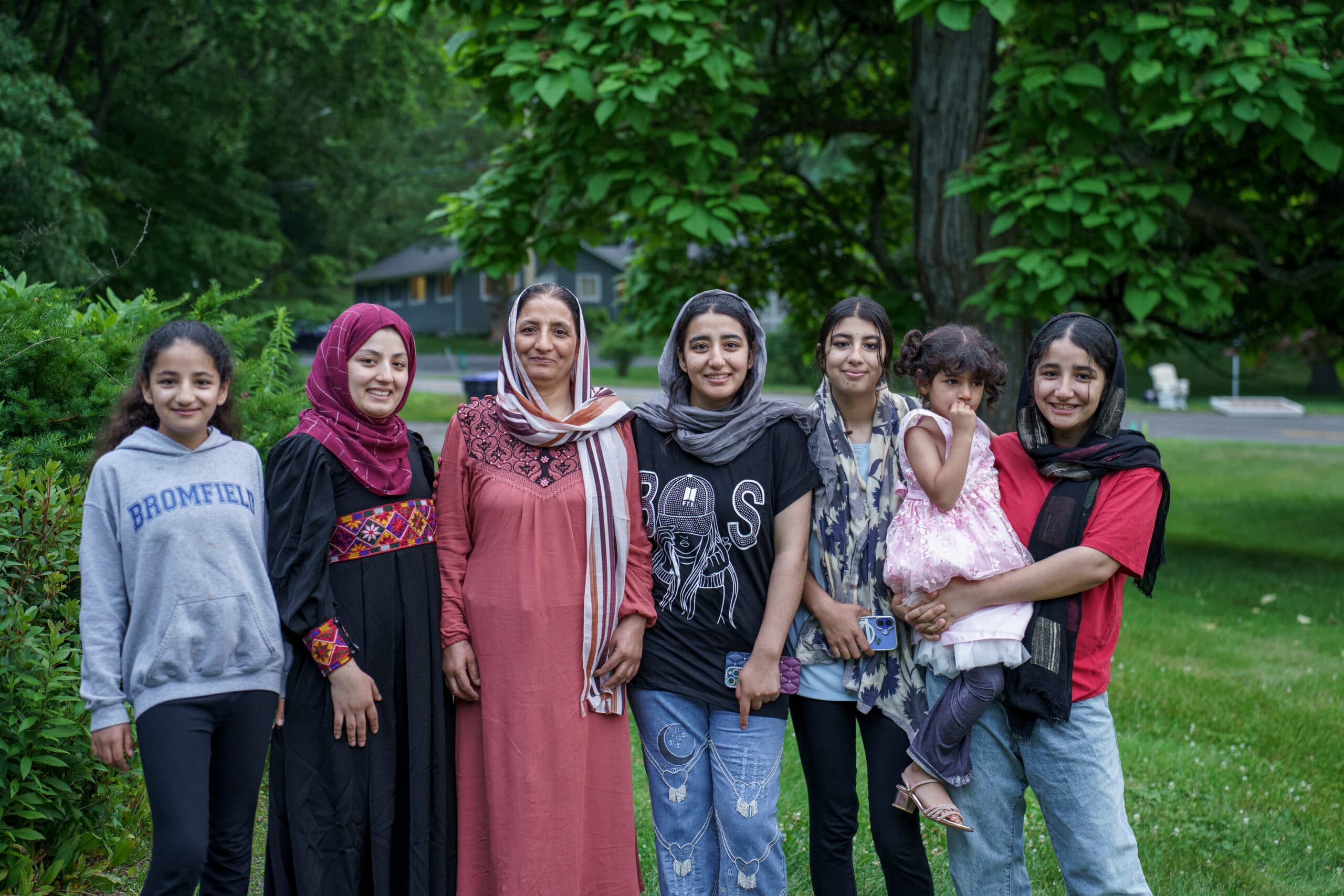
After the 2021 American withdrawal from Afghanistan, tens of thousands of Afghans who had helped the US military there were granted humanitarian parole to come to the United States. Among them was the Kabir family. Two sisters in that family have ambitious goals for their education, which they could not have received in their homeland. Reporter Adeline Sire met them and has their story, from Massachusetts.
Kabir women outside of their new home in Massachusetts, where they live with another Afghan family.
When the US withdrew from Afghanistan in 2021, the military evacuated more than 120,000 people from Kabul during the airlift. Over 70,000 Afghans were brought to the United States under humanitarian parole. Many had helped with military operations and would be at risk under Taliban rule. Thousands have since secured permanent residency in the United States.
The Kabir family is one example. They were evacuated from Kabul in August 2021.
The father, Taher, had worked as a manager of food services for the US Army there and would be a prime target for the Taliban after the American withdrawal.
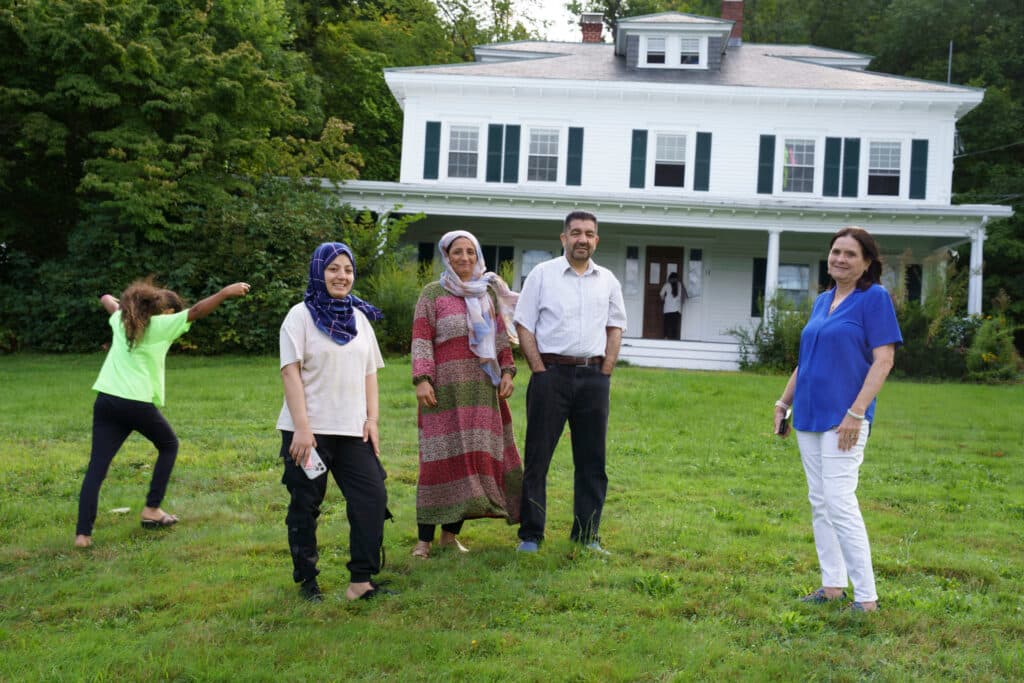
On short notice, the Kabir parents and their seven children grabbed everything they could and were flown out on a military cargo plane to Qatar. Then they flew to Germany, then to Texas, before finally arriving in Massachusetts in December. They, along with another Afghan family of 11 people, now share a century-old house in a quiet and leafy suburb of Boston.

For 18-year-old Shayesta Kabir, “quiet and leafy” felt extremely disorienting at the time.
“When we moved here, it was winter, one week before Christmas,” Shayesta said, recalling her first impression of America. “Everywhere was dark, and then I saw turkey, deer, and I was like, ‘Oh my God, I swear to God, they [took] us to [a] jungle!’ and I started to cry. My mom, when she saw I was crying, started to cry, too. I like the people, but I don’t like that jungle because there is nothing. I went to Boston, and it was so much fun. I am a city girl!”

The Kabirs had spent their entire lives in the bustling metropolis of Kabul — with its population of about 5 million. So, they had to acclimate to their new surroundings.
Fortunately, Terry Symula was there to help. Symula is part of the Neighborhood Support Team, a group of volunteers that assists refugees with everything from language support to housing. And handling two large families at once meant a lot of logistics, complicated by the pandemic.
“Transportation became a big issue,” Symula said. “We don’t have any public transportation here. So, fortunately, the kids could go to school in a school bus, but we were working very hard to get them in jobs, and we had to get them to work and get the kids to medical appointments.”
Then there was the language issue.
“It was hard,” Shayesta said, “because when the teacher gave us homework, we were like, ‘Oh, I don’t know how to do it!’” But thankfully, she said, many students offered to help.
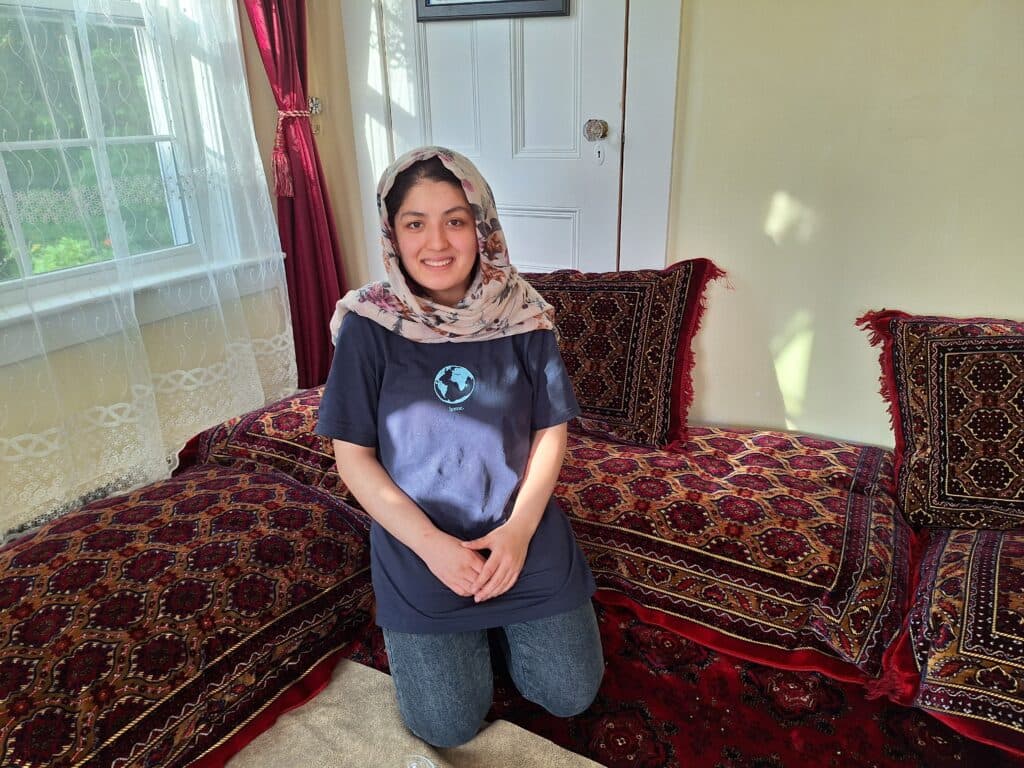
Attending a co-ed school was new and also a bit of a culture shock for the girls. For Shayesta’s older sister, 19-year-old Behishta, the dress code was confusing.
“I couldn’t really recognize who was the student and who were the teachers,” she said, “because in my country, we have a special uniform, but here they wear whatever clothes they wanted to wear.”
Shayesta agrees.
“They wear shorts and they’re hanging out with boys,” she said. “And I saw my friends Max and Sophia, they were dating since 6th grade, they kiss each other in front of other people. And I was like, ‘Oh my God, I don’t know what they’re doing.’ So, it was very different.”
Three of the Kabir kids have graduated from high school so far. The girls’ older brother and Behishta last year, and Shayesta just a couple of months ago. And she already has big goals.
“I can go to college,” she said. “I can study three years law school. I will study to become a judge.”
Shayesta said she was inspired to pursue a legal career by a Turkish movie she saw as a kid. It featured a female judge who was not afraid of using her authority.
“She always [spoke] for herself and other people,” she said. “Now, [with] the situation in Afghanistan, there is no education for women, which is so sad. So, I was like, I should become a judge and speak up for myself and for them, too.”
Shayesta plans to study criminal justice at a local community college and transfer to a state school.
Behishta is preparing to study engineering, in addition to journalism. She said her goal is to tell true stories, something she says she and her mother didn’t see much of under the Taliban’s oppressive regime.
Recently, Behishta and photojournalist Jodi Hilton teamed up on a project that features framed still photos that come to life through a phone app called Artivive. The project profiles Afghan refugees in Beshista’s new town and the volunteers supporting them. She wanted to record their stories in their own words.
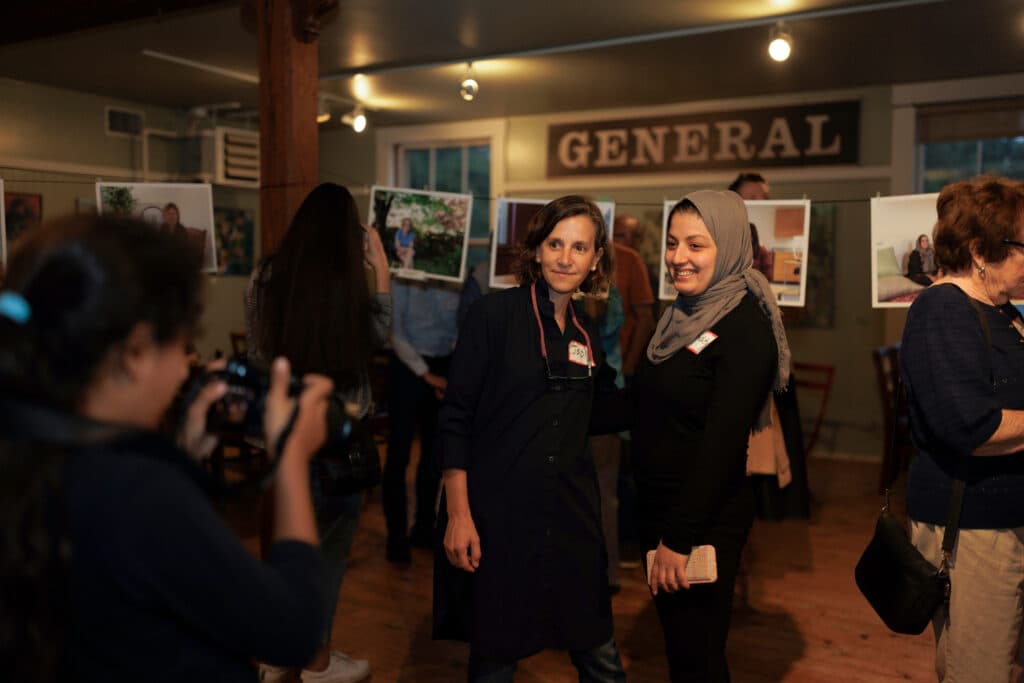
“The photo exhibition is basically that everyone is saying their own thing,” Behishta said. “Instead of me talking about them, it’s better to have them talk about themselves.”
The exhibit will be opening this month at the Massachusetts State House in Boston.
Behishta and her sister realize, had they remained in Afghanistan, their destinies would have been very different.
Shayesta said she feels helpless about her old classmates back in Kabul who are unable to get out and pursue their education. One friend complained that the school where she attended English-language classes was shuttered, Shayesta shared. As for Behishta, by now, she said she’d probably already be married to a cousin on her father’s side.
“My mom said: ‘If we were there, we would have said yes [to the marriage proposal],’” Behishta said, “‘because the situation is tough and we would have picked a way for you to just go for your future.’ Thank God I’m not there. That’s what I am grateful for.”
Another thing the sisters wouldn’t have been doing back home: working in a shop. Both girls are employed at a general store. Shayesta works shifts as a cashier and says she loves it for many reasons.
“The people are so nice there, and they’re rich too,” she mused. “Everyone there has those gold cards, and they leave $20 tips all the time.”
Behishta works in the baking department, and when The World visited her at the store, she pointed to the multitude of sweets she and her teammate had baked that day.
“So, that’s snickerdoodle, peanut butter, molasses, chocolate chip,” she said, “and we have zucchini bun cakes, they’re really good. They’re really popular.”
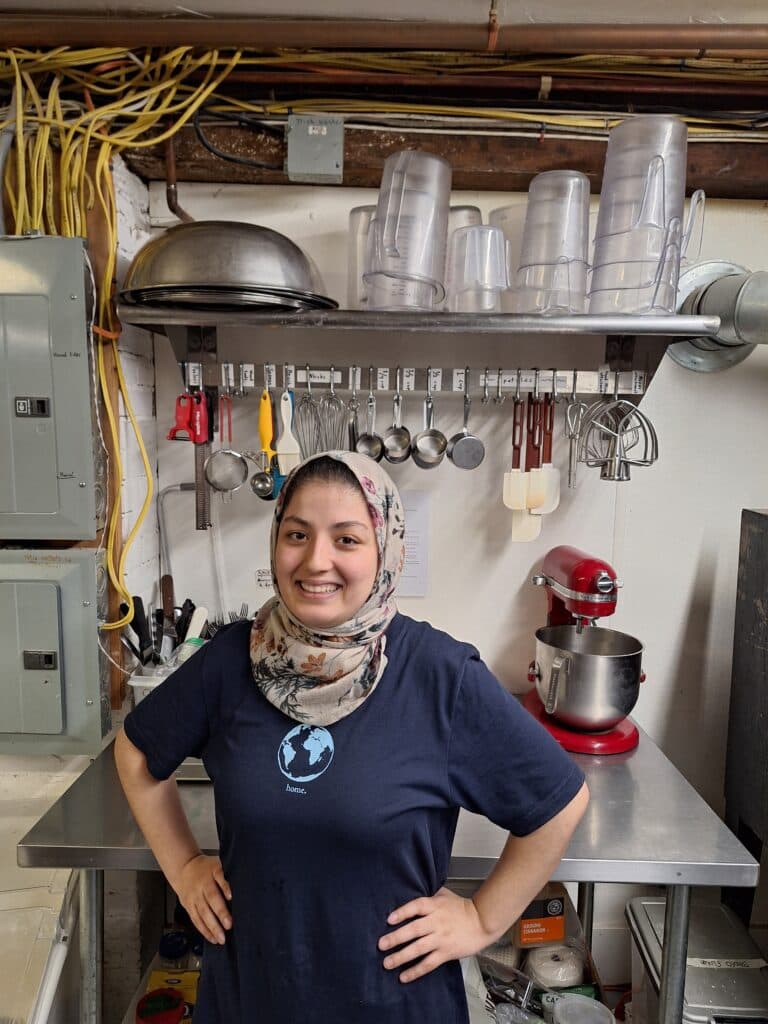
Behishta is actually the head baker there — which is remarkable considering that she was hired to wash dishes. Even though she knew very little about American pastries, she volunteered to take the baker’s place when they quit.
Kelsey Garner, the store’s general manager, said Behishta’s work ethic is nothing short of amazing.
“She’s an incredible problem solver,” Garner said. “She thinks on her feet. I think it takes a really special person to adapt so well, and I was blown away when she told me she was interested in learning the bakery, and she just got it.”
Behishta’s profile as a hard worker and applied student is not unique among new immigrants. Refugee youth tend to be highly ambitious and motivated, according to Jeff Thielman, president and CEO of the International Institute of New England. His organization currently serves about 10,000 immigrants and refugees, helping them with resettlement. He has years of experience helping Afghans, and said none of them want to squander their prized opportunity.
“What I see among younger refugees from Afghanistan and other countries, by the way, this is a common trend, is young people who are very eager to be successful,” he said. “They have waited for years to come here, and they have gone through extreme vetting. They recognize how lucky they are to be in the United States of America, and they want to contribute. And it is not uncommon to run into young people who are working multiple jobs and going to school.”
Now, supporting newcomers is not just valuable to the refugees. Volunteer Terry Symula has grown very close to the Afghan families who affectionately call her “grandmother.” And she says the entire town has benefited from the presence of these families.
“I think they say, ‘If you want to learn about the world, you should travel.’” she said. “Well, this community has learned a whole lot by this family, these families being here. And it’s been a real education and an opportunity to come together for a common cause.”