Public radio’s longest-running daily global news program.
©2025 The World from PRX
PRX is a 501(c)(3) organization recognized by the IRS: #263347402.

Rent prices in Germany are skyrocketing. But one place hasn’t increased its rent in five centuries. The Fuggerei helps people who are poor to live a life of dignity.
The Fuggerei was founded in 1521 in Augsburg, Germany, by Jakob Fugger, a wealthy banker and devout Catholic.
The Fuggerei doesn’t advertise its rental listings, but if it did, it might read something like this:
1 BR/1 BA in historic gated community close to downtown, with private church and biergarten.
Rent: €0.07 ($0.08)/month, forever.
Founded in 1521 in Augsburg, Germany, by Jakob Fugger, a wealthy banker and devout Catholic, the Fuggerei might just be the world’s oldest affordable housing project. And it is seriously affordable.
The rent of one Rhenish guilder a year — the medieval currency in use in Europe when the Fuggerei was founded — is set by charter, and it hasn’t ever increased. In today’s money, that works out to 0.88 euros ($1.00) in yearly rent. The goal, then as now, is to let poor people get on with their lives.
“To have a rent that is free, or negligible, really takes away a significant part of those daily or monthly worries,” said Daniel Hobohm, who runs the Fugger family foundations, which still finances the Fuggerei and maintains its 130 low-cost apartments. “This is a place for people to calm down — they don’t have to worry about that anymore.”

Ilona Barber, 75, has lived at the Fuggerei since 2014, with four zebra finches, a rescue dog and two cats named Smokey and Bandit, the latest chapter in a colorful life. She was raised in a traveling circus, performed as a child acrobat, then became a singer, touring US military bases with her band, the Rockets. But she never made much money, and when it came time to retire, the math didn’t look good.
“The [rental] market is crazy,” she said. With her low retirement pension, after rent she had nothing left.

To qualify for an apartment at the Fuggerei, renters have to meet three criteria. They have to be resident in Augsburg, they have to demonstrate real financial need and they have to be Catholic — because along with their €0.88 ($1.00) a year, they are obliged to say three Catholic prayers a day for Jakob Fugger and his descendants. Today, those prayers are on the honor system.
Barber qualified, and after a two-year wait, she moved in. On the open market her upstairs, one-bedroom home would go for more than 850 euros a month (almost $1,000), far more than she could afford. Instead, like everyone else at the Fuggerei, she pays €0.07 ($0.08) each month.
“I’m very lucky,” she said.

Amid a national housing crisis, an apartment at the Fuggerei is the rarest of finds. More than half of Germans rent their homes, but rents are soaring, and affordable housing is scarce. Many renters are struggling, especially those with low incomes, who pay on average 40% of their income in housing costs.
As rent has become a major political priority, Germany’s new coalition government voted to extend a national rent control framework until 2030, but it is widely seen as a Band-Aid, not a cure.
The Fuggerei isn’t going to solve the crisis — its unique history and financial model are unlikely to be replicated any time soon. But the novelty of 8-cent rent draws some 200,000 visitors every year (admission fees help cover some of the Fuggerei’s costs), sparking conversation about what affordable housing could, or should, be.
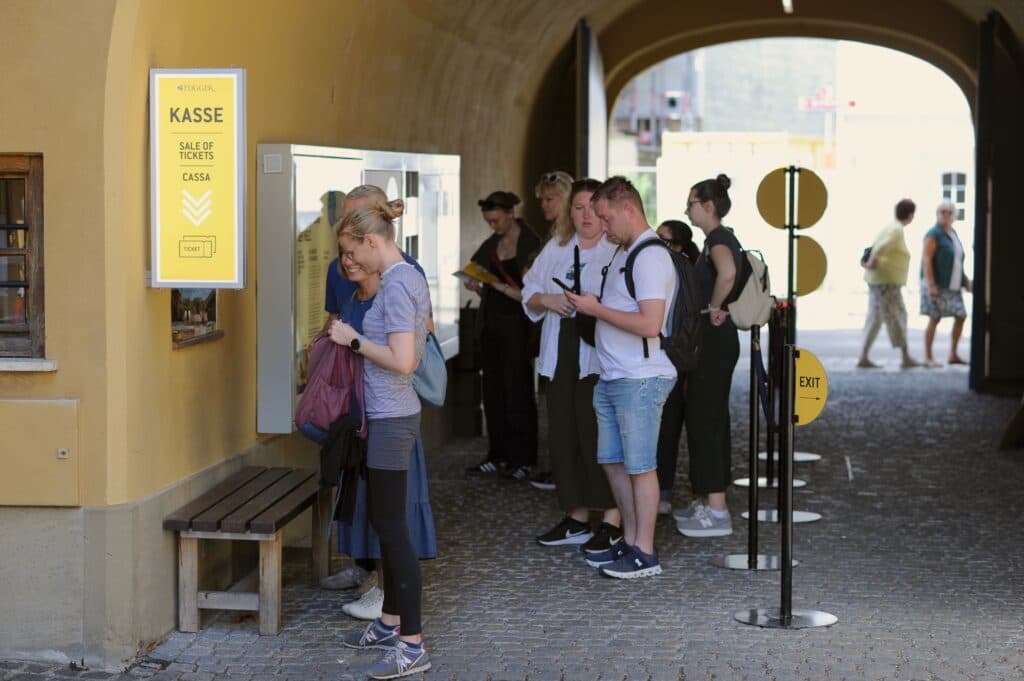
“It’s really good to see, in this day and age, where everybody is out for what they can get, basically for selfishness and greed, that a place like this exists, where people who are in need can be helped and can live in dignity,” said Carol Crook, a visitor from England. “I think we’d all be better off if everyone was looking out for the poor.”
With no rent to worry about, Ilona Barber has plenty of time for community. She works in the Fuggerei’s ticket booth and garden, and as an unofficial Fuggerei ambassador, speaking with visitors about her life.

In the afternoons, she likes to hang out with friends at the Fuggerei’s biergarten. Three of them are planning a road trip to Tuscany next month. They have found a vacation rental big enough for all of them, and the price is right: for the week they’re each paying about 128 euros ($150), or only 150 years’ rent at the Fuggerei.