PRX is a 501(c)(3) organization recognized by the IRS: #263347402.
‘Bone music’ brought Western tunes to Soviet fans by recording songs onto X-rays
Stephen Coates began collecting contraband Soviet bootlegs, known as “ribs,” over a decade ago. He also researched the Soviet-era “art” of recording Western music records using discarded X-rays. Coates discussed this topic and his book with The World’s Host Marco Werman.
Some people living during the Soviet era found creative ways to copy and share forbidden books and music.
Courtesy of The X-Ray Audio project
Stephen Coates started collecting contraband Soviet bootlegs, known as “ribs,” more than 10 years ago.Courtesy of The X-Ray Audio project
During the harshest days of Soviet censorship, it was nearly impossible — and also very risky — to get a hold of Western music. But people in the Soviet Union became experts at devising creative, sometimes extraordinary, ways to copy and share forbidden books and music.
One example was recording music by pressing it onto old X-ray film, instead of vinyl, for underground distribution in the USSR.
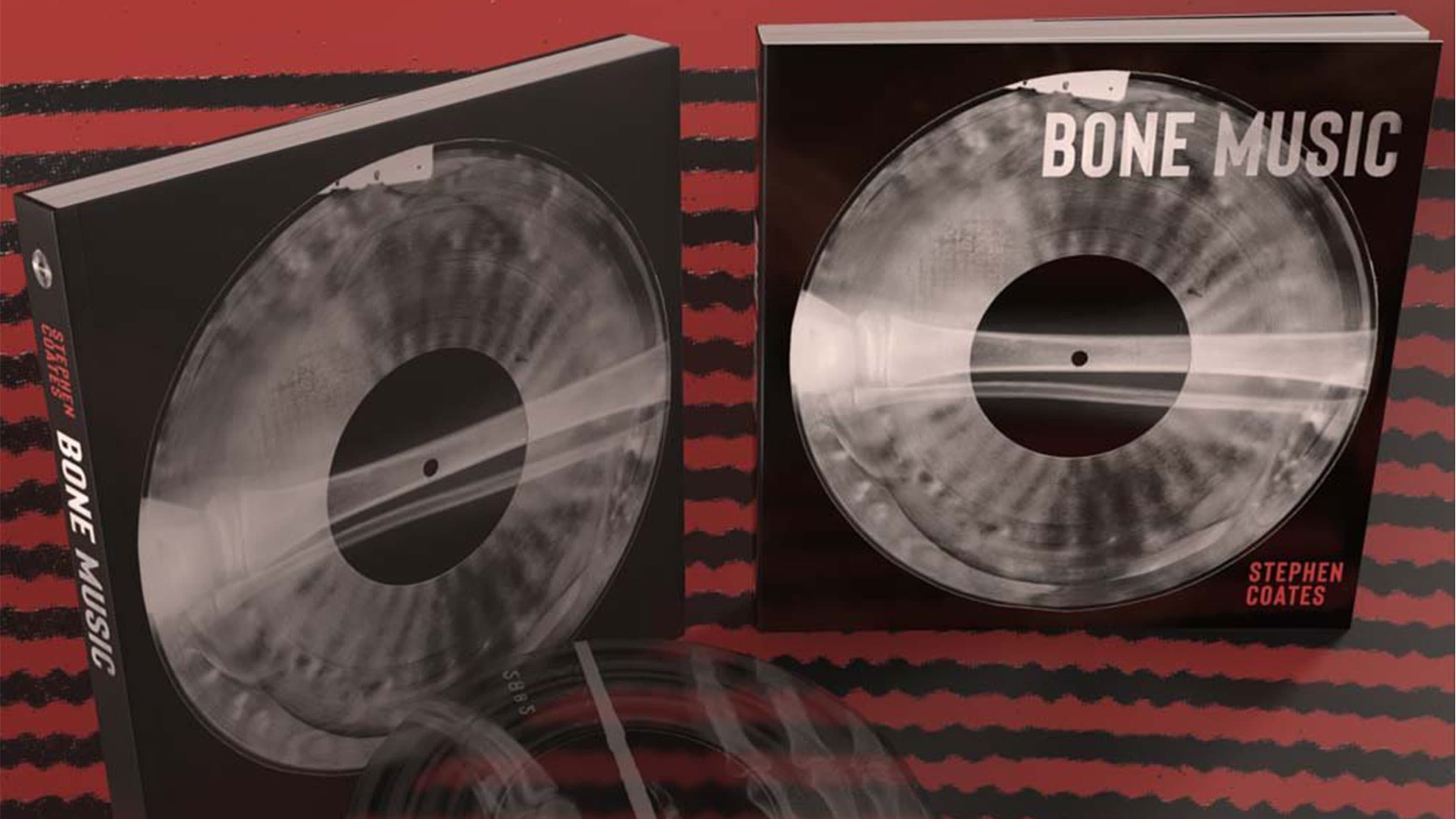
London-based audiophile Stephen Coates started collecting contraband Soviet bootlegs, known as “ribs,” more than 10 years ago. In 2023, he published a book called “Bone Music: Soviet X-Ray Audio.”
He spoke to The World’s Host Marco Werman about his collection.
Marco Werman: Stephen, tell us about the first time you came across a “rib.”
Stephen Coates: I’m a musician, actually, by trade and at that time I was performing regularly in Russia. And my habit after a gig was, the next morning, to go wandering in the local flea market and we happened to be in St. Petersburg, Leningrad as it was in the Cold War era. And Russian flea markets are strange places with lots of strange stalls and, on one particular stall, I saw this thing and it looked like a record, but it also looked like an X-ray.
Now, I asked my young Russian friends about it. They didn’t know what it was. The guy who stole it was kind of rather dismissive, I suppose. But I bought it anyway and brought it back to London, put it on my record. I had to adjust the speed to 78 RPM [revolutions per minute]. That was the first thing I noticed. And when I played it, and I heard “Rock Around the Clock” [by Bill Haley & His Comets]. When you held it up to the window, this record, it was an X-ray that had a pair of skeletal hands on it.
And I suppose — really wow — that was it. So, I was like, “Well, what is this? Who made this?” Secondly, “Why did they make it?” Just thirdly, “How did they make it?” And it’s really those three questions that sort of drove my research for the next years when I was back in Russia.
A bootleg record, with music pressed onto an X-ray of hands.Courtesy of The X-Ray Audio project
Here’s a sample bootlegof “Rock Around the Clock” by Bill Haley & His Comets played on a “rib”:
That’s just amazing. So, let me ask you first. Were these square X-rays and you just slapped the square of, I guess, some kind of cellulose on your platter and then put the needle down?
They’re circular, but they’ve been cut to be circular often quite crudely. Because this is an underground production and each record was made one at a time on these special machines. We call them recording layers. It’s a bit like dub plates that people use to make master records. And so, you’re making one record at a time, so they were literally cut out from square or rectangular X-ray film and placed on a platter recorded onto, one at a time as I said.
But you can play them on a conventional record player. They sound pretty ropey as you just heard. The record that you played has probably suffered because it’s about 70 years old, but also, they never sounded high fidelity. But that didn’t matter because they contained the music that people loved, not the music that people were supposed to love.
I mean, X-Ray film is pretty thin. Did the records wear down over time?
It used to be a bit thicker than it is now but it’s like photographic film, basically, but they absolutely did wear out. In fact, when they were first made, which was just after World War II, and people were still using wind-up gramophones with steel needles — they get torn apart maybe after 10, 15, 20 plays. Later, when people were using electric record players as we do they would last quite a bit longer but they were disposable, let’s put it that way. And once you’d played it to death then you would throw it away. So, the ones that I have collected and that are still around, for some reason people didn’t play them. Maybe they got hidden away or forgotten, or maybe people just treasured them and took good care of them.
Music recorded onto an X-ray of a skull.Courtesy of The X-Ray Audio project
So, these X-rays are used X-rays, and a lot of them are of skulls, so there’s a lot of black around the edges of the round shape. Do you think of these bootlegs also as a visual art form in addition to the music that’s on them?
Totally. I think the thing which is most striking about them is the fact that they are pictures of the interior of people, the interior of Soviet citizens. And actually they’re images of pain and damage — damaged bones quite often.
So, you’ve got this strange and very poignant combination of a very striking image, quite a Gothic image in some respects, plus the music, which is on the record, which is often very beautiful or at least very well loved. So, I think in terms of objects, it’s this combination of the visual striking image and the strange spooky sound that makes them very special.
I guess this is where the expression “you can feel the music in your bones” comes from.
Yeah, totally. Well, you mentioned that they are often called “ribs.” There’s two reasons for that. One reason is that [some of them] were obviously the X-rays of chest cavity. So, you can see the ribs. That’s the obvious reason. And the reason for that is that everybody was getting tested for tuberculosis. So, there were lots of X-ray of people’s rib cages.
But the second reason is the bootleggers, when they were dealing these records or the streets, the traditional place for them to hide them was under their shirts. They were flexible so you could put about 25 on each side under your shirt against your ribs without being spotted by the authorities. And then when somebody came up to you you could you could fish one out.
Music recorded onto an X-ray of a rib cage.Courtesy of The X-Ray Audio project
So, Stephen, I get how rock ’n’ roll would have been openly anti-establishment in the USSR. But why was Satchmo [Louis Armstrong] censored when he was welcomed by [former Soviet Prime Minister Nikita] Khrushchev, right?
That was later, yeah. So, this was a bit earlier, and the interesting thing about the record you played, “Dark Eyes,” the reason I included it is it’s actually a Russian tune. They call it “Black Eyes” actually in Russia, so he’d adapted that and done an improvised version of it, but in the beginning jazz, American jazz in particular, was forbidden.
This is after World War II. During the World War II, he was welcomed, that’s the strange thing. Because the Americans, the Brits, the Soviets were all on the same team, so you could listen to American jazz in Moscow and St. Petersburg or Leningrad in WWII.
But afterwards, when the Cold War started, it became forbidden. Not particularly because anything in the lyrics is anti-Communist or anti-Soviet, it was just because it was the product of the West. We didn’t get their stuff, they didn’t our stuff, it was simply Cold War politics.
Here’s a sample bootlegof “Dark Eyes” by Louis Armstrong played on a “rib”:
Well, there were some bootlegs made also by Russian musicians. “Two Teardrops” was by a musician named Konstantin Sokolsky. What do you know about this artist?
Well, I think in some ways this represents a category of music that appears on these X-ray records, which you could say is the true “bone music” for me, because this is Russian music, at least songs that were sung in Russian, that became forbidden. Why? Well, they became forbidden because the people who sang them or performed them became forbidden. Konstantin Sokolsky, like Petr Lysenko, was what’s called an emigre singer. He was a Russian singer who was living abroad, who was not living in the Soviet Union. And these people who were emigres, who were living in the West, were regarded as traitors in some way.
So, the music that they made — deeply loved by the Russian people — became forbidden at times. And Konstantin Sokolsky is one of those emigre singers. Also some of the other styles that the emigre singers sung in, which were sometimes called Russian gypsy romance, these very passionate, flamboyant styles, drew the ire of Soviet authorities because it was regarded as being unhealthy, passionate music aimed at the lower parts of people’s being, put it that way, likely to evoke unwelcome emotions particularly in young people.
So, this flamboyant music, often the Russian tango, would get forbidden for that reason, too. So, that’s why that’s included. And I think, in some ways, it’s a much sadder story really because this was Russian people’s own music that was becoming impossible for them to listen to, at least for a while.
Wow, control the medium and control the message.
Absolutely.
Here’s a sample bootlegof “Two Teardrops” by Konstantin Sokolsky played on a “rib”:
As to one of your key questions earlier, who made these “ribs?” Like who took the risk? Who were the bootleggers and what motivated them? Did you find out?
What happened is that after World War II, as music started to become forbidden — music which had previously been available — you’ve got music lovers, people like you, people at me, ordinary people who could not listen to the music they wanted to, some of those people took action into their own hands. They had the technical knowledge and perhaps the courage, and the anti-establishment flair, let’s put it that way, to try and change things.
And what they did is they built their own recording machines. These are based on machines that you know were sort of used in recording studios and radio stations but they built their own bootleg machines basically. And in underground workshops, out of the way, outside of the authorities, they would start to copy forbidden music, whether copying it from radio or copying it from smuggled records, even recording forbidden songs live, in fact, as well.
So, it started off with a group of music lovers. It became a business, there’s no doubt about that, because people wanted what they were producing. So, it turned into a black market business with various rascals involved later on, but it was started off really by passionate music lovers.
London-based audiophile Stephen Coates published his book called “Bone Music: Soviet X-Ray Audio” in 2023.Courtesy of The X-Ray Audio project
How risky was it for these bootleggers to make these “ribs?”
Well, some of them went to prison, so it was risky. My research was based, in part, on interviews with one of them who went to prison in the 1960s and was involved with a gang of bootleggers in the late ’50s. So, the authorities tried to stamp down on it.
You wouldn’t go to prison for buying one of these records. You might get in trouble. You might get your name noted, put on your record, maybe like getting caught smoking weed or something, right? You might get off with a caution.
But for the people who made the records and dealt them, they were facing prison sentences, and time in a Russian prison at that time would not have been pleasant. It was a risky business.
How risky was it, if you had one of these in your possession, to play them back in your home? I suspect to keep the volume low?
Keep the volume very low. I did speak to people about that and say well, because ordinary people, ordinary kids really — 17, 18, 19-year-olds — were trying to buy rock and roll records. Well, they’d play them very quietly or they would play them in places where they were pretty sure that they were with their friends and nobody could hear them. But some people took much more chances and would have parties and stuff but they running the risk of getting in trouble. As I said, you probably wouldn’t go to prison just for playing them, but in the Soviet Union, having your name noted, written down, could impact things like your career, your studies, how you could advance in life. So, it was a social risk, let’s put it that way, for them.
Stephen, you mentioned earlier how you used to gig as a musician in Russia, and I gather that since the Russian invasion of Ukraine, your collecting has gotten pretty limited.
It has indeed. I mean, what happened basically, I was in Russia many times, right up until COVID-19, actually. And then COVID ended and I was planning to be back there. But then, of course, Russia invaded Ukraine, and that’s really put a stop to it, sadly.
People in the Soviet Union became experts at coming up with creative ways to copy and share forbidden books and music.Courtesy of The X-Ray Audio project
So, not to put a crimp in your own collection, but for anyone interested in collecting “ribs,” what should they be looking out for?
OK, so people are selling them now on the internet, on eBay. What happened is that, as a consequence of my project, the exhibition, the books, etc., is we inadvertently created a market because these records were forgotten in Russia. Nobody took any notice of them. Of course, entrepreneurial Russians since have started to sell them.
I would just say be very very careful. If you go to my website there is a blog post about what to look out for so that you know that you’re not getting ripped off. There are lots of fakes. You could say there’s lots of bootleg bootlegs, in a strange way. It’s all in the spirit of the original endeavor but, obviously, if you want something which was in a really recorded back-in-the day piece of forbidden samizdat culture, do be careful, but If people check out my website, there is a post on there about what to look out for.
Basically, if it’s got a song which was written in the 1970s onwards, it’s fake. Because this culture came to an end in the ’60s.
For purists, like listening to The Beatles as if they recorded on a 78 shellac, I imagine it won’t be interesting. I’d be curious to know from you, though, Stephen, what you feel when you listen back to these “ribs,” because they’re kind of transporting. Why do you find these so compelling?
They are, without any doubt, sometimes a difficult listen, just from a Hi-Fi (High Fidelity) perspective. But they are also very haunting and time has lent them a certain evocative ghostly beauty, I think. So, if you ever enjoy the sound of a shellac record from the ’30s, you know in that wonderful kind of nostalgic distance which time has lends it, well you get that from these records, but of course if you know the story of them too, then that’s enhanced. And it’s important to remember, I think, speaking to old people who remember these records in the Soviet Union, it didn’t matter that they sounded terrible because they were listening to music which they loved and I think that was much more important to them than the fact that, even at the time, they sounded pretty dodgy.
This interview has been lightly edited and condensed for clarity.