Public radio’s longest-running daily global news program.
©2025 The World from PRX
PRX is a 501(c)(3) organization recognized by the IRS: #263347402.
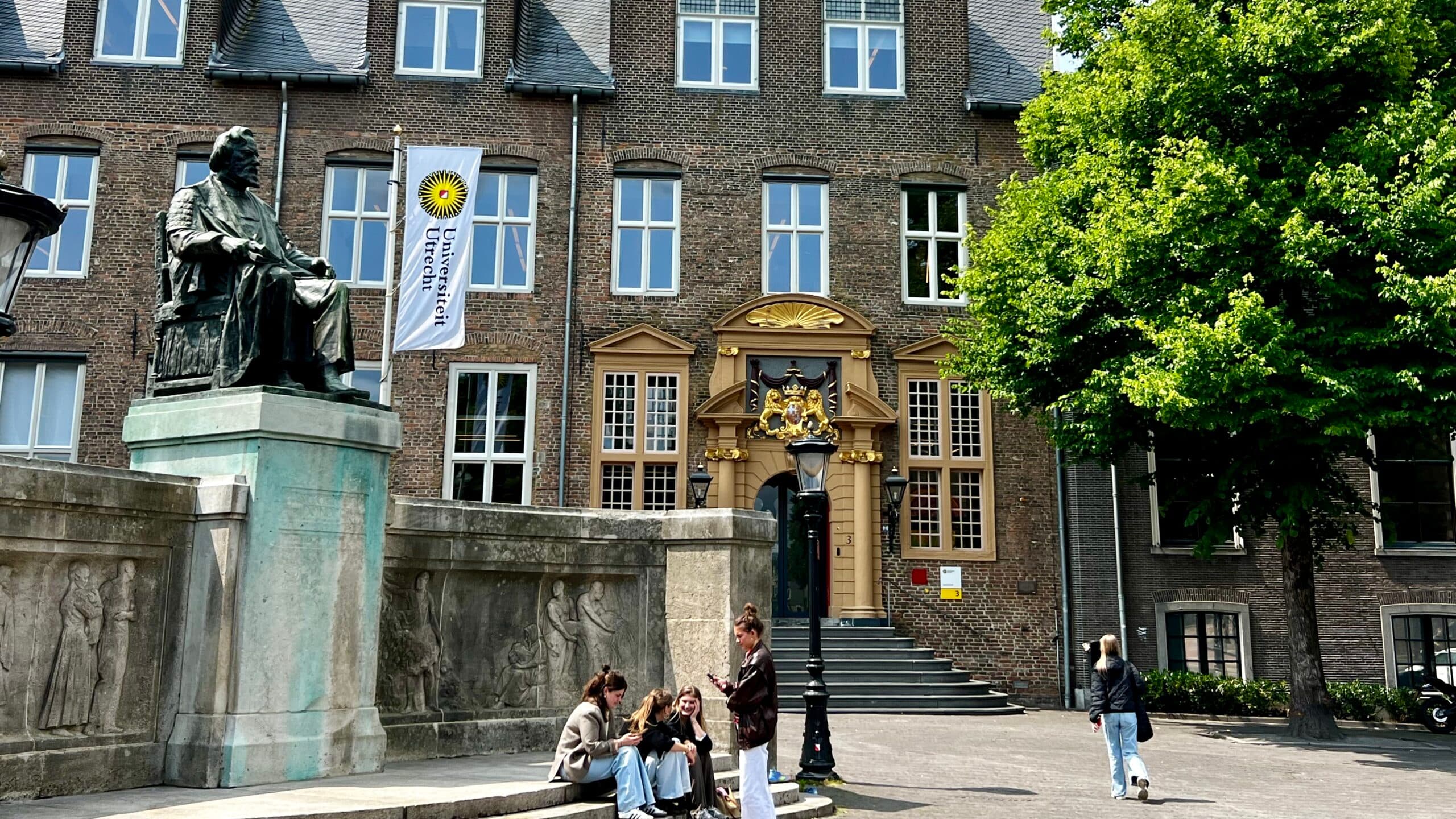
In the Netherlands, students who began university between 2015 and 2022 have come to be known as the “bad luck generation” for the amount of debt they’re stuck with, unlike others who have benefited from government assistance. Now, they’re looking for compensation.
Students outside Utrecht University’s law department on June 4, 2025.
When Tijn began his undergraduate studies at the University of Amsterdam in 2015, he wasn’t entirely sure what he wanted to do afterward. Like many Dutch students, finishing school was enough.
“As long as you get the diploma, that’s most important,” Tijn, who asked to be identified by his first name only. “It doesn’t really matter what direction, what topic — just finish your studies, and that will lead you somewhere in a career.”
Case in point: The now 28-year-old works as a strategic advisor for the regional government based at The Hague. While the role doesn’t have much to do with his bachelor’s in European studies, nor his master’s in philosophy, he counts himself lucky to have the job.
But, his education came at a staggering price: Tijn said he owes the Dutch government nearly $90,000 in student debt.
“I hardly ever look at it because it’s not really a nice sight,” he said.
That kind of Faustian deal with the financial devil — piling up debt in exchange for a shot at a stable future — is something many American students know all too well. But in the Netherlands, it’s the reserve of students like Tijn, who began university between 2015 and 2022. Known as the pechgeneratie, or the “bad luck generation,” they studied during a period when the Dutch government went from paying students a monthly stipend to exclusively offering loans — with a lot of promises attached.
Years later, the government reneged on many of those promises and reverted to giving new students stipends, leaving members of the “bad luck generation” feeling left high and dry.
“I think they are quite unlucky,” said Pieter Slaman, a historian at Leiden University and an expert on Dutch higher education. “There’s a lot more to worry about in the day when I studied.”
For decades prior, Dutch students benefited from a generous “basic grant” — a monthly stipend of about $300 at the time — to help with living costs and reduce borrowing.
But in 2015, the Dutch government scrapped the grant in favor of a new loan-based system. The decision had broad support across the political spectrum. The left argued that the grant unfairly benefited wealthier students.
“If you take into account that proportionally a large share of university students is from the higher income groups in society, if you give them all a basic grant of the same amount, basically that turns into pumping money from lower income groups to higher income groups,” said Slaman.
Meanwhile, he said the right framed higher education as a personal investment:
“Conservative parties said, ‘Well, students will earn a lot of money because of their studies in the future, so they should look at these studies as an investment in their own future. So, it is only fair if they bear their own cost.’”
To ease the transition, the government offered zero-interest loans and promised leniency when it came to repayment.
“A student loan is really a completely different loan than a commercial loan or a mortgage,” said then-Education Minister Jet Bussemaker, responding to students’ questions in a 2015 interview. “The loan will also be [forgiven] if you have not been able to pay off your student loan even after 35 years. And we have agreed with banks that the student loan will only be included to a limited extent when you take out a mortgage.”
Bussemaker, now a professor at Leiden University, did not respond to The World’s request for comment.
But Slaman says such assurances were complicated by a cascade of unforeseen economic shocks down the road: The COVID-19 pandemic, Russia’s invasion of Ukraine, rising inflation and a burgeoning housing crisis all contributed to a soaring cost of living in the country.
Some students, like Tijn, found themselves forced to borrow more as the pandemic disrupted their timeline to complete their degrees and the prices increased. Some, meanwhile, found other ways to invest in their future with government loans.
“People started to borrow a lot because it was quite a cheap loan and, for instance, their parents used it to renovate their bathroom,” said Slaman. “A lot of students used it to invest in stocks, because they had to pay so little interest and they could make such large profits.”
One such student was Stefan Hengeveld, who borrowed around $25,000 — some of it spent on socializing, some of it on the stock market.
“I took out the money because, well, they first said it’s an interest-free loan,” he said. “So I thought, ‘Interest-free? I’m taking all the money because I can put it [in] the bank, put it [in] the stock market, and just magically make more money.”
While Hengeveld said he earned enough from investing his loan money to help purchase a home, many students weren’t so lucky.
Amid growing frustration from graduates, the government reversed course in 2023 and brought back the basic grant for students.
Since then, “the bad luck generation is owed compensation” has been a rallying cry among those graduates left with high student debt. Others have chanted “Niet mijn schuld” — a play on words that can mean both “Not my fault” and “Not my debt.”
This year, the government paid up, offering indebted graduates roughly $40 per month for every month they attended university under the loan-only system — about $1,800 total for most.
While the government has announced additional payments, Mylou Miché — who was chair of the National Dutch Students Association when she spoke to The World — said the gestures fall short.
“We are happy that we get some, but we still find it not enough — It’s not sufficient enough to compensate that generation,” said Mylou, who owes about $46,000. “We still see that those students still have a lot of disadvantages, so we still want them to be compensated.”
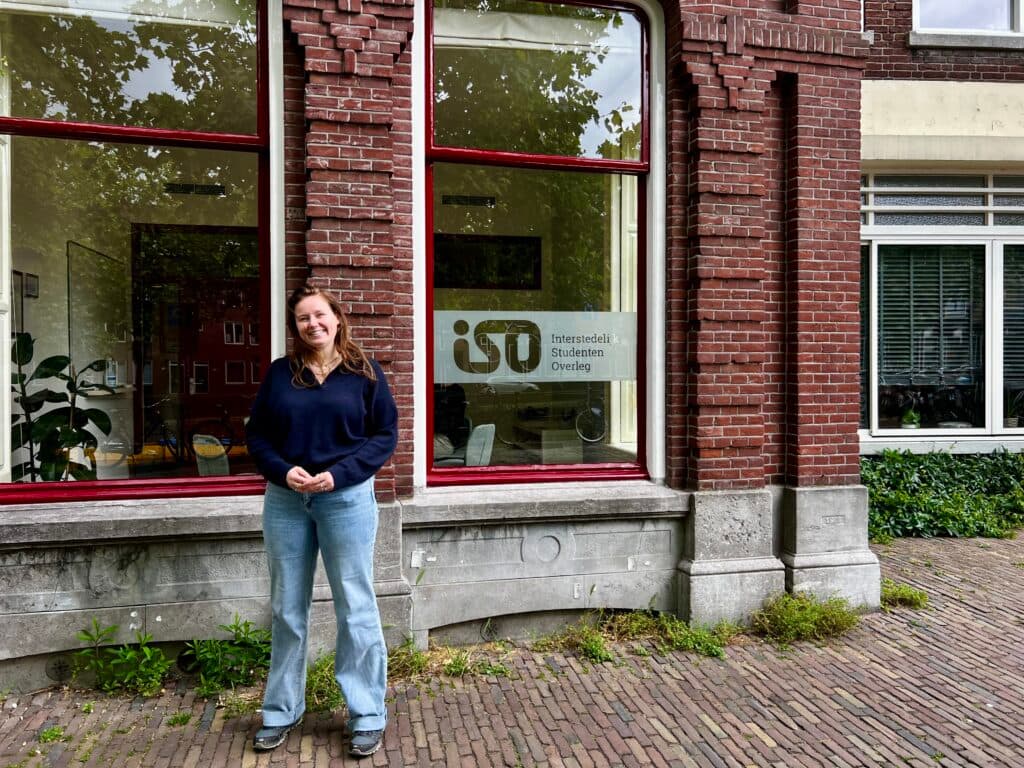
Since 2022, the interest rates on the once-zero-interest loans have increased to 2.57%. And while the former education minister Bussemaker said the heavier reliance would not impact mortgages on loans, many like Tijn now feel duped.
Tijn and his girlfriend want to buy a house, but the debt he was told wouldn’t count against his mortgage application now does.
“They promised us these terms [would] stay the same,” he said. “And now, years later, these terms are changing, and that’s where I can blame myself — I just believed my own government and, well, here we are.”
That five-digit debt now hangs over him like a dark cloud, he said.
If he could speak to his 17-year-old self, he says, he would offer a simple piece of advice: Borrow — and spend — less.
The Ministry of Education declined to comment and instead referred to its website.
Editor’s note: This article has been updated to remove sensitive information.