Public radio’s longest-running daily global news program.
©2025 The World from PRX
PRX is a 501(c)(3) organization recognized by the IRS: #263347402.
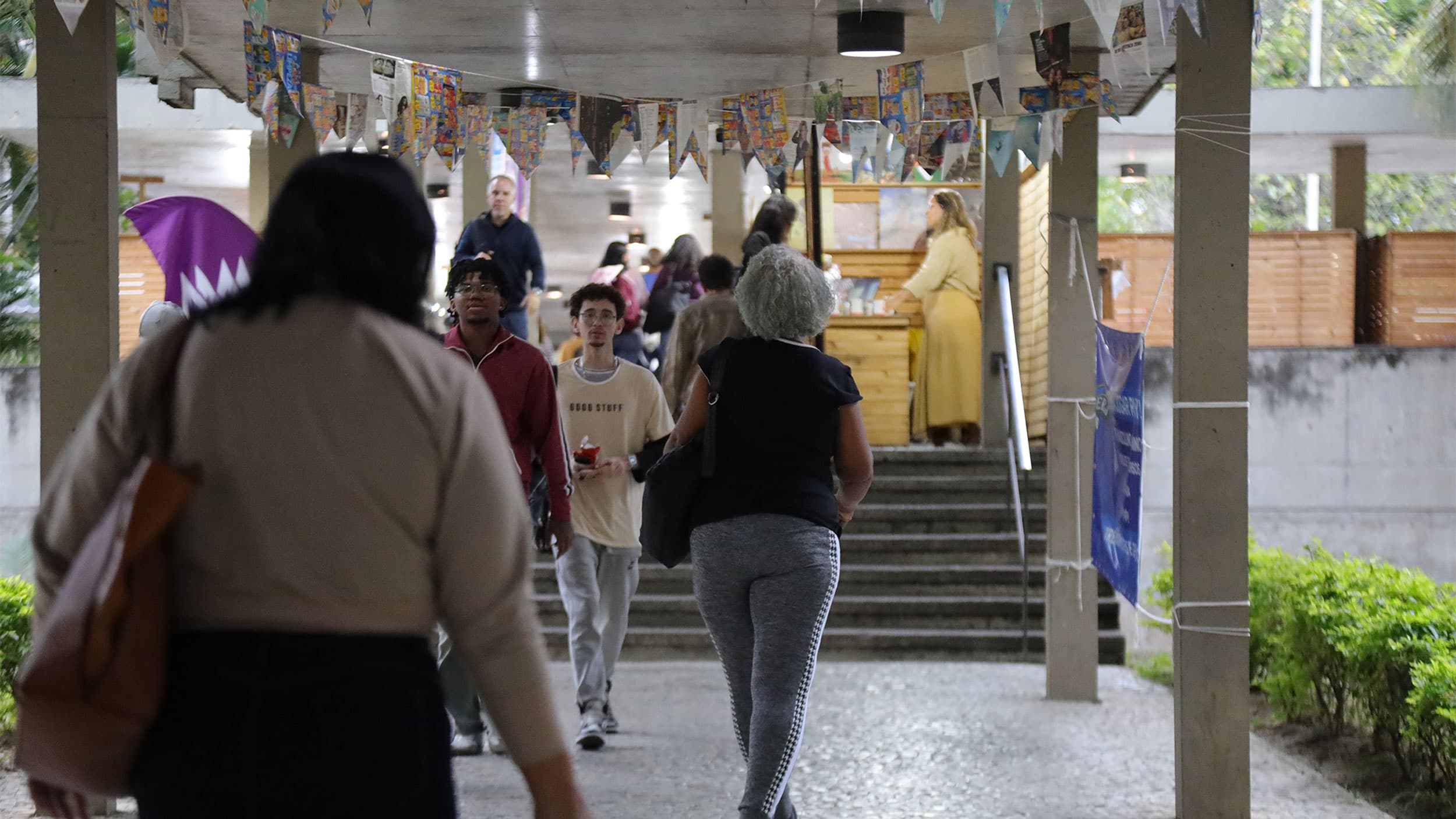
The US Supreme Court effectively ended affirmative action policies in a 2023 ruling, stating race-based college admissions were unconstitutional. But in Brazil, not only is affirmative action alive and well — it’s thriving.
Rio de Janeiro State University was one of the first Brazilian universities to implement a system of affirmative action in 2003.
At the entrance to the main building of Rio de Janeiro State University, one thing stands out as students walk quickly back and forth to class. The crowd is diverse. Just about every shade of skin color can be seen, representing the demographics of the Brazilian state of Rio de Janeiro.
And that is not by accident. It has taken years to get to this point.
“Historically, there were almost no Black people at these universities,” said Wescray Portes Pereira, a sociologist at the university, who himself benefited from affirmative action there. “They were largely white and middle class, and very restricted to this sector of society.”

Rio de Janeiro State University was one of the first Brazilian universities to implement a system of affirmative action in 2003. Today, the policy is benefiting higher education and is thriving across the country. Despite rollbacks in the United States, educators say affirmative action in Brazil is here to stay.
“I think it’s been very successful,” said João Feres Júnior, the head of the Rio de Janeiro State University’s Multidisciplinary Study Group on Affirmative Action, GEMAA. “It’s totally transformed the face of public universities in Brazil and opened it up to people who were not there before. In other words, you know, non-whites and people of low income.”

That includes people like David Gomes.
“It was always just my mom and me,” he said. Gomes grew up in one of Rio’s many favelas, or slums. He was the first of his family to go to college through the Rio de Janeiro State University racial quota system. He graduated as a history major and went on to get his master’s degree in urban planning.
Today, Gomes is the head of the academic assistance and affirmative action department at the university.

“The quotas system helped me to build a life,” he said “And now, I’m here to help others like me get into the Rio de Janeiro State University and graduate, have a career and also give back to society.”
Quotas at universities vary according to the school and the racial demographics of the state where they’re located.
In general, at federal universities, 50% of seats are awarded based solely on academic achievement, while 50% are allotted for the quota system, including people self-identifying as Black, Indigenous and people with disabilities.

It has been a game changer. According to the 2022 Higher Education Census, more than 100,000 students benefited from racial quotas in Brazil just in the previous year.
But from the beginning, affirmative action was not an easy sell.
“I remember at the time. People would just go on and on. Talking about how quota students would destroy the university,” said Vânia Penha-Lopes, a Brazilian professor of sociology at Bloomfield College of Montclair State University and the author of the 2017 book “Confronting Affirmative Action in Brazil.”

Penha-Lopes said those against affirmative action said it would tank university performance and cause racial tension that supposedly never existed before in Brazil.
“Because of the myth of racial democracy,” she said. “And those who are against any kind of reparations, any kind of compensation, would say, ‘Oh, you’re copying the United States.’”
Brazilians long looked to the United States for inspiration on affirmative action. The policy was implemented in the US following the 1964 Civil Rights Act. But there are some big differences between the programs in the two countries.

In the US, race was one of the factors used for admission. But quotas were prohibited by the Supreme Court back in the late 1970s. In other words, US universities couldn’t set a percentage or a number of students who would benefit.
Meanwhile, the Brazilian Supreme Court unanimously approved racial quotas at Brazilian universities in 2012.
“This has been really positive,” said Elaine Monteiro, a historian who has also studied at Rio de Janeiro State University through the quota system. “The democratization of university access for the poorest people, and for Black people.”

But there has been pushback.
In one Instagram video, a Black sociology student from the Rio de Janeiro Federal University denounced quotas in Brazil, saying all applicants really need to do is study.
Conservative lawmakers have also done their best to attack the policy. During one speech during a debate about quotas, Senator Flavio Bolsonaro — the son of former far-right President Jair Bolsonaro — asked, “What about poor whites?”
“We can’t create an apartheid [system] for those people who don’t have Black skin or a disability and who sometimes live in the same favela, and who studied in the same public school,” he said.
Meanwhile, back on the Rio de Janeiro State University campus, those promoting racial quotas say it hasn’t led to racial divisions.
“These policies are effective. They are changing people’s lives,” Pereira said. “Those benefited by the quota system go on to better jobs. They start to have a different degree of social mobility in relation to their parents.”
And that, he says, translates into a positive for society in general. Millions of people have been lifted from poverty in Brazil over the last 20 years.
And affirmative action policies have played an important role in that success.