Public radio’s longest-running daily global news program.
©2025 The World from PRX
PRX is a 501(c)(3) organization recognized by the IRS: #263347402.
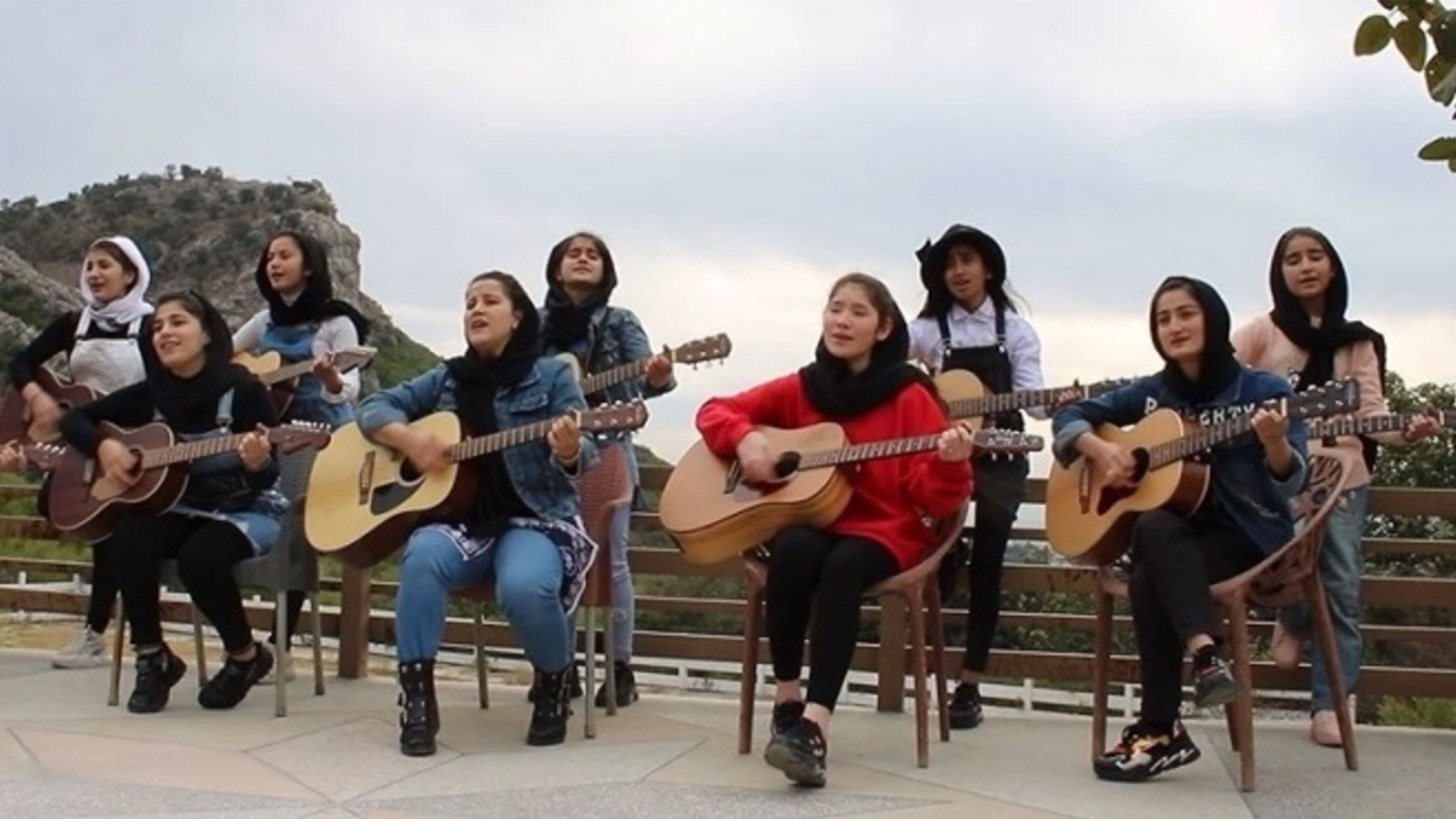
A group of Afghan teenage girls once found hope through music. They were then forced to escape Taliban rule and take refuge in Pakistan. Now, Pakistan wants to send them back.
Young Afghan girls play their guitars together in a band. The Taliban has effectively banned music in Afghanistan since it regained control of the county in 2021.
Yasemine Khodadadi was 11 years old when she worked the streets of Kabul selling gum, pens and cleaning shoes to help support her family.
That was in 2017, when Kabul was still a war zone. Taliban forces were in a bitter battle with Afghan and American forces.
“I was traumatized,” Khodadadi said, remembering how suicide bombings frequently struck crowded areas.
It was around that time when American guitarist Lanny Cordola, who once played with the rock bands Guns N’ Roses and The Beach Boys, founded a nonprofit music school for Afghan girls in Kabul called “The Miraculous Love Kids.”

Cordola had a mission to get Afghan girls off the dangerous streets and into a safe space where they could learn music and English, and explore their own creativity.
Khodadadi was one of his students.
“When I picked up the guitar and held it, I was like ‘wow,’” she recalled. “It was a really different [feeling].”
At its peak, the school had hundreds of students, Cordola said.
In 2021, the music students collaborated with rock musician Sammy Hagar on a cover of Steve Miller’s song “Fly Like an Eagle.”
Hagar sent them a personal video message: “Stay strong, and fly like an eagle.”
Then, the Taliban returned.
The takeover of Afghanistan in August 2021 left many in disbelief. Cordola fled to Pakistan on the last commercial flight, but his students were left behind.
One of them, 16-year-old Zakia Payandeh, remembers her father smashing her beloved guitar into pieces. He feared it would draw unwanted attention from the Taliban.
“He used the frame for firewood,” she said, tears in her eyes.
The music school shut down. And the girls went into hiding.
It took Payandeh and her sisters two years to escape to neighboring Pakistan. It was a grueling, weeklong journey.
Today, four of Cordola’s former students and their families live in Pakistan. They applied for resettlement to the United States and were on track to leave earlier this year.
But then, everything stalled.
“The Trump administration stopped processing refugees,” said Shawn VanDiver, president of #AfghanEvac, a coalition of organizations helping America’s Afghan allies resettle in the US.
Between 10,000 and 15,000 Afghan refugees in Pakistan were cleared for resettlement to the US, according to #AfghanEvac.
“They include lawyers and prosecutors who worked with the Americans to put Taliban members in jail,” VanDiver explained. “These are people who helped us gather intelligence, they’re our partner forces who we fought, trained and bled alongside. Their relationship with the US puts them at risk.”
Pakistan has ordered all Afghans to leave, or face deportation. That includes thousands already cleared for US resettlement.

“It’s wrong,” VanDiver said. “It’s not simply changing policy. It’s sending people to certain death.”
For the girls, deportation likely doesn’t mean immediate death, but it does mean a return to a life without basic rights like education, employment and freedom of movement.
They had gone through all the necessary steps to be resettled in the United States, guitarist Cordola said. And they were scheduled to leave Pakistan for the US in February.
Now, they are so worried about being sent back to Afghanistan that they’ve been hiding indoors for three weeks.
Cordola described their condition: “no sunlight, no fresh air, stir crazy, cabin fever.”
Zakiya Payandeh said that every evening, kids gather in a nearby park to play while the girls can only look on from behind a window with envy.
“This house is like a prison,” Payandeh added, “and we feel like prisoners. Nowhere is safe.”