Public radio’s longest-running daily global news program.
©2025 The World from PRX
PRX is a 501(c)(3) organization recognized by the IRS: #263347402.
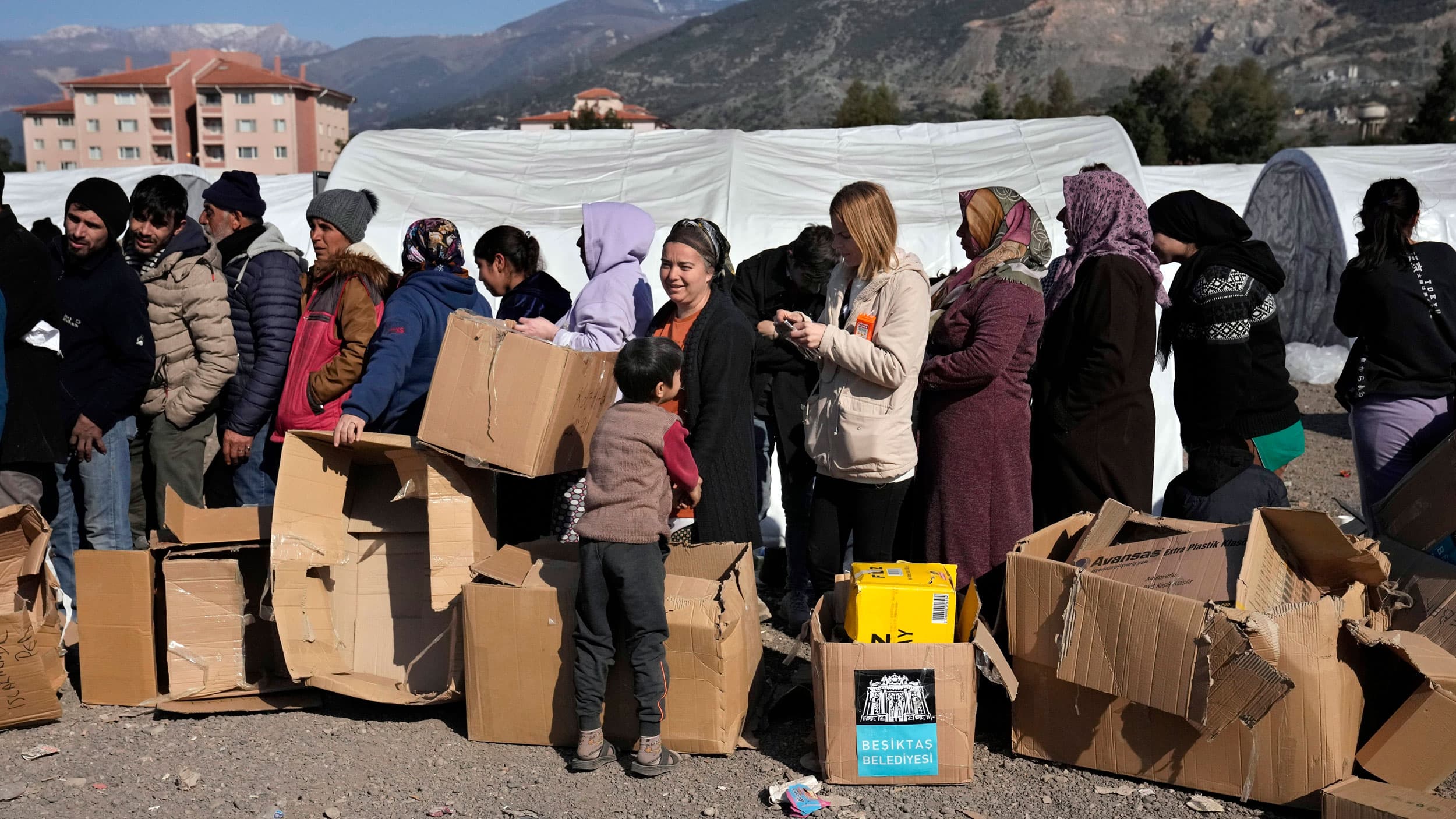
After a catastrophic earthquake destroyed northwest Syria, assistance is slowly trickling in. It took a full week for the UN to strike a deal with the Syrian regime to open two additional crossings into the region. US Ambassador to the UN Linda Thomas-Greenfield talks with host Marco Werman about the situation.
People who lost their houses in the devastating earthquake, lineup to receive aid supplies at a makeshift camp, in Iskenderun city, southern Turkey, Tuesday, Feb. 14, 2023. A convoy of 11 trucks from a United Nations agency crossed into northern Syria from Turkey on Tuesday, just hours after the UN and Syrian government reached an agreement to temporarily authorize two new border crossings into the rebel enclave.
Syria has become a pariah state under the government of President Bashar al-Assad. He’s been accused of gassing his own civilians, and bombing hospitals and schools.
But the catastrophic earthquake that hit northwestern Syria last week is opening some doors.
Arab leaders who once shunned him are reaching out with aid, and assistance from the United Nations is trickling in. It took seven days for the UN to strike a deal with Syria to open two additional border crossings into the region.

US Ambassador to the UN Linda Thomas-Greenfield addressed the underlying reason for the delay in a conversation with The World’s host Marco Werman.
“I wouldn’t put the blame on the UN,” Thomas-Greenfield said.
“The US made very clear on day one that we would provide assistance directly to the Syrian people through any means possible. Where the blame lies [is] with the Syrian government. They took seven days to reopen the border. NGOs, the UN, donors were all working desperately to get assistance to the people of Syria. It is the Syrian government, the Assad regime, that let the Syrian people down.”
This interview was lightly edited and condensed for clarity.