Public radio’s longest-running daily global news program.
©2025 The World from PRX
PRX is a 501(c)(3) organization recognized by the IRS: #263347402.
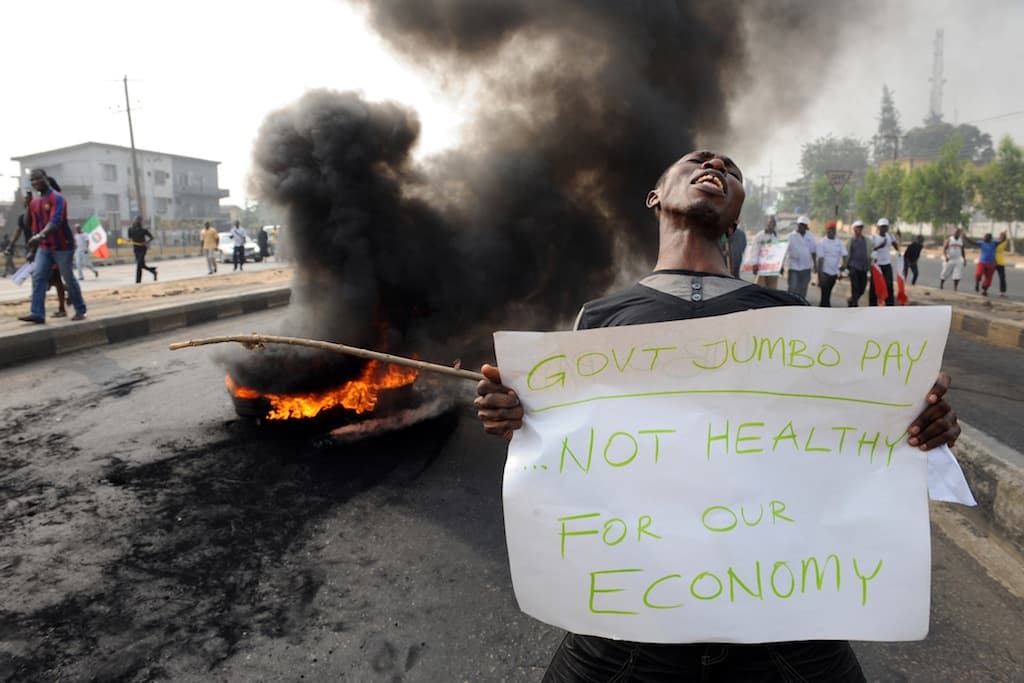
Nigerian President Goodluck Jonathan removes oil subsidies, and the nation responds with a strike.
A man carries a placard beside a bonfire during a demonstration against soaring petrol prices following government’s decision to abolish decades—old fuel subsidies, on January 9, 2012 in Lagos. One protester was shot dead in Nigeria’s commercial capital Lagos during the national strike over fuel prices, a union leader said.
NAIROBI, Kenya — For many Nigerians the only good thing their government has done for them is provide cheap fuel by subsidizing the cost of imported fuel, but at the start of this year President Goodluck Jonathan removed subsidies, and prices doubled and the people are not happy.
The president's decision, which on the plus side will both save the state money and challenge some long standing vested interests, has triggered a nascent Occupy Nigeria movement and, today, a widespread national strike.
The irony of course is that Nigeria is Africa's biggest oil producer, but the total failure by a succession of governments to invest in any kind of refining, preferring to cash in quick by selling crude oil to mostly foreign companies, means the country imports its petrol and other fuel products.