Public radio’s longest-running daily global news program.
©2025 The World from PRX
PRX is a 501(c)(3) organization recognized by the IRS: #263347402.
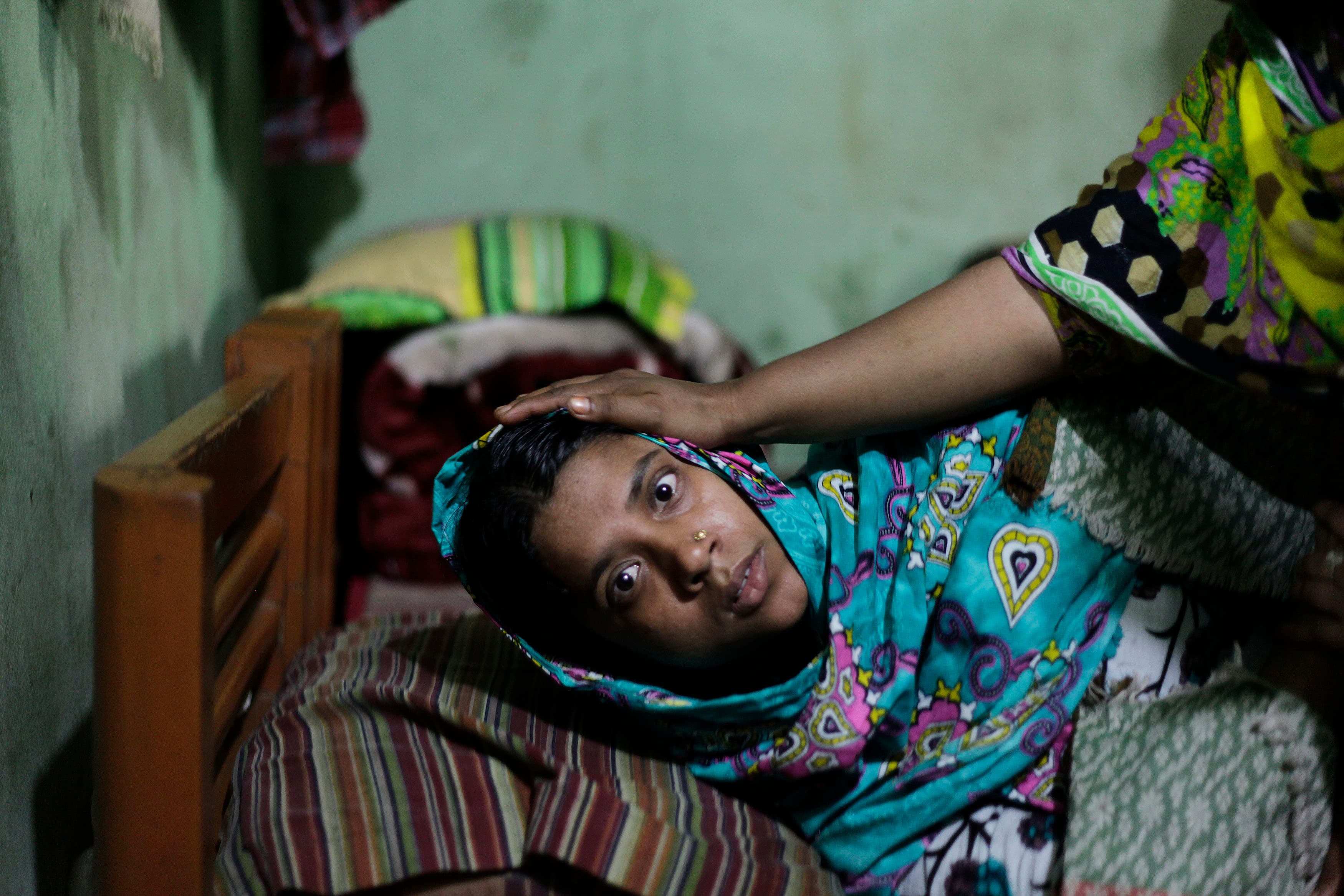
A court is going after the owners of Tazreen Fashions garment factory in Dhaka, Bangladesh, after possible safety violations may have contributed to the deaths of more than 100 people.
Tahera Begum, 25, who survived a devastating fire in a garment factory, lies inside her slum room in Savar November 30, 2012. Begum, an operator of Tazreen Fashions garment factory, escaped the fire which killed more than 100 workers on November 24. According to Begum’s husband, she became mentally ill and lost her memory after escaping the fire.
Last November, the Tazreen Fashions garment factory in Dhaka, Bangladesh, went up in flames. More than 100 workers died.
The stories of how they died are terrifying. The Wall Street Journal's Syed Zain Al-Mahmood interviewed survivors of the fire. They told him that as alarms went off, managers forced them to sit-down and keep working. They were told it was just a "fire drill."
"It wasn't until after smoke the smoke had filled the factory floors that people realized this was an actual fire and tried to get out," he says.
The fire was one of the worst to hit Bangladesh's wealthy garment industry, often viewed as the economic driver of the entire nation. But Al-Mahmood says actions to correct safety problems have oftentimes been ignored. The garment industry is powerful–Bangladesh exports more than $20 billion a year. And those responsible for it tend to have enough influence to keep them protected.
But that changed Tuesday. A court in Bangladesh issued a warrant for the arrest of the owners of the Tazreen Fashions garment factory. They, and four other management level employees, are being accused of homicide.
Al-Mahmood says this is the first time Bangladesh has gone after factory owners for safety violations. He says the outcome could be huge. It could change the working conditions for garment workers. It could show the government takes safety conditions seriously.
"Labor activists have welcomed this," he says. "If the factory management of Tazreen are indeed held accountable, it will send a strong message that times are about to change."
But those six have yet to turn themselves in. Even if they never do, the courts will try them in absentia. So they will, see their day in court.
And many survivors of the fire are no doubt curious to see how they rule.