Public radio’s longest-running daily global news program.
©2025 The World from PRX
PRX is a 501(c)(3) organization recognized by the IRS: #263347402.
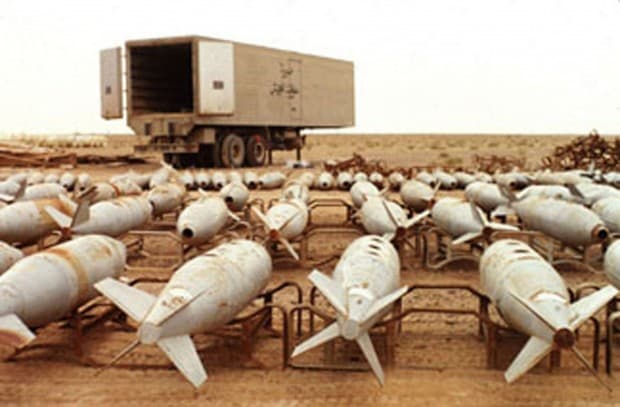
It is one thing to agree on the inspection and destruction of Syria’s chemical weapons arsenal. Possibly quite another to actually do it. But there is one precedent for this kind of weapons inspection: Iraq.
Chemical warfare agent filled 500 pound aerial bombs await destruction at Muthanna, Iraq in this undated file photo. Former U.N. arms inspector [Scott Ritter], once accused by Iraq of spying for the United States, returned July 29, 2000 to film a documentary about weapons sites and the impact of U.N. sanctions. [Ritter] said on arrival in Baghdad he hoped his mission could help break the impasse between Iraq and the United Nations over the suspended inspections programme and Iraq’s allegedly continuing efforts to produce weapons of mass destruction. ?,? FROM SOURCE – RTXJWEO
It is one thing to agree on the inspection and destruction of Syria’s chemical weapons arsenal.
Possibly quite another to actually do it.
But there is one precedent for this kind of weapons inspection: Iraq.
After the Persian Gulf War in the early 1990s, the UN destroyed large quantities of Iraqi chemical weapons.
As director of Arms Control at the British Defense Ministry Paul Schulte helped oversee the destruction of those arsenals.
He says if the Syrians have decided they are going to give up their chemical weapons the international community might want to revisit what happened to the chemical weapons stockpiles in Iraq after the 1991 conflict.