Public radio’s longest-running daily global news program.
©2025 The World from PRX
PRX is a 501(c)(3) organization recognized by the IRS: #263347402.
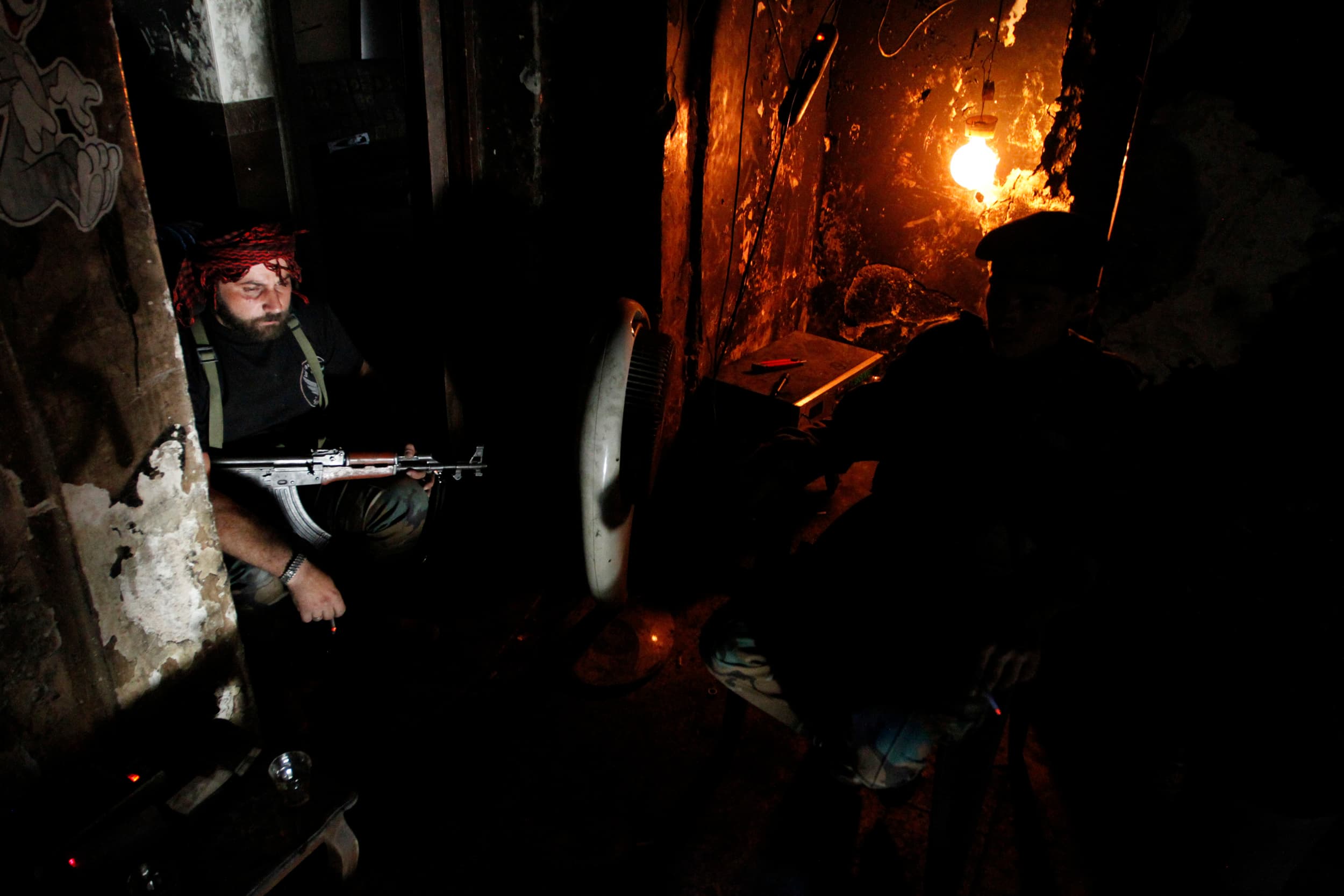
George Packer, the author of “The Assassins’ Gate: America in Iraq,” sees multiple problems with the diplomatic effort to destroy Syria’s chemical weapons. Packer talks with anchor Marco Werman about the connections between September 11th, Iraq and Syria.
Free Syrian Army fighters smoke cigarettes as they rest in Aleppo’s Qastal al-Harami neighbourhood September 11, 2013. REUTERS/Nour Kelze (SYRIA – Tags: CIVIL UNREST CONFLICT) – RTX13HR4
Syria's insurgents aren't the only ones who think the prospect of a US intervention is now remote.
Packer is the author of "The Assassins' Gate: America in Iraq" and more recently "The Unwinding: An Inner History of the New America."
According to Packer, White House officials have been "hit in the face with overwhelming rejection" of their plan to intervene.
Diplomacy, he says, "gives (President Obama) a way out. And that's what he wanted. So the speech last night probably shouldn't have been given at all. They should have gone about the business that they want to do now which is negotiate in Geneva with the Russians so that everyone can save face and get out of this without any more disaster."
Packer says Americans are war weary.
"The Middle East just looks like a flaming swamp right now. And Americans see that and think: 'This is not our problem, this is far away, this is unbelievably complicated and it's just intractable and unresolvable and nothing we do and certainly nothing in the form of tomahawk missiles, so why should we get pulled in again?'"