Public radio’s longest-running daily global news program.
©2025 The World from PRX
PRX is a 501(c)(3) organization recognized by the IRS: #263347402.
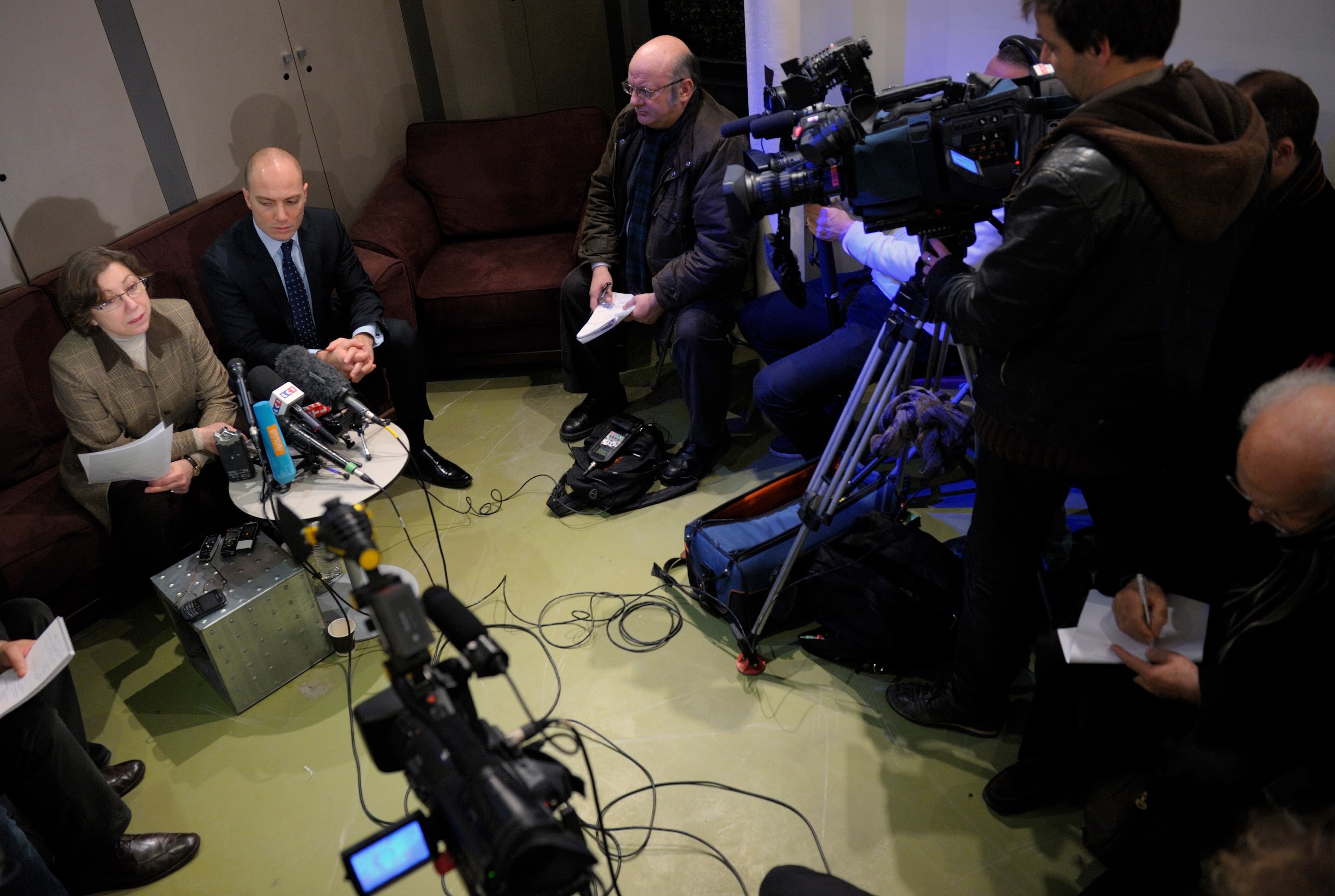
Journalists trapped in the city of Homs were pleading for help getting out of the embattled Syria where dozens of people continue to die under a relentless attack by the Syrian government. Meanwhile, efforts to get Syria to halt the attack will resume at a meeting Friday, though there is little hope for success.
Basma Kodmani, left, a senior official with the Syrian National Committee, and Ausama Monajed, second from left, an SNC adviser, speak during a news conference in Paris on Feb. 22, 2012. The SNC said Wednesday it was coming to the view military interventi
Syria’s assault on the city of Homs continues into its 20th day, claiming still more lives.
Meanwhile, other journalists who are still trapped in the city where at least three of their colleagues were killed, have turned to YouTube and the Internet to seek help in getting out of the city and, in some cases, getting treatment for the wounds they have.
Paul Conroy, a photojournalist with the Sunday Times in the U.K. and colleague of Marie Colvin, who died in Syria Wednesday, appeared on a video on YouTube where he described the protection and medical care he was receiving from the Free Syrian Army.
It’s “the best treatment available,” he said.
Edith Bouvier, who is a reporter for French newspaper Le Figaro, also appeared in a video where she described her injuries and asked to be allowed to leave the city. In the video, a colleague of Bouvier’s said she urgently needs an operation that she cannot receive in the besieged city of Homs.
Syrian officials, however, have been unmoved by requests to evacuate the wounded journalists and to allow the Red Cross to establish humanitarian corridors into Homs so it could tend to civilians who are struggling without food or safe shelter, the New York Times reported.
A United Nations panel on Thursday issued a report blaming both the Syrian government and Syrian rebels for committing crimes against humanity — though it laid the vast majority of the lame on the Syrian government. It also identified three people particularly responsible for the crimes, but declined to name them publicly.
The panel “concluded on Thursday that ‘gross human rights violations’ had been ordered by the Syrian authorities as state policy at ‘the highest levels of the armed forces and the government,’ amounting to crimes against humanity,” the Times reported.
According to the Guardian, Syria’s most senior leaders, presumably including President Bashar Al-Assad, are on the list.
“The UN’s top human rights official has previously called for Syria to be referred to the international criminal court,” the Guardian wrote.
International pressure has been mounting on Assad to halt its brutal repression of the Syrian people, but so far he has resisted such entreaties or insisted no such attack was under way.
Leaders of many western and Arab countries were meeting in Tunisia on Friday to try and find a path forward to either stop the violence by Assad’s forces or, perhaps, to begin to supply and arm the rebels.
A senior State Department official told the Times that many countries were ready to provide aid to the Syrian people within days, but that access to the embattled areas was a major question.
